Why a frozen pose can tire a muscle
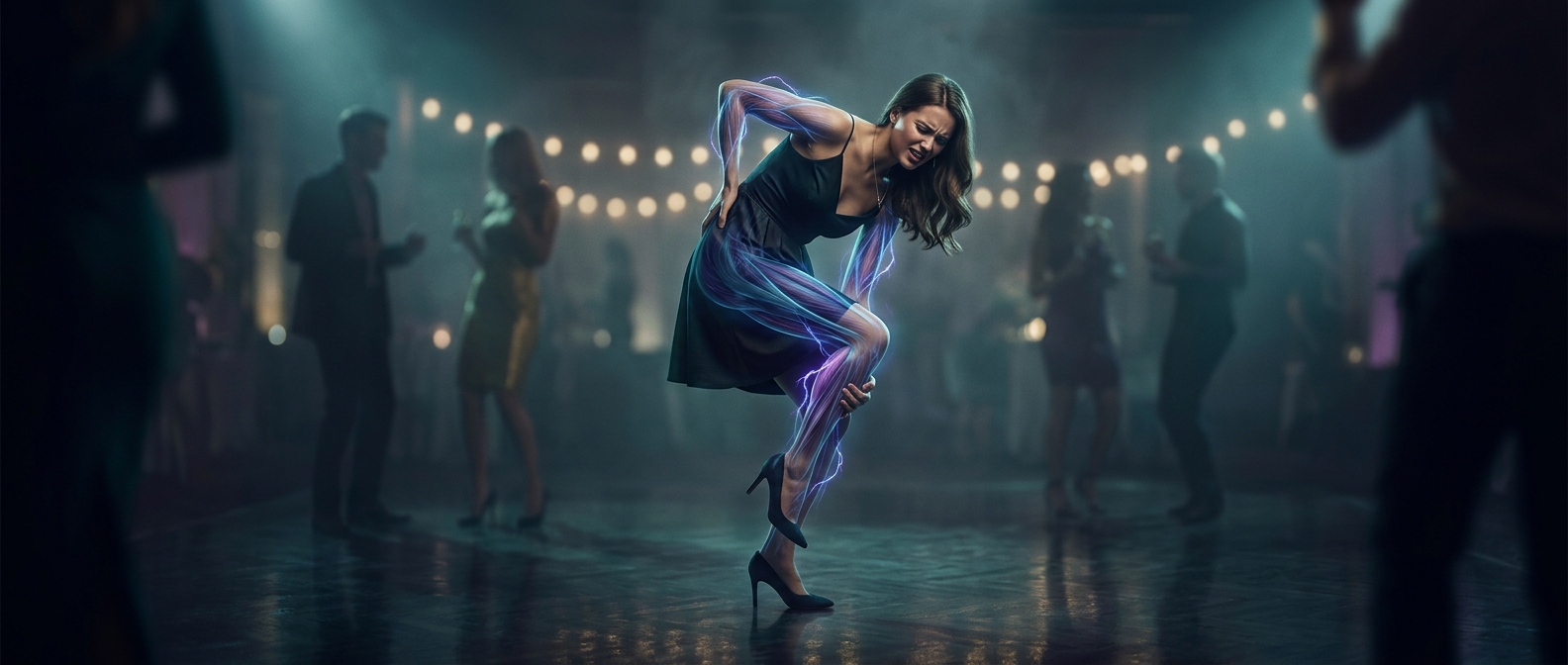
Musical statues looks like a game of stillness, but a dramatic pose can make some muscles work continuously. In a deep lunge, for example, the muscles in the front leg stay tense to keep the knee and hip from giving way. That kind of effort—making force without changing position—is called an isometric contraction.
Because the muscle does not get to relax between movements, it can fatigue surprisingly quickly. Sustained tension also compresses some small blood vessels within the muscle, temporarily limiting blood flow while the pose is held. The result may be aching or shaking; a sudden, involuntary tightening is a cramp. Cramps have more than one possible cause, so the pose alone does not explain every episode.
The pose matters more than the pause
A comfortable, balanced stance spreads effort across the body. A twisted reach or one-legged balance concentrates it: the supporting leg must stabilize the body while smaller muscles make constant adjustments to prevent a wobble. The harder the pose is to hold, the less the player is truly resting during the music.
That is part of the game’s comic tension. Players try to make their statues impressive, but the most elaborate pose can turn the wait for the next song into a brief endurance test. When the music starts again, changing position lets those working muscles finally release their sustained effort.