Why crews carve monster-truck tires
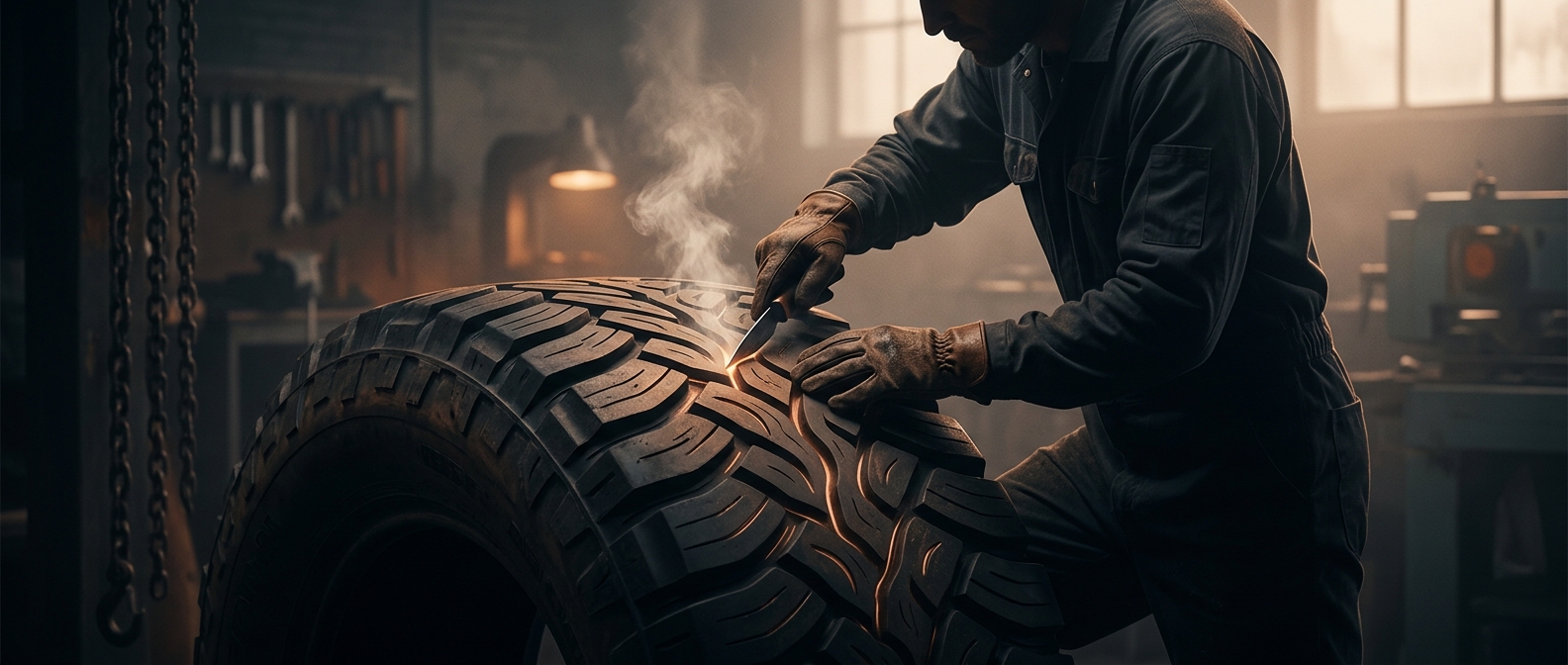
A monster-truck tire’s tread is not always a finished pattern straight from the factory. Before an event, crews can reshape its raised rubber blocks with a heated knife, cutting away material to change how the tire meets the ground. This practice is called tire grooving or siping, depending on the kind of cut.
The goal is to manage the tradeoff between grip and durability. On loose dirt or mud, tread blocks that can press into the surface and shed packed material may help the tire find traction. A crew can remove or reshape parts of the tread to suit the conditions, rather than relying on one pattern for every track.
Heat makes the cut controllable
A cold blade would struggle against the thick, tough rubber. A hot knife softens the material along its path, allowing a crew member to make deliberate cuts without trying to force a blade through the entire tread. The operator works around individual blocks, adjusting their edges or creating channels while leaving the rest of the tire intact.
Those changes matter because tread is a set of moving contact points. As a tire rolls, its blocks deform against the ground; their shape influences how they bite, flex, and release dirt. But carving is not a simple “more cuts, more grip” formula. Removing rubber also reduces the material available to withstand repeated impacts, so the pattern has to suit the surface and the demands of the run.
A track-specific adjustment
Monster trucks face changing surfaces and short, demanding events, making tire setup part of race preparation. Crews can tune a tire’s tread for the conditions they expect, then inspect and maintain it as the schedule continues. The striking part is that a tire built to carry a truck is still adjustable by hand: its grip can be altered one rubber block at a time.