How a drone keeps its camera level
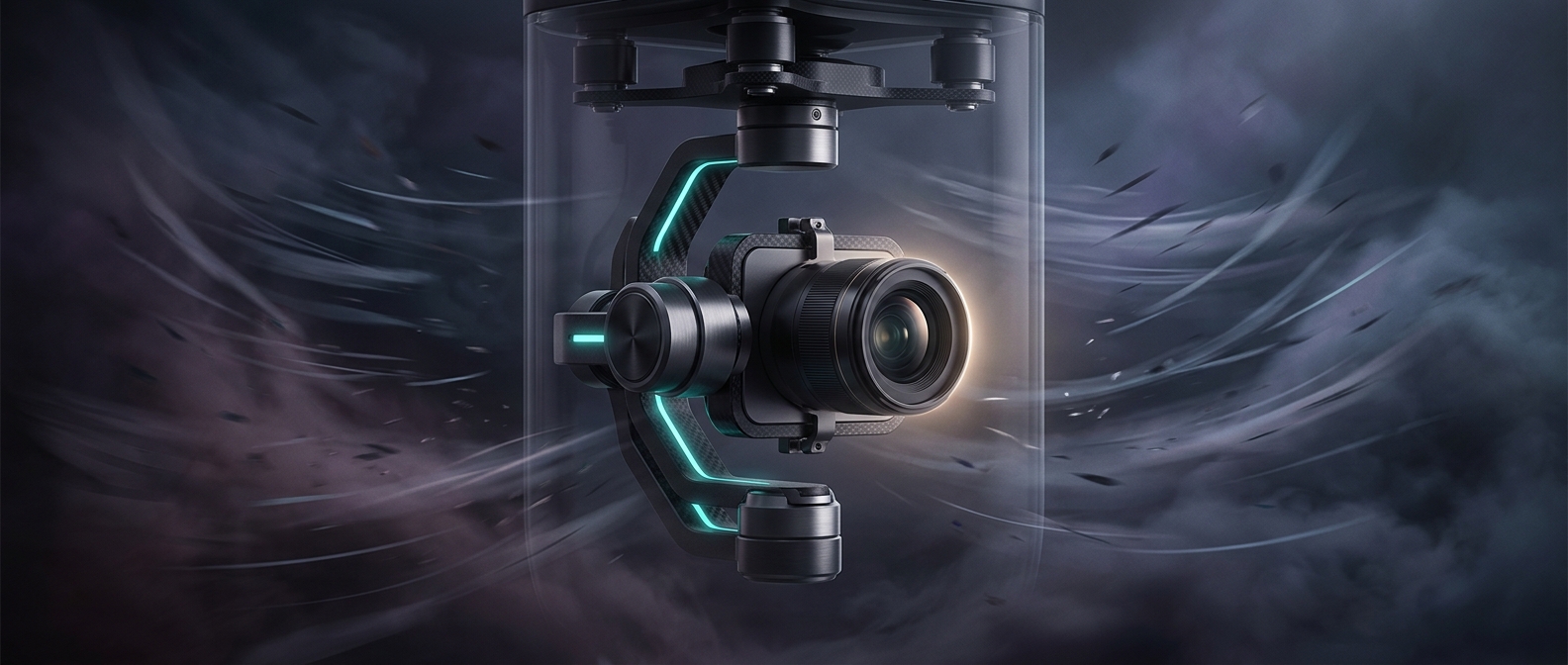
A drone’s body and camera do not have to move as one rigid unit. The camera sits in a gimbal: a small mount with pivoting joints that let it turn independently around one or more axes. Motors at those joints can counter the aircraft’s rotations, helping the camera stay pointed where it was aimed.
A rapid correction loop
Sensors in the gimbal detect rotation, while a controller continually compares the camera’s motion with the desired orientation. If the drone pitches forward, for example, the controller commands a motor to tilt the camera back. The correction happens repeatedly, not as a single adjustment, so the camera can resist a stream of small bumps and steering movements.
This does not stop the drone from moving, and it cannot erase every shake. A gimbal has a limited range of motion and can be overwhelmed by a sharp jolt or a turn that demands more correction than its motors can provide. Its joints, motors, and camera also add weight and use power—real costs on an aircraft where both are limited.
Why the footage looks different
Without mechanical isolation, a camera records much of the drone’s pitch and roll directly. A gimbal absorbs much of that rotation before it reaches the lens, producing steadier footage while still allowing the aircraft to maneuver. The practical result is that a drone can bank to change direction while the camera continues to hold a relatively composed view of the scene.