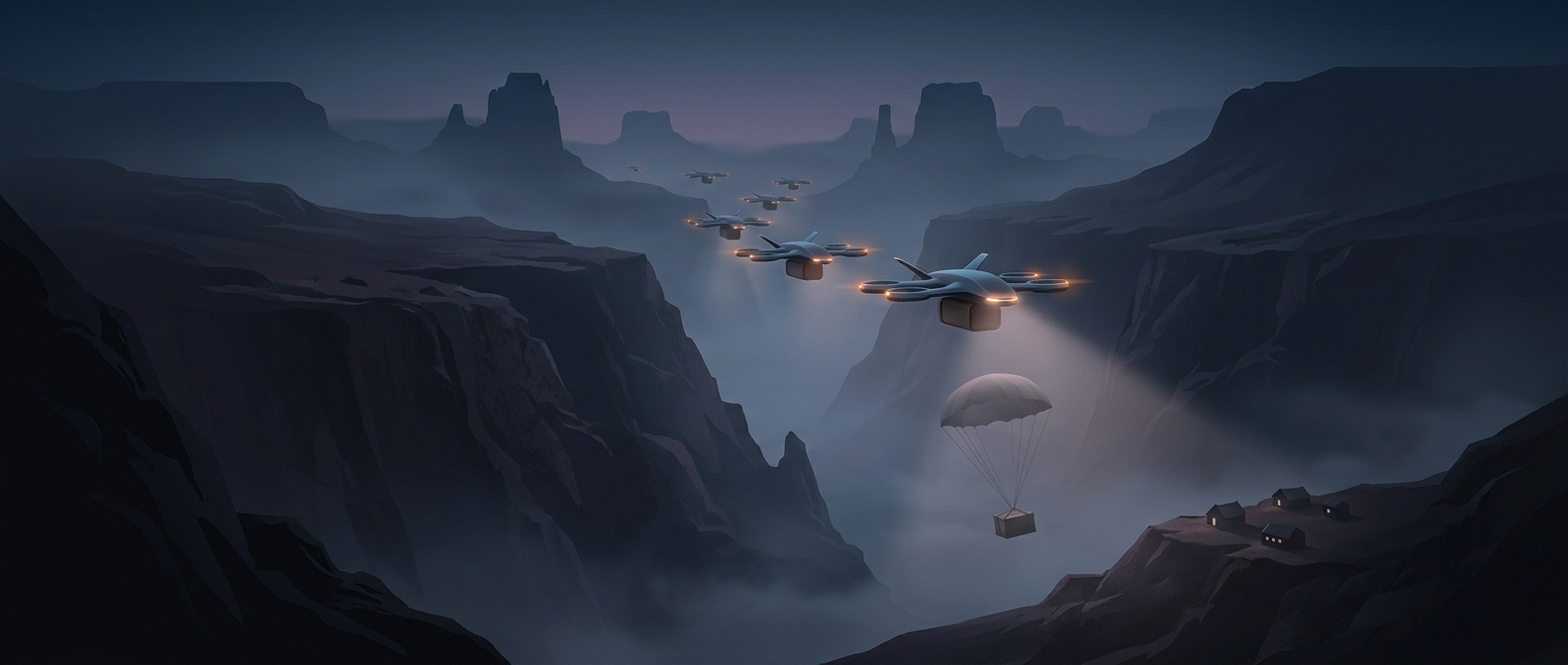
The package can land where the drone cannot
A drone does not need a runway, but it still needs room to approach safely. Trees, rooftops, wires, uneven ground, or people nearby can make a landing risky. Releasing the package from above shifts the hardest part of the delivery: the aircraft must reach a suitable point in the air, while the medicine must reach a safe point on the ground.
A small parachute adds drag—the force of air resisting motion—so the package falls more slowly. That gives the medicine a gentler arrival without requiring the drone to touch down. The package must be secured well enough to travel, yet release cleanly; its weight and shape also affect how the parachute opens and how the load moves in the air.
A shorter route is not automatically a simpler one
Avoiding a landing site can make delivery possible to places with little clear ground, and the drone can remain available for its next flight instead of waiting to take off again. But the drop still has to be planned around wind and obstacles. A parachute slows the fall; it does not make the package immune to drifting sideways, snagging, or landing in the wrong place.
That is why the useful destination is not merely a town on a map. It is a reachable release point from which a lightweight, protected package can descend safely. The tradeoff is practical: the drone avoids the need for a landing area, but the delivery still depends on finding a reliable place for the medicine to come down.