A landing pad can be ready before the aircraft
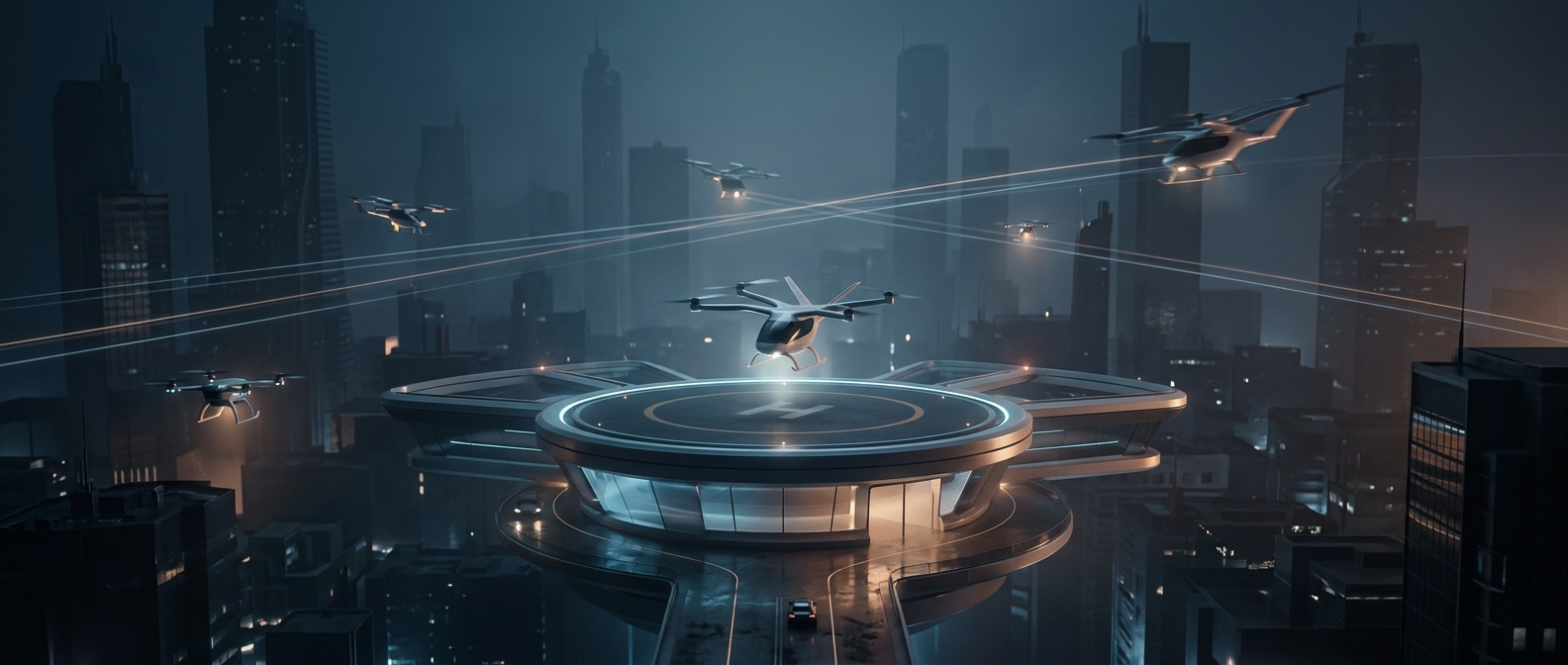
A rooftop terminal is more than a place to touch down. It has to connect the aircraft’s arrival to the city below: passengers need a safe route between the pad and the building, while staff need space to manage boarding, security, and turnarounds. If the planned aircraft is electric, the site may also need charging equipment and enough electrical capacity to support it.
That makes a so-called vertiport—a facility for aircraft that take off and land vertically—a piece of urban infrastructure, not simply a painted circle on a roof. Designing and fitting one into a building can take time, so developers may prepare the ground before a regular air-taxi service exists.
The bottleneck is the whole system
A usable terminal cannot create a usable commute on its own. Aircraft must be certified for passenger service, operators need reliable routes and schedules, and local systems must manage where aircraft can fly and when they can land. The service also depends on practical limits such as weather, noise, and how many flights a site can handle.
Those pieces advance at different speeds. A building can finish its landing area while the aircraft, operating approvals, or route network are still developing. The result is a facility designed around a future routine—arrive, board, fly across town—that has not yet become routine for travelers.
That gap is the striking part: the terminal can look finished long before the commute is. Its empty waiting area is a reminder that urban transport is built from linked parts, and the first one to arrive cannot make the others arrive faster.