Why a passenger drone needs so many rotors
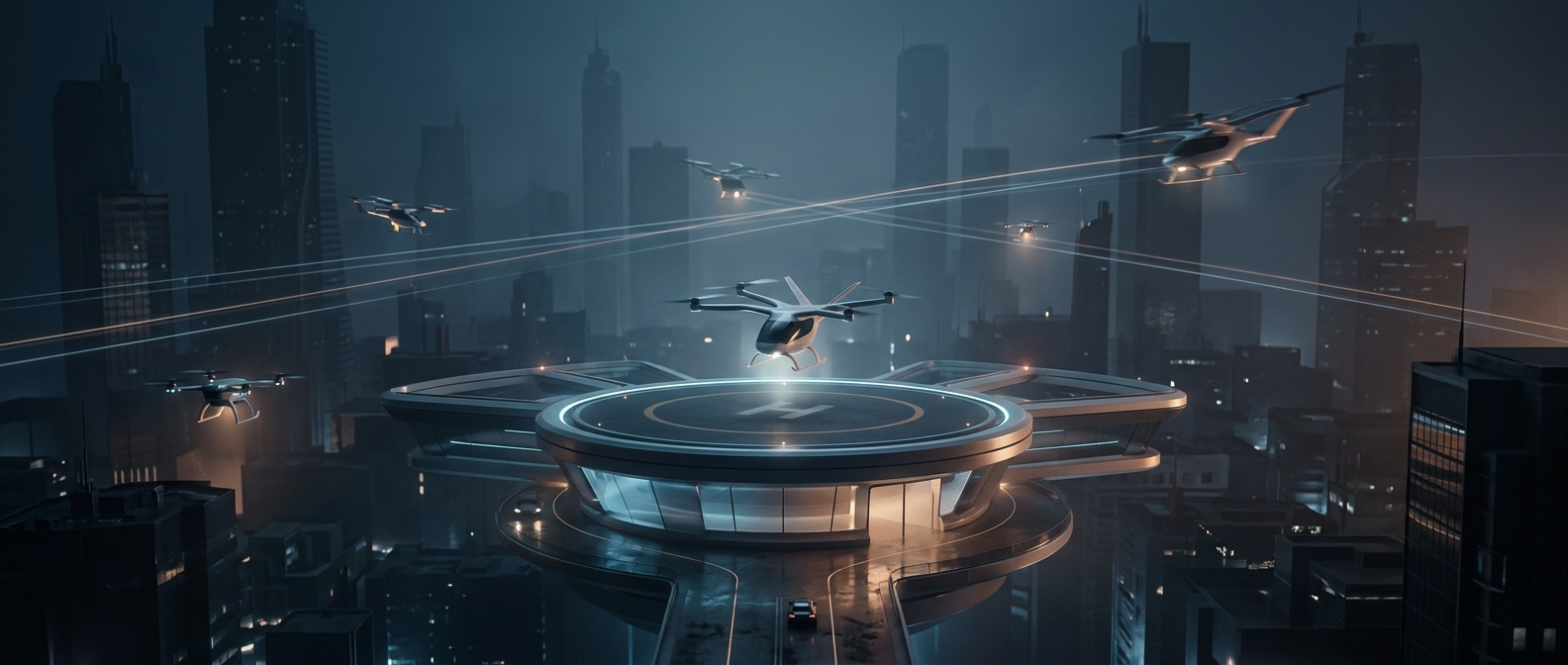
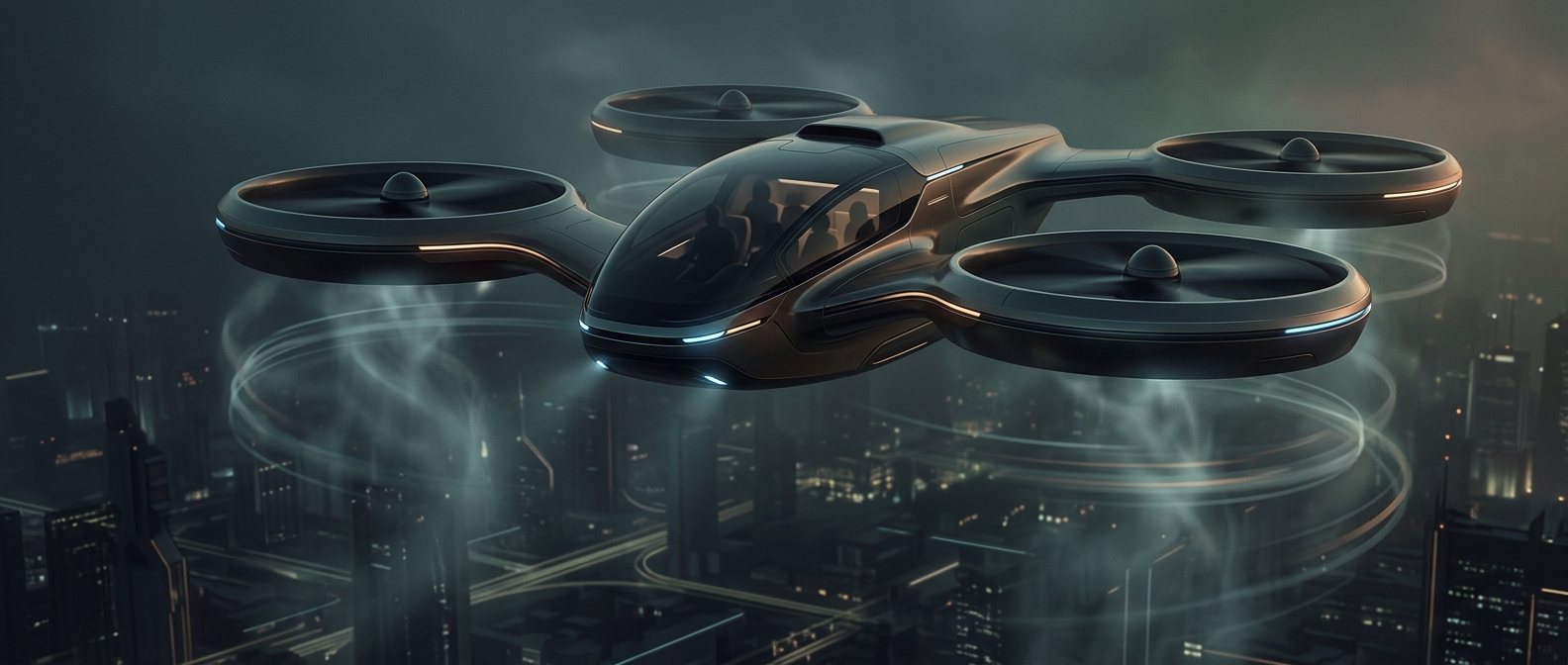
A flying taxi built like a large multirotor trades the long, efficient glide of an airplane for the ability to rise and land vertically. Its rotors push air downward to hold the aircraft up; there is no wing producing most of the lift as it moves forward. That makes it useful where a runway is impractical, but it also means the motors must keep working throughout a hover.
The control system turns small changes in rotor speed into movement. If some rotors push harder than others, the aircraft tips; the tilted thrust then points partly sideways, accelerating it in that direction. To stop or turn, the system adjusts the rotors again. A flight computer makes these corrections continually, because a multirotor does not have the same passive stability as a conventional airplane.
The trade: vertical access for energy and noise
Hovering is power-hungry: the aircraft must continually push air down just to remain at the same height. Batteries therefore have to serve both the vertical takeoff and landing and the trip between them. A winged aircraft can use forward motion to generate lift and may be more efficient over longer distances, but it needs space to take off and land—or a more complicated design that combines wings with vertical lift.
Many rotors can distribute the work and give designers more options for controlling the aircraft, but they do not make the underlying energy demand disappear. More spinning blades also make noise, a practical concern when aircraft operate near homes and landing sites.
Scaling changes what failure means
A camera drone that loses control may fall into an empty patch of ground. A passenger aircraft must be designed around the possibility that a component or motor stops working, and around how the vehicle can remain controllable afterward. That requires careful coordination among propulsion, batteries, flight controls, and the structure carrying people.
The central engineering bargain is clear: multirotors can reach places without runways, but they must spend energy continuously to stay in the air. That makes route length, payload, and safe landing options as important as the aircraft’s ability to take off vertically.