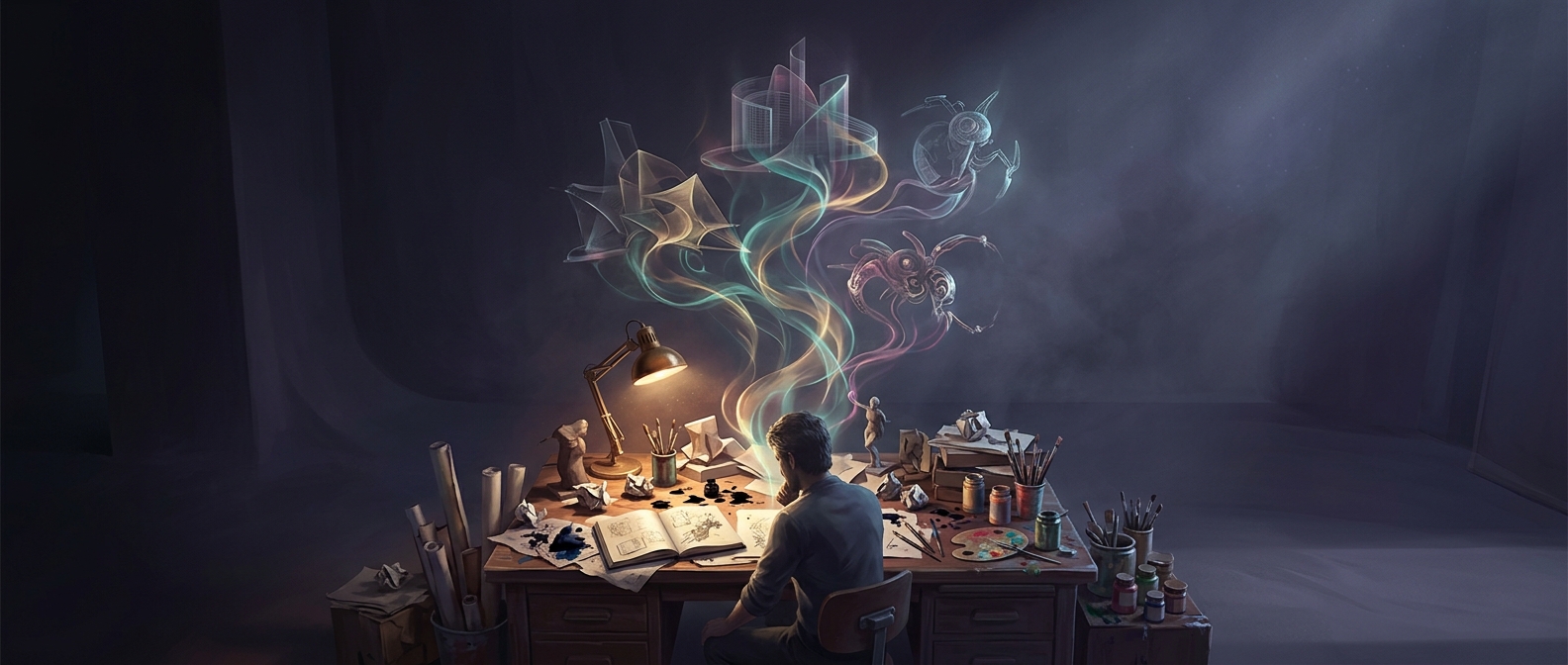
How a limit can give an idea somewhere to go
An open-ended task can feel less like freedom than a demand to invent everything at once. A constraint—such as using only a few materials, writing to a fixed length, or working within a set time—shrinks the number of choices. That makes it easier to begin and gives the mind a specific challenge to work on.
The constraint also creates a useful tension: the creator has to meet the requirement without producing something predictable. A short story with a required setting, for example, can prompt questions about how that place shapes the characters and plot. The rule does not supply the idea; it gives the search for one a direction.
The useful boundary still leaves room
Constraints can also encourage people to reconsider familiar approaches. If the obvious solution does not fit, they may combine materials or methods in a new way. In that sense, a rule can act as a creative prompt rather than merely a restriction.
But this works only when there are still meaningful choices to make. If rules dictate every step or make success seem impossible, they can shift attention from exploring possibilities to avoiding mistakes. The boundary then stops being a starting point and becomes a wall.
A good constraint therefore narrows the task without deciding its answer. It gives a person a first move—and leaves enough room for the surprising second one.