Why a Boat Becomes a Speed Machine on Blue Ice
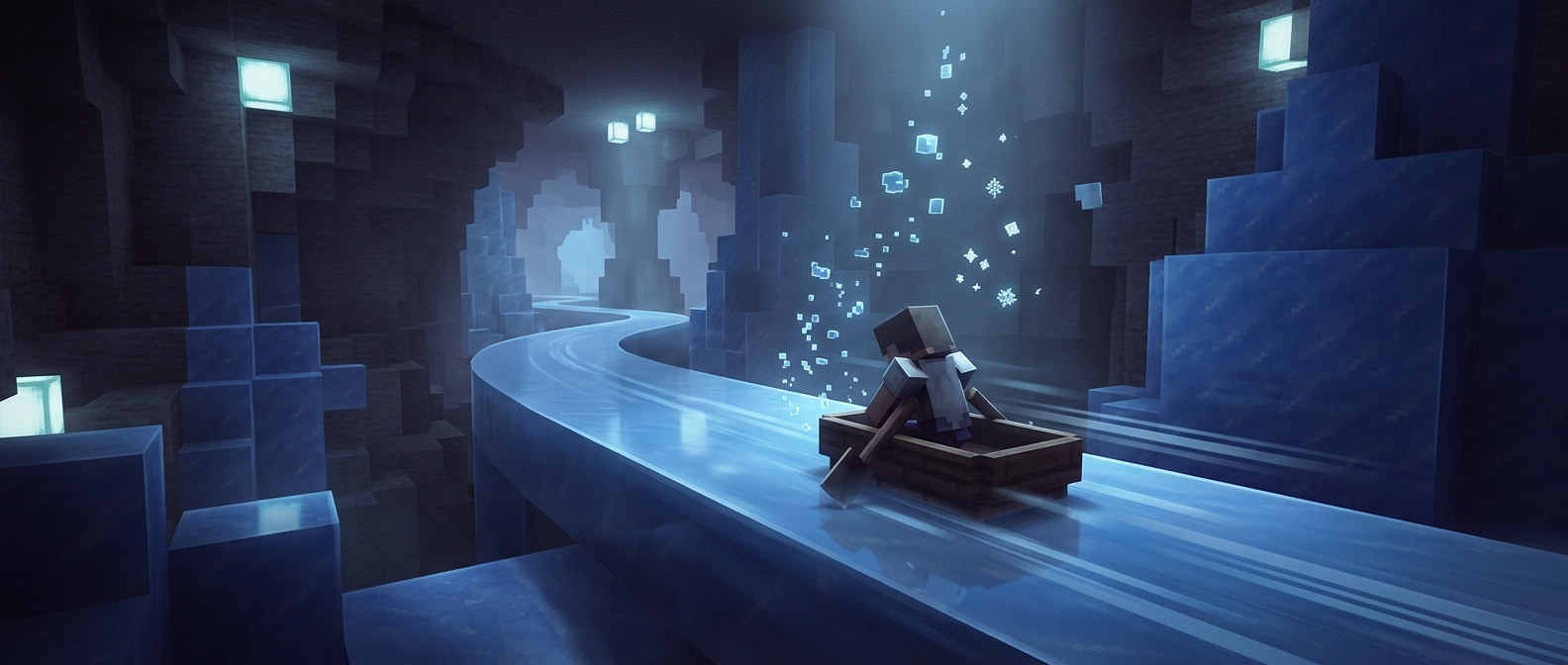
A boat normally feels like a vehicle for water, but Minecraft lets it slide across ice. Blue ice is especially slippery: the game applies very little resistance to a boat moving over it, so the boat keeps its momentum and can reach striking speeds. The result is less like rowing and more like sending a sled down a nearly frictionless track.
The Track Matters as Much as the Boat
To turn that behavior into a route, players lay blue ice in a long, mostly level strip. Once moving, a boat can glide along it without the repeated acceleration and braking that make ordinary travel feel slower. A straight, clear path lets the speed build; turns, obstacles, and gaps can spoil the run or send the boat off course.
That makes blue-ice travel a different kind of engineering from a railway. Rails guide a minecart along a fixed line, while an ice route gives a boat room to drift and demands careful steering. The payoff is rapid travel over a prepared corridor, but the corridor itself takes resources and construction effort.
Why Players Build Them
Blue ice turns a simple movement rule into infrastructure: build the slippery surface once, then use it as a high-speed link between distant places. Instead of laying a powered rail line, a player can race a boat across a carefully designed track—and the sight of a watercraft skimming over land is part of the fun. The practical trick is remembering that at those speeds, a small bend or misplaced block is no longer a minor inconvenience; it is a serious obstacle.