Why Dropped Gear Keeps Twirling
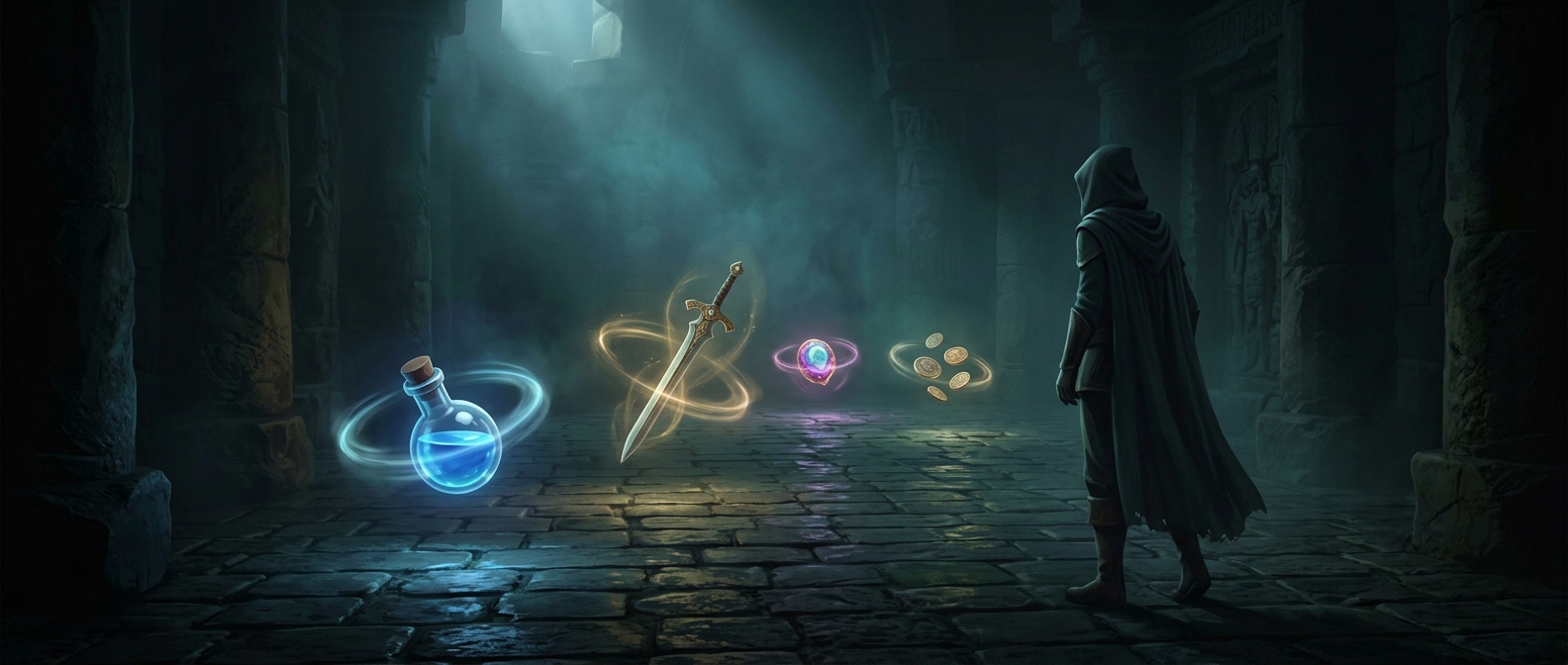
A dropped item often stops behaving like a piece of physical equipment and becomes a signpost for the player. The game may leave it hovering above the ground and rotate it in place so it catches the eye against busy scenery. A bronze helmet that landed flat in grass could disappear from view; a slow spin gives its silhouette a chance to show from several angles.
An Animation, Not an Endless Fall
The motion is usually a small idle animation: the game repeatedly turns the item around an upright axis and may add a gentle bob. That is different from simulating a real helmet tumbling under gravity, which would eventually settle. Once the item reaches a stable display pose, looping the animation keeps it noticeable without asking the game to calculate a new collision or movement every moment.
The effect also makes the object feel available. A player can leave gear behind while comparing options, managing a full inventory, or deciding whether a detour is worthwhile. Keeping the item visible preserves that choice; hiding it or making it vanish immediately would turn a temporary decision into a risk of losing track of it.
A Small Animation With a Clear Job
The spin is a practical compromise between realism and readability. It makes an ordinary object behave less like debris and more like a selectable pickup, while giving the player a stable landmark to find again. The helmet may not be waiting forever in every game, but while it remains in the world, its little rotation is doing useful work: saying, in effect, that this item is still here.