A suitcase makes every pickup a decision
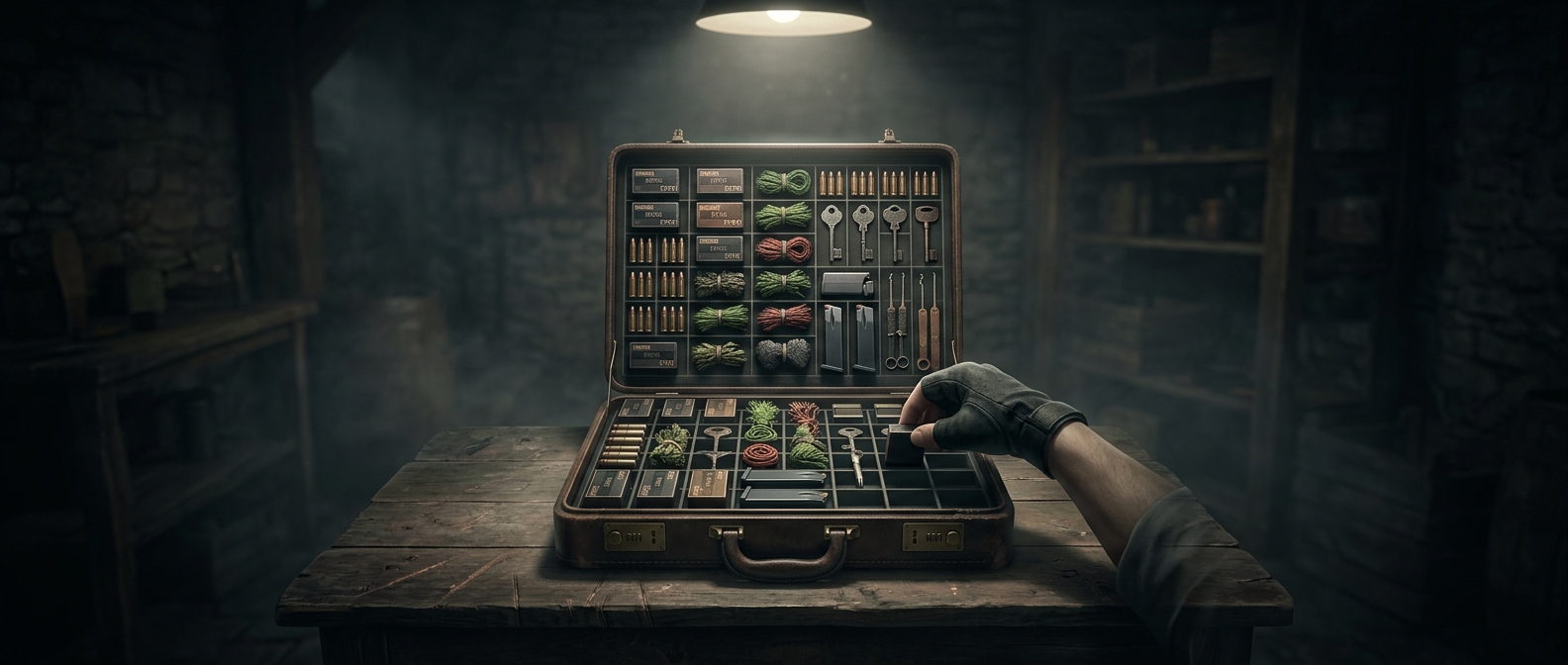
In Resident Evil 4, the attache case is more than a container: it is a grid, and each item occupies a particular shape within it. A long weapon can block several smaller objects; turning an item changes how it fits, but not how much room it takes. The result is a puzzle with a practical stake: there may be no neat way to carry every useful thing.
That constraint makes loot immediately consequential. Finding ammunition or a healing herb is not simply a reward. Leon may have to rearrange the case, leave something behind, or decide that one resource matters more than another. Space becomes part of the survival economy, alongside health and bullets.
Why the pause has a rhythm
The case is usually managed between bursts of danger, so its careful sorting contrasts with the urgency of combat. Players move from aiming and reacting to planning: group supplies, make room for a weapon, and prepare for what might come next. Because the objects have recognizable shapes, the challenge is easy to grasp without a separate set of abstract inventory rules.
The system also gives progression a tangible effect. A larger case—available as an upgrade—does not merely improve a number on a status screen; it gives the player more physical room to organize. Even then, capacity remains finite, so added space eases pressure without removing the choices that make each pickup matter.
That is why packing can feel satisfying as well as restrictive: a well-arranged case is a small plan made visible, and the next discovery can force that plan to change.