A household chore becomes a player-made experiment
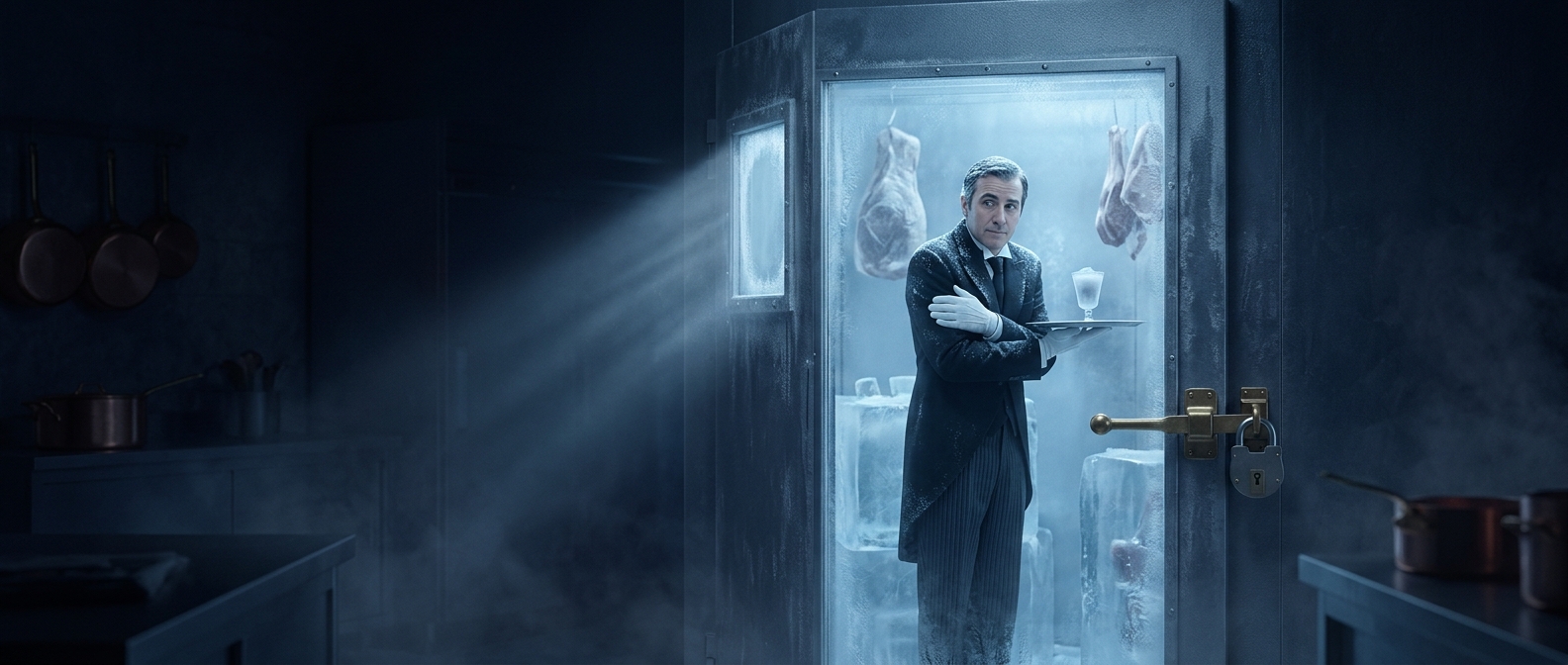
The freezer is not a puzzle with a hidden reward. Its appeal is that it is an ordinary object the player can use in an unexpected way. Once the game lets players move a servant through the house and control access to rooms, a mundane door becomes a tool for testing what the game will allow.
That is a form of emergent play: behavior that arises from combining simple actions, rather than from a developer-written objective. Lure a character, get him into a room, shut the door. Each step is straightforward; together, they create a ridiculous little scenario the game did not need to prescribe.
Why the pointless action is the point
A practical goal would narrow the possibilities: players would do what advances the mission. With no useful outcome to chase, the action becomes its own reward. The fun lies in the contrast between the servant’s everyday role and the absurdity of treating the freezer like a trap, as well as in seeing whether the game’s systems permit the stunt.
This kind of mischief also gives players a story to tell. The game may provide the house and its characters, but the player supplies the motive. The memorable moment comes from making the world behave in a way that feels both possible and completely unnecessary.