A house that tells its story out of order
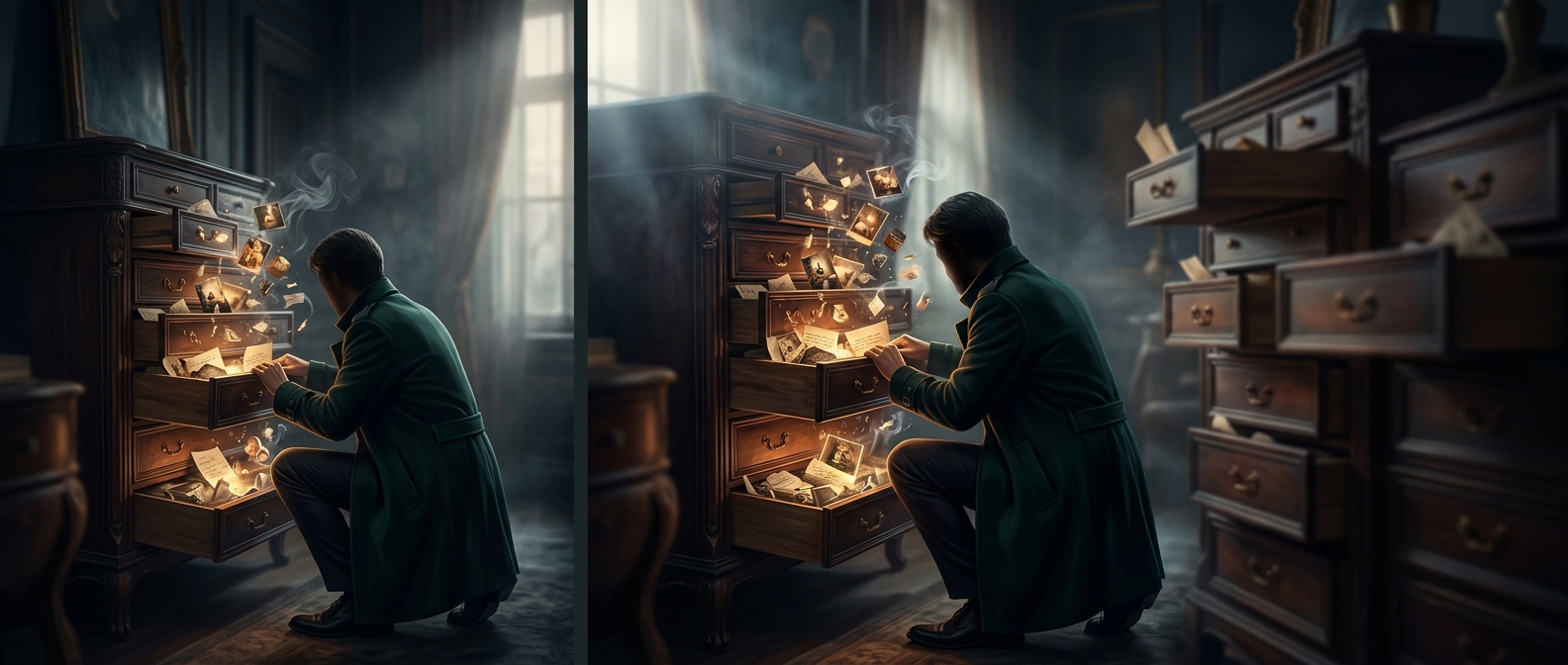
In Gone Home, the plot is not delivered through a character standing still to explain what happened. It is scattered across a lived-in house: a note left on a table, a book tucked among others, a box that has been opened and put away. The player makes sense of these objects by deciding where to look and noticing how they fit together.
That turns ordinary exploration into a form of reading. A single item may mean little, but its location and relation to other belongings can suggest who used it, what they cared about, and what changed. The house becomes a timeline assembled from traces rather than a sequence of scenes shown in order.
Why searching is the central action
The game’s first-person view makes the player’s attention part of the storytelling. You can open drawers, pick up objects, and inspect details at your own pace. There is no combat or puzzle machinery competing for attention; the main challenge is deciding what deserves a closer look and connecting discoveries without being told exactly what they mean.
That freedom also creates a design tradeoff. Players may find clues in different orders, so the story has to remain understandable without relying on one carefully timed reveal. Familiar objects help: a letter or a personal keepsake is easy to recognize, while its placement supplies the more subtle clue. The player is not just collecting evidence but building an interpretation from it.
The mystery changes what “exploration” means
Many games make an empty building feel threatening because danger might be hiding in it. Gone Home borrows that expectation, then redirects it. Its rooms invite searching not because they conceal an enemy, but because they preserve the choices and relationships of the people who lived there. The result is a mystery whose payoff depends less on a final twist than on gradually understanding someone through the things they left behind.