Why the Map Starts as a Blackout
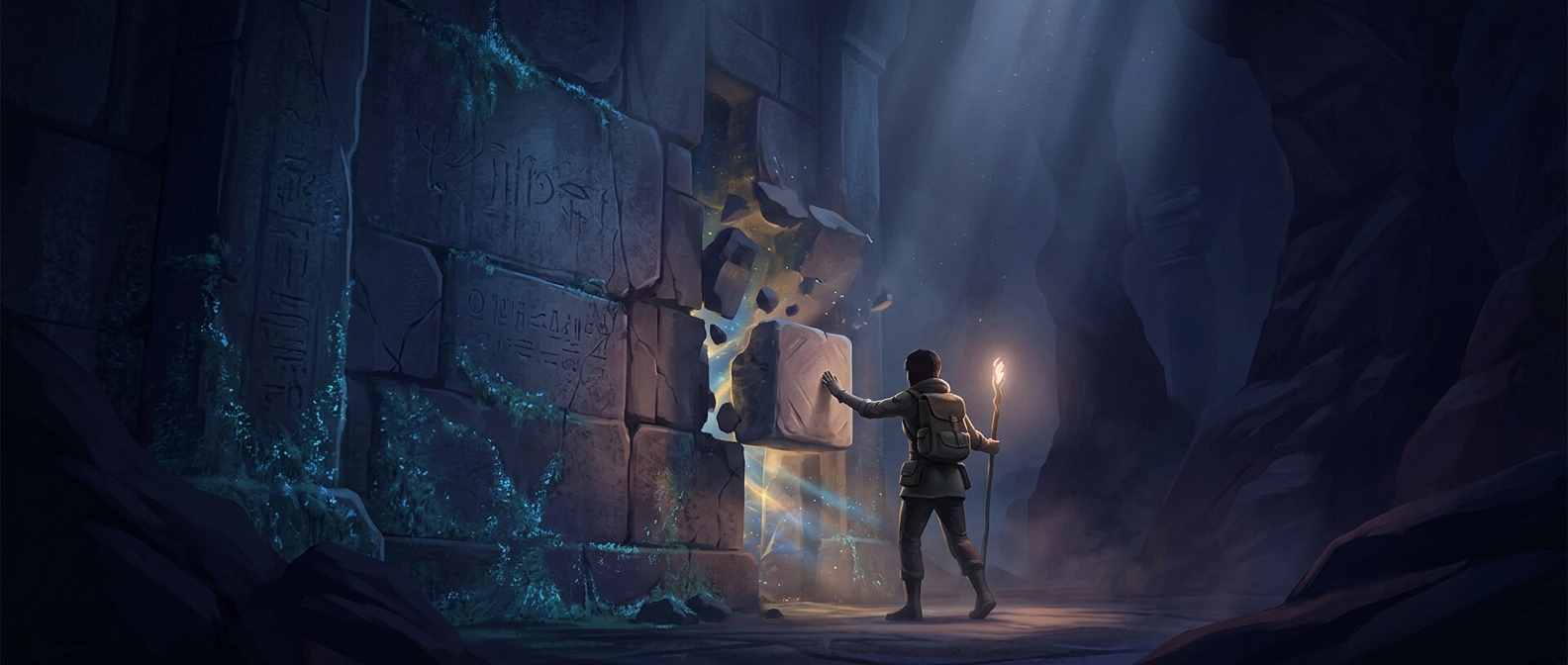
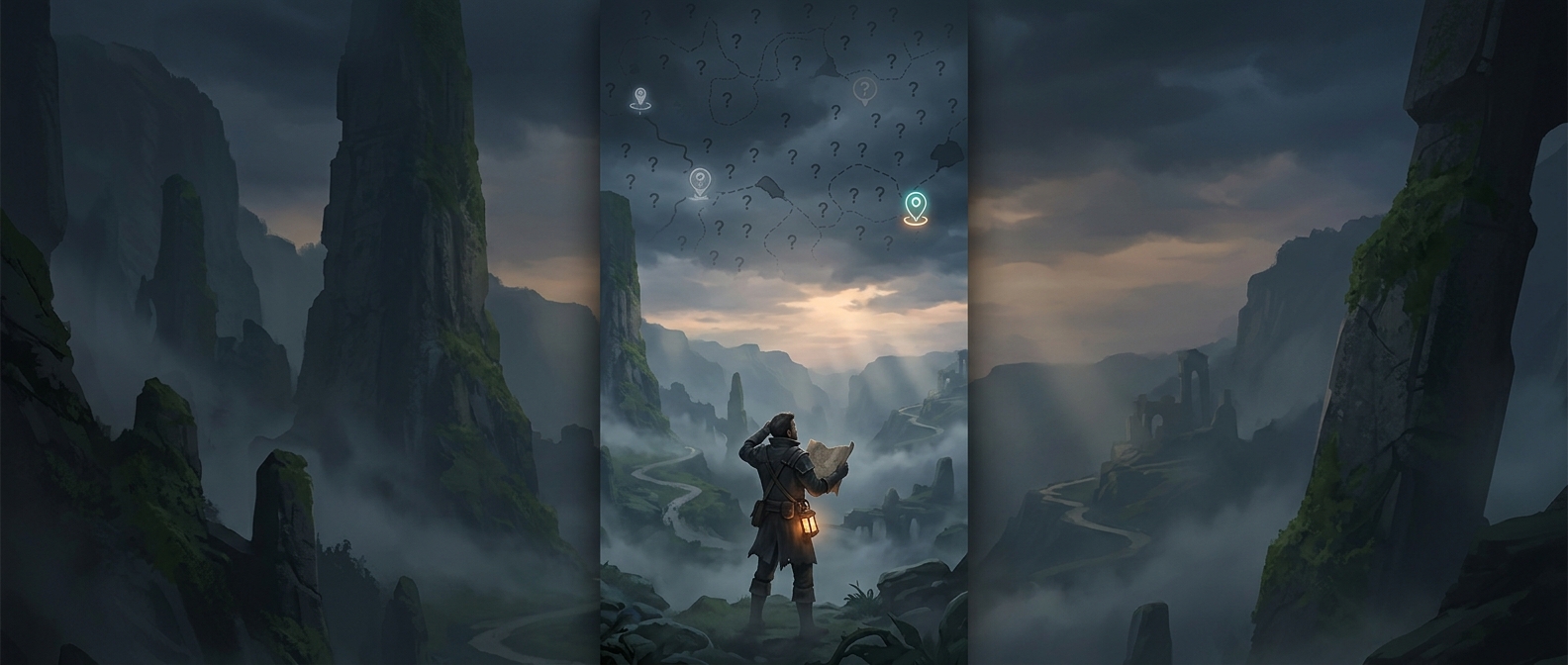
A black patch on a game map is not necessarily a place hidden by literal darkness. It is information the game has chosen not to give the player yet. In fog-of-war games, the map can be divided into small areas, with each area concealed until the character reaches it. Walking forward does more than move the character: it changes what the player is allowed to know about the world.
That makes exploration a sequence of decisions under uncertainty. A path that looks safe may end at a cliff, a blocked passage, or an encounter; the player cannot plan around landmarks they have not discovered. The blank space creates a practical reason to leave a familiar route and see what lies beyond it.
Two Kinds of Knowing
Many games distinguish between a place the character has discovered and a place the character can currently see. Once explored, an area may remain drawn on the map even when it is no longer nearby. The terrain is remembered, while enemies or other changing details may remain hidden until the character returns.
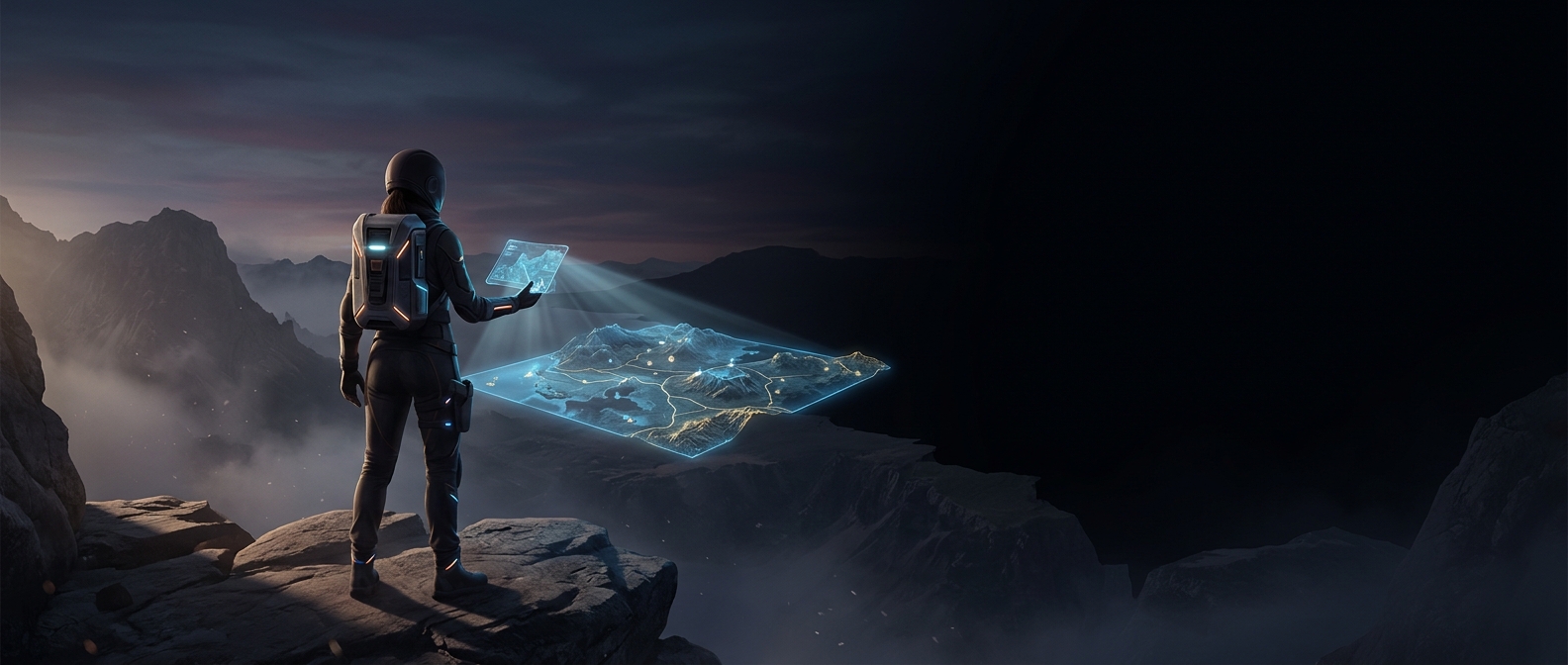
That difference lets a map serve as a record of travel without making the whole world permanently observable. It also gives designers control over the pace of discovery: a narrow opening can reveal only the next stretch of a route, while a high vantage point can make a much larger region legible.
The Cost of a Blank Space
The blackout can make navigation slower, but that friction is part of its purpose. Players must use landmarks, retrace paths, and decide whether an unknown route is worth the risk. A map that begins incomplete turns movement into information-gathering—and a newly revealed coastline or corridor into evidence of where the player has actually been.