Why a TV audience is arranged for the camera
A studio audience is not simply a crowd facing a stage. It is also part of the picture: cameras may show the room in wide shots, cut to audience reactions, or frame performers with spectators behind them. From the camera’s chosen angle, an empty seat near the front can stand out more than several empty seats outside the shot.
Moving audience members forward helps make those views look lively and continuous. It can also put spectators closer to the action, where their reactions are easier to see. The aim is not just to fill seats, but to shape what the broadcast audience sees.
A practical fix, not a change to the show
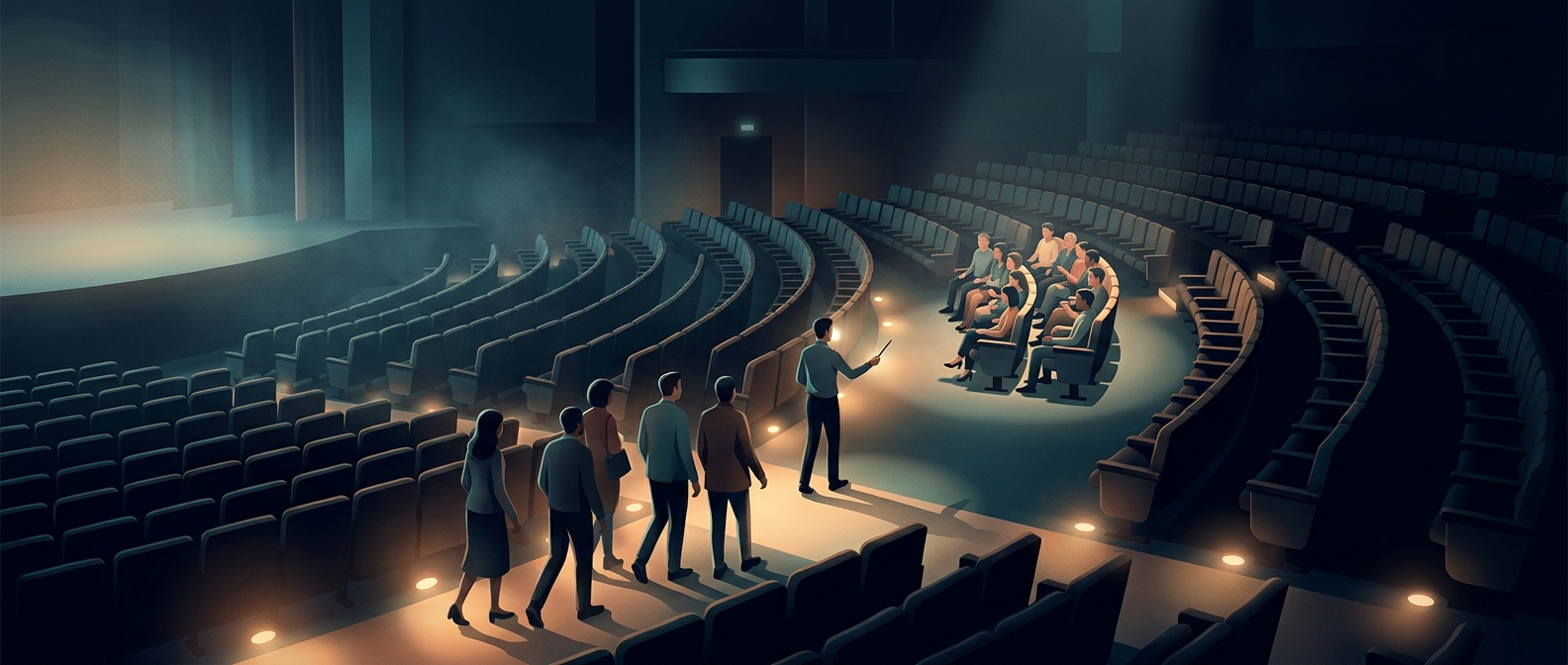
Seats can remain empty because people arrive late or do not show up, while the cameras and set are already arranged around a particular view. A floor manager can respond by asking some spectators farther back to move into open seats. That is usually simpler than changing camera positions or leaving a visible gap in a shot.
The move has to fit the room’s constraints: spectators need to get to their new places without blocking cameras, distracting performers, or disrupting filming. And “better” is relative. A closer seat may offer a more immediate view, but the production’s main concern is how the audience reads on screen. A handful of people changing rows can turn a patchy-looking frame into one that feels full.