What Eckhart Meant by Unity with God
Meister Eckhart, a Dominican preacher and theologian, used daring language to describe the soul’s closeness to God. In his sermons, he spoke of a deepest “ground” of the soul where a person could encounter God beyond images, ordinary desires, and even the usual distinction between knowing and being known. Some statements could sound as if the human soul and God were simply the same thing.
That was not necessarily Eckhart’s claim. His mystical language pointed to a union in which the soul receives its life from God and turns wholly toward God—not to a person becoming an independent deity. But compressed sermon phrases could blur that distinction, especially when heard without the careful theological context that surrounded them.
Why the Language Became a Legal Issue
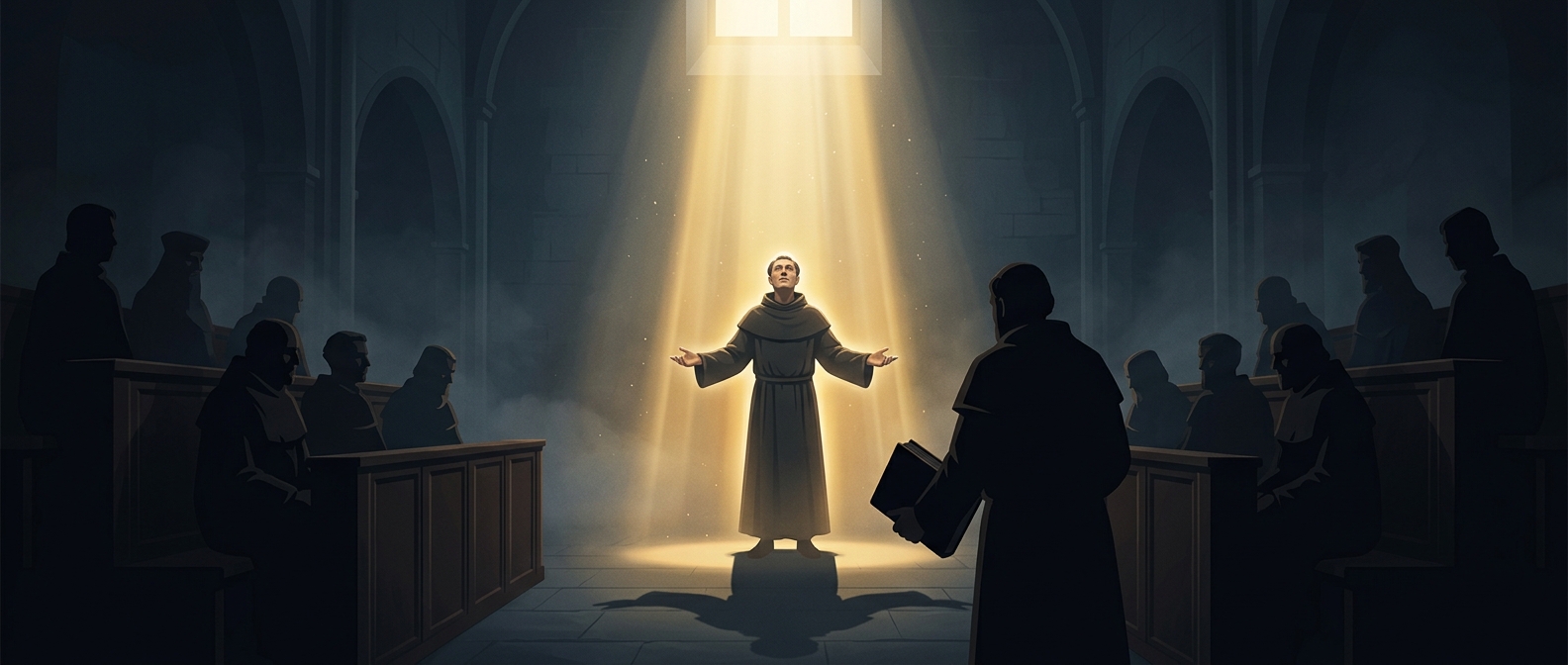
In the early 14th century, church authorities investigated Eckhart’s teachings in Cologne. The issue was not mysticism by itself: Christian theology already had ways to describe intimate union with God. The danger, as authorities saw it, was that claims about the soul’s divine unity might erase the boundary between Creator and creature or make ordinary moral and religious duties seem unnecessary.
Eckhart defended his teaching and appealed to the judgment of the church. He died before the final papal decision. In 1329, Pope John XXII condemned a set of propositions attributed to him, judging some heretical and others suspect. The ruling targeted statements, not a simple claim that Eckhart had openly declared himself God.
The controversy shows how a mystical insight could become a theological test: the more boldly a preacher described union with God, the more carefully he had to preserve the distinction that made that union meaningful.