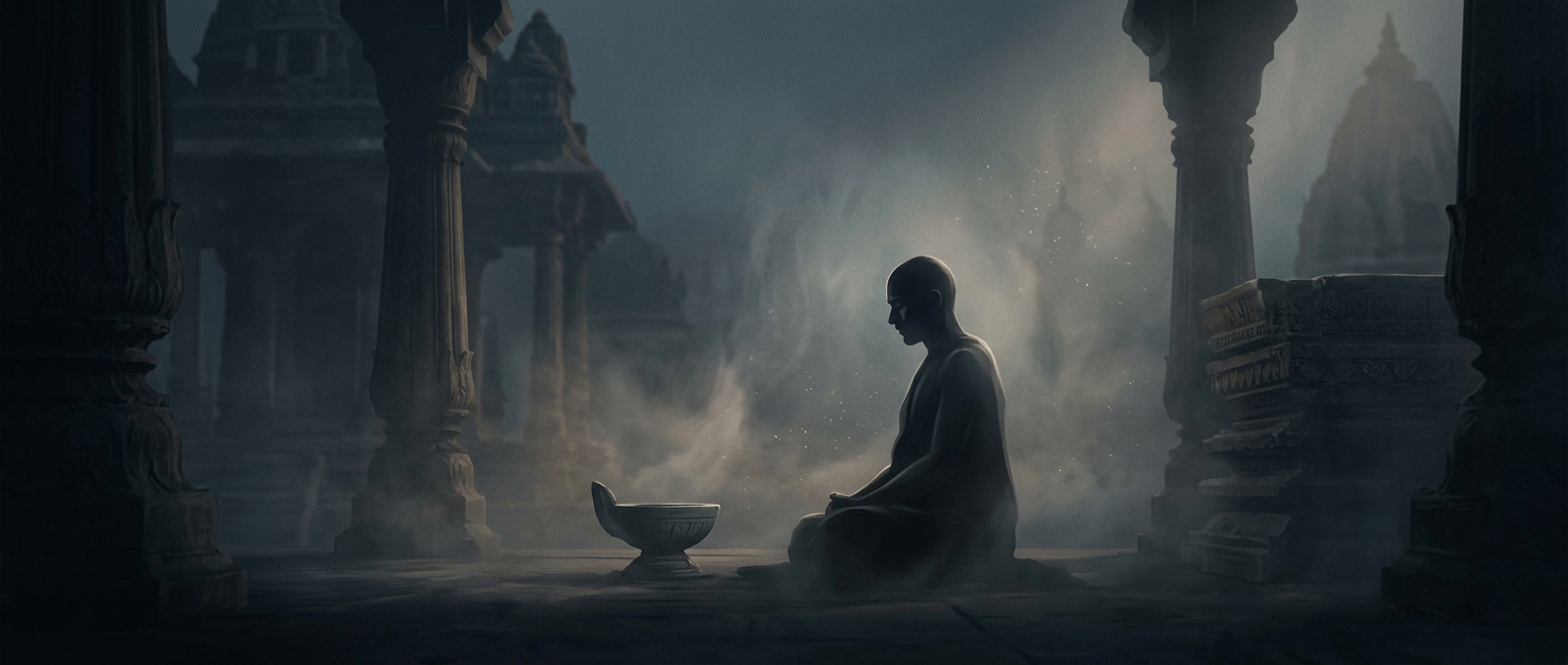
Why Digambara monks go unclothed
In Digambara Jainism, a tradition whose name means “sky-clad,” the nudity of the most advanced male monks is a deliberate religious practice. It expresses aparigraha, or non-possession: the effort to stop treating anything as “mine,” even something as basic as clothing. The point is not to shock observers but to make renunciation visible in the monk’s daily life.
Clothing can represent more than practical protection. It must be acquired, maintained, and kept; it can also mark status or personal identity. Giving it up carries the vow of non-possession to an extreme. A monk is meant to rely on what is freely available rather than build a private stock of comforts.
A demanding discipline, not a costume
Jain asceticism is organized around vows that include nonviolence, truthfulness, restraint, and renunciation. Going naked is one expression of that larger discipline, not a claim that exposure itself brings spiritual insight. The practice is associated with highly advanced Digambara monks, not with all Jains or every person who follows an ascetic life.
The tradition also distinguishes between monks and nuns. Digambara nuns, known as aryikas, wear simple clothing and follow demanding vows, but traditional Digambara doctrine holds that liberation cannot be attained in a female body. Other Jain traditions differ on that point. This helps explain why the most literal form of “sky-clad” renunciation is specifically associated with male monks.
What the practice asks of the monk
Without clothing or ordinary possessions, a monk depends more directly on discipline and on the support of lay followers, who may offer food. The practice does not mean that society has no boundaries: ascetics still move through communities, and their conduct is shaped by religious and social norms. Its force lies in the personal renunciation it demands. The absence of a loincloth is the visible sign of a much broader attempt to loosen attachment to ownership, comfort, and status.