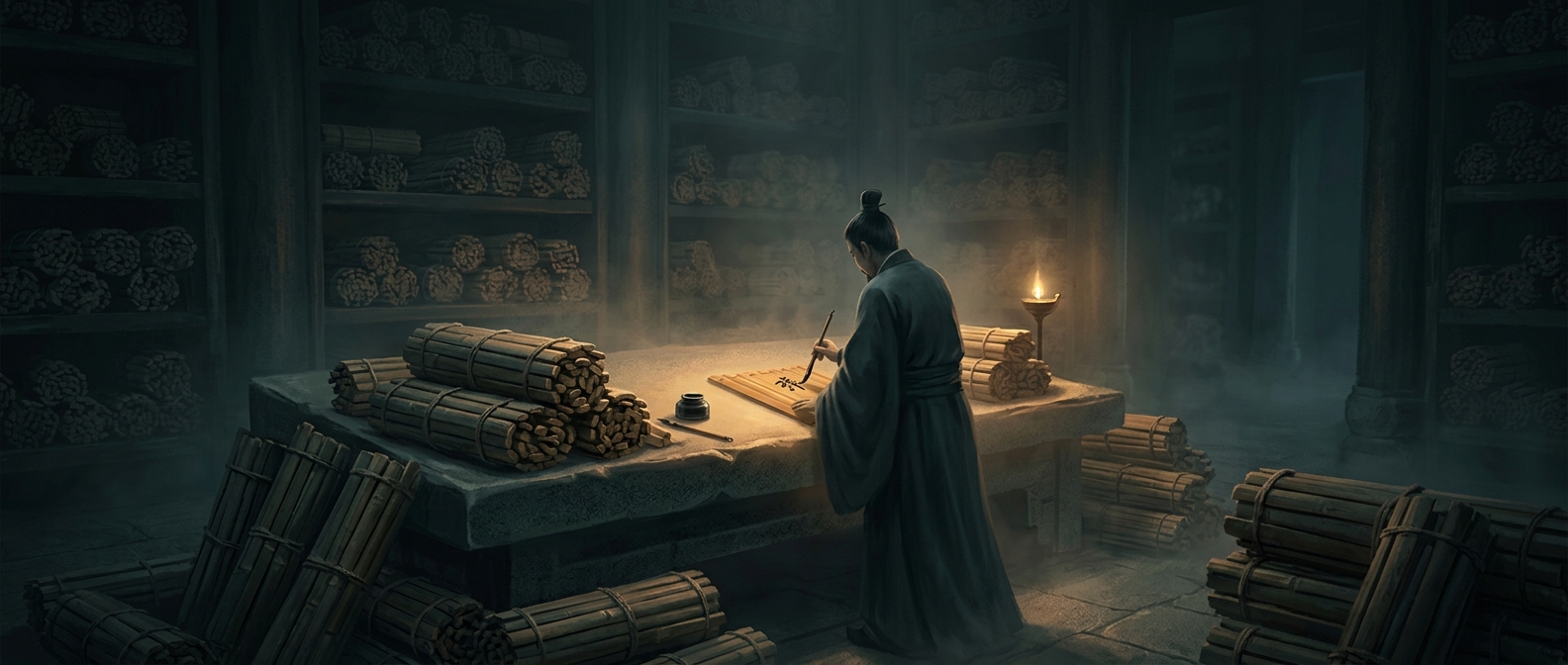
How a bamboo strip became an official record
Before paper became common, Chinese scribes wrote on narrow, prepared strips of bamboo. A single strip held only a small amount of text, so a longer document required many of them. Scribes arranged the strips in sequence and tied them together with cords, turning separate pieces into a continuous record that could be read in order.
That format suited government work. Officials needed to preserve written instructions and administrative information, and linked strips could carry more text than any one slat. But the document’s contents were physically spread across a bundle: finding a passage or carrying several records meant handling the connected pieces, not simply picking up a thin sheet.
Why a lighter medium changed record-keeping
Paper offered a different way to hold the same kind of information. Instead of dividing a text among many rigid slats, a sheet could take writing across a broad, flexible surface. That made documents easier to store, transport, and consult—practical advantages for offices that generated or managed many records.
The change was gradual rather than an overnight switch. Bamboo remained useful, and written materials varied across time and place. Still, the contrast is easy to picture: an official’s library was not just a collection of words, but a physical load of tied-together writing surfaces. Changing the surface changed how far and how easily those records could travel.