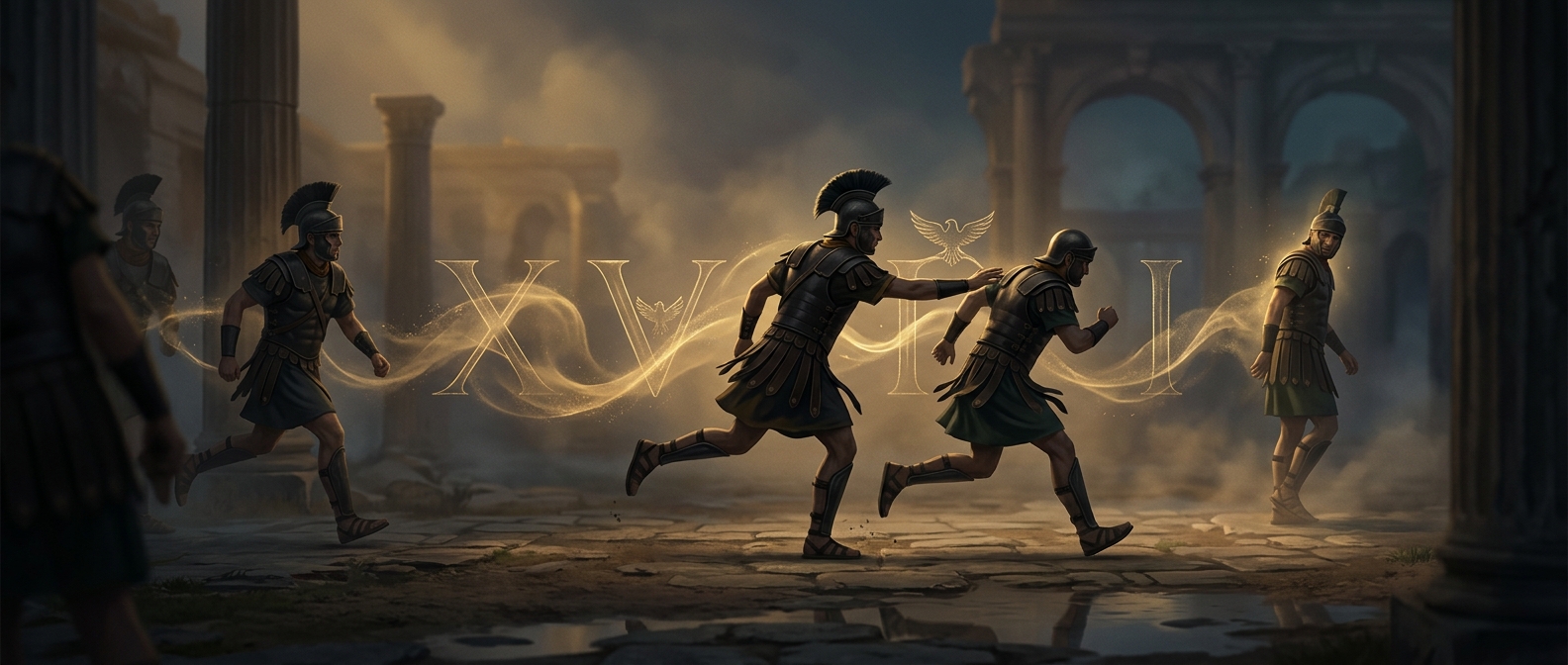
A message carried by touch
In the reported Roman game, the message was not a sentence but a designated status—a condition or role that players had to pass along. Men ran between one another and used a slap as the signal. The next player could then carry that status onward, turning the group into a moving relay.
That made the slap more than a rough greeting: it was the game’s compact communication cue. A spoken message can be missed in a noisy, fast-moving group; a physical signal is immediate and hard to confuse with ordinary conversation. The running kept the exchange active, while each slap marked the moment the status changed hands.
The rule made the group the message
The striking feature is how little equipment the game needed. Its mechanism was built into the players: movement carried the signal from person to person, and the rule gave the contact meaning. The slap itself did not explain the status; everyone had to know the agreed rule for interpreting it.
That distinction matters. This was a playful, physical way to relay a defined condition, not evidence that Roman armies routinely sent operational orders by slapping. The account’s memorable detail is the simple chain it describes: one person runs, makes contact, and another takes up the message—until a status has traveled through the group without anyone needing to stop and speak.