Why alchemy begins with blackness
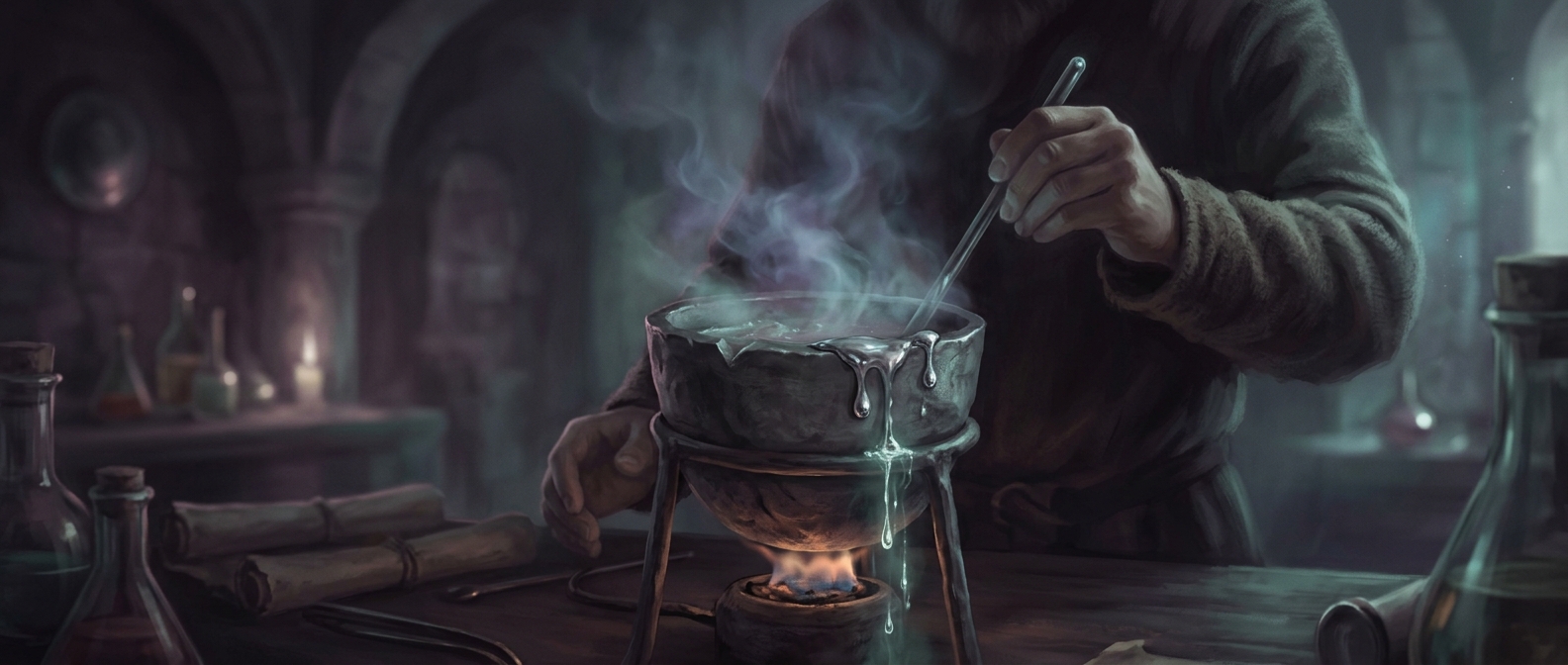
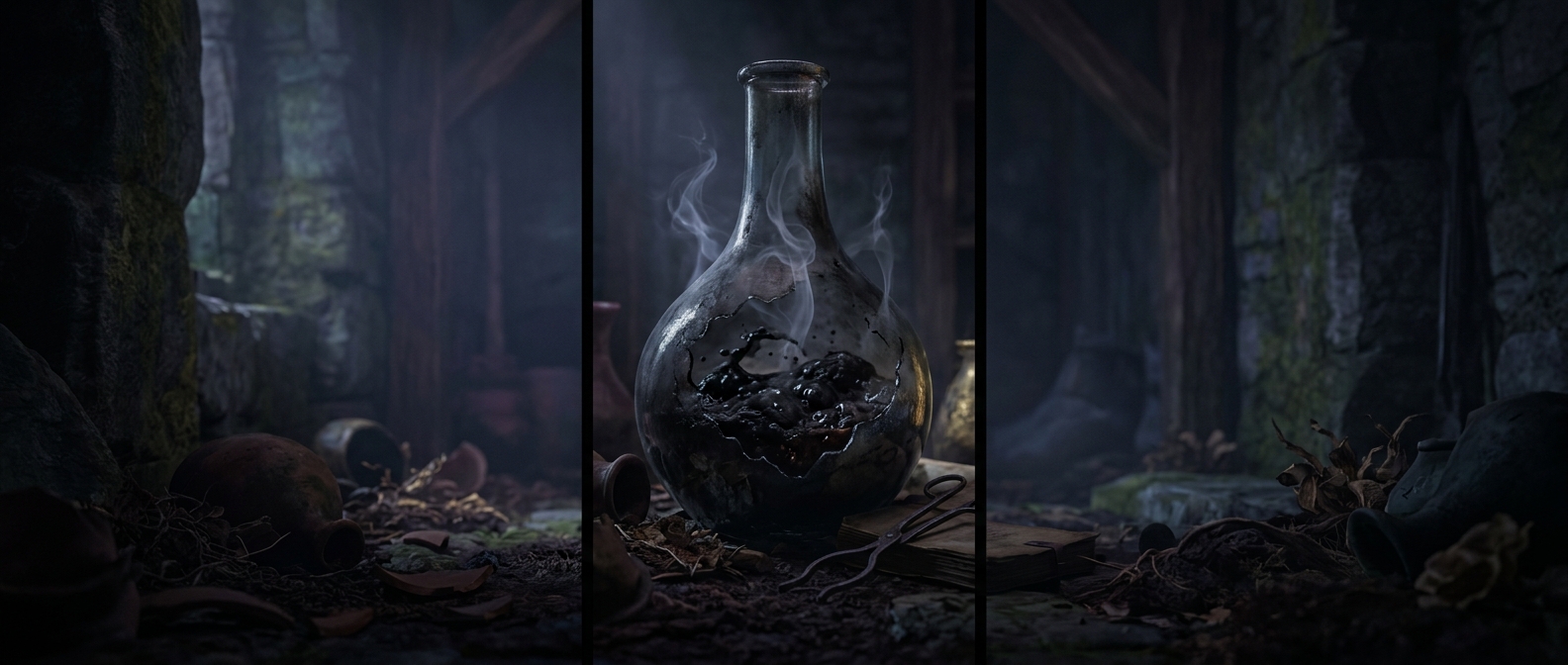
Nigredo means “blackness” in Latin. In alchemical writing, it names a phase in which a material darkens or breaks down—and, by analogy, a person’s familiar sense of self is unsettled. The image is not of instant enlightenment. It is of losing the confidence that the old form can simply be polished into something better.
Putrefaction gives that change its starkest language. In nature, rotting matter loses its recognizable structure; in the symbolic reading, cherished self-images and excuses are made to fall apart. The point is not that a person literally decays, but that transformation starts by facing what has been hidden or denied.
Breakdown as a beginning, not an ending
Alchemy did not have one universal sequence, and writers used its symbols in different ways. But where nigredo appears as part of a larger process, its darkness often marks a necessary first disruption: before something can be remade, its previous form must be loosened. That makes the stage uncomfortable by design. The old order has failed, while a new one has not yet taken shape.
Read this way, nigredo is less a promise of effortless self-improvement than a warning about its cost. Change may require admitting that a familiar identity is incomplete. The blackening matters because it marks the moment when transformation becomes possible—not because breakdown, by itself, is the finished work.