A two-way route for blood
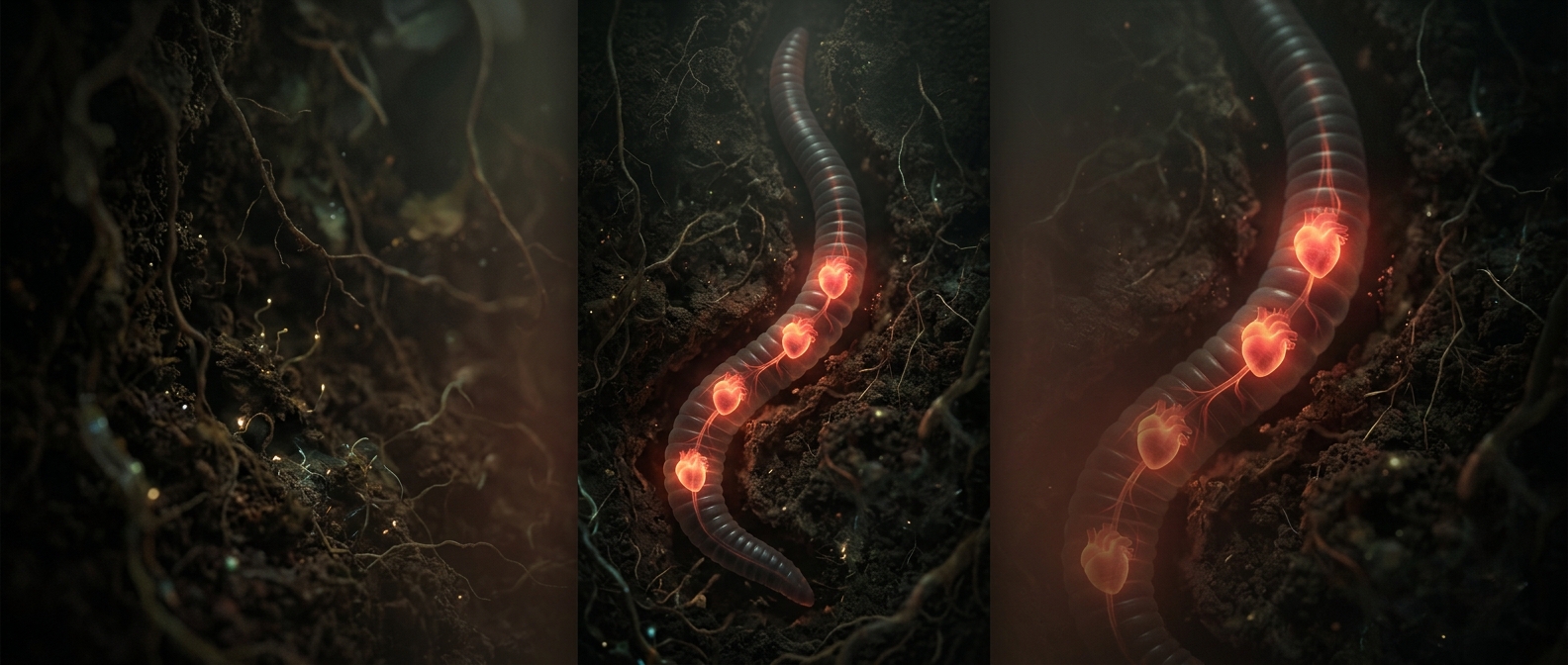
An earthworm’s circulation is a closed loop: blood stays inside vessels rather than bathing organs directly. A long dorsal vessel runs along the worm’s back and moves blood toward the head. The aortic arches link it to a ventral vessel, which carries blood back toward the tail. Their contractions help push blood between these routes and keep it circulating through the body.
The arches sit around the esophagus—the tube that carries food—so their position is a practical one: they can squeeze the major vessels without requiring a separate heart chamber. Together, the vessels form a simple pump-and-pipeline system, not five miniature versions of a human heart.
Why the loop matters
Earthworms take in oxygen through their moist skin. Oxygen passes across the skin into nearby blood, which distributes it through the body; carbon dioxide travels back toward the surface to leave. The blood’s oxygen-carrying pigment, hemoglobin, is dissolved in the blood rather than packed into red blood cells as it is in humans.
That arrangement links the worm’s lifestyle to its anatomy. Its skin must stay moist enough for gas exchange, while the vessel loop carries the absorbed oxygen to tissues well beyond the body surface. The “five hearts” nickname points to the visible pumping action—but the more revealing design is the continuous circuit that connects breathing at the skin with circulation throughout the worm.