Turning a Painting Into a Live-TV Act
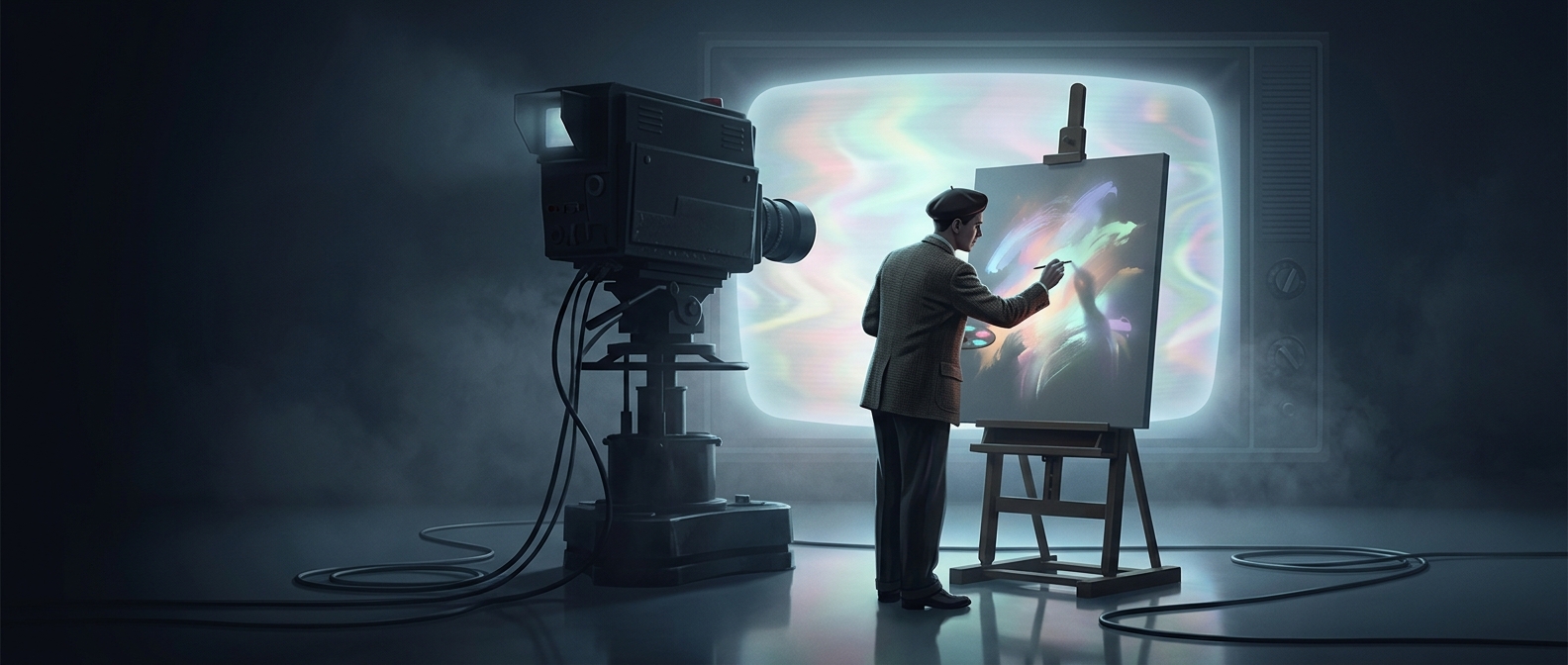
A variety show had to keep viewers watching from one moment to the next, and live television made empty minutes especially awkward: there was no recorded segment ready to roll whenever a performance ended early. A giant board, buckets of paint, and a performer could turn that pause into a spectacle unfolding in real time.
The appeal was not just the finished picture. At a small scale, a brushstroke can be hard to follow from across a room—or through a television screen. On an oversized surface, sweeping motions and splashes became easy to see. The audience could watch the image change, even if the method was less about careful detail than bold, immediate effects.
The Waiting Was Part of the Show
Paint also supplied a built-in delay. Once a design had been made, it needed time to dry; that wait could be folded into the act rather than hidden behind a cut or a set change. The process gave the camera something to show before the final result was ready, and the uncertainty of what the paint would look like as it settled helped hold attention.
This was a practical kind of television-making: inexpensive materials, a large visual payoff, and an activity that could stretch to fit the available airtime. The art mattered, but so did its usefulness as live entertainment. A bucket of paint could keep a studio—and its viewers—occupied while the next part of the show took shape.