The mirror is often a carefully arranged set piece
A real mirror obeys a simple rule: it reflects the camera if the camera sits in the path of the reflected light. Crews avoid that by controlling the geometry. They may place the camera just outside the mirror’s visible angle, then rotate or reposition the mirror so it still catches the actor’s face. The result is a slightly “cheated” reflection—convincing from the audience’s viewpoint, even if it would not work from every angle in the room.
The camera can also sit close behind the actor, lined up so the actor’s body hides it in the reflection. That setup takes precise framing: move the camera too far to one side and it appears in the glass; move it too close to the actor’s line of sight and the reflected gaze looks wrong.
When the angle cannot solve it
For a more flexible shot, the mirror may be an opening in the set rather than a reflective surface. The camera films through that opening while a matching bathroom set, actor, or image is arranged on the other side. Productions can also use partially reflective glass or a separate reflection shot, combining the views in editing. These approaches let the camera capture the performance without appearing where a normal mirror would reveal it.
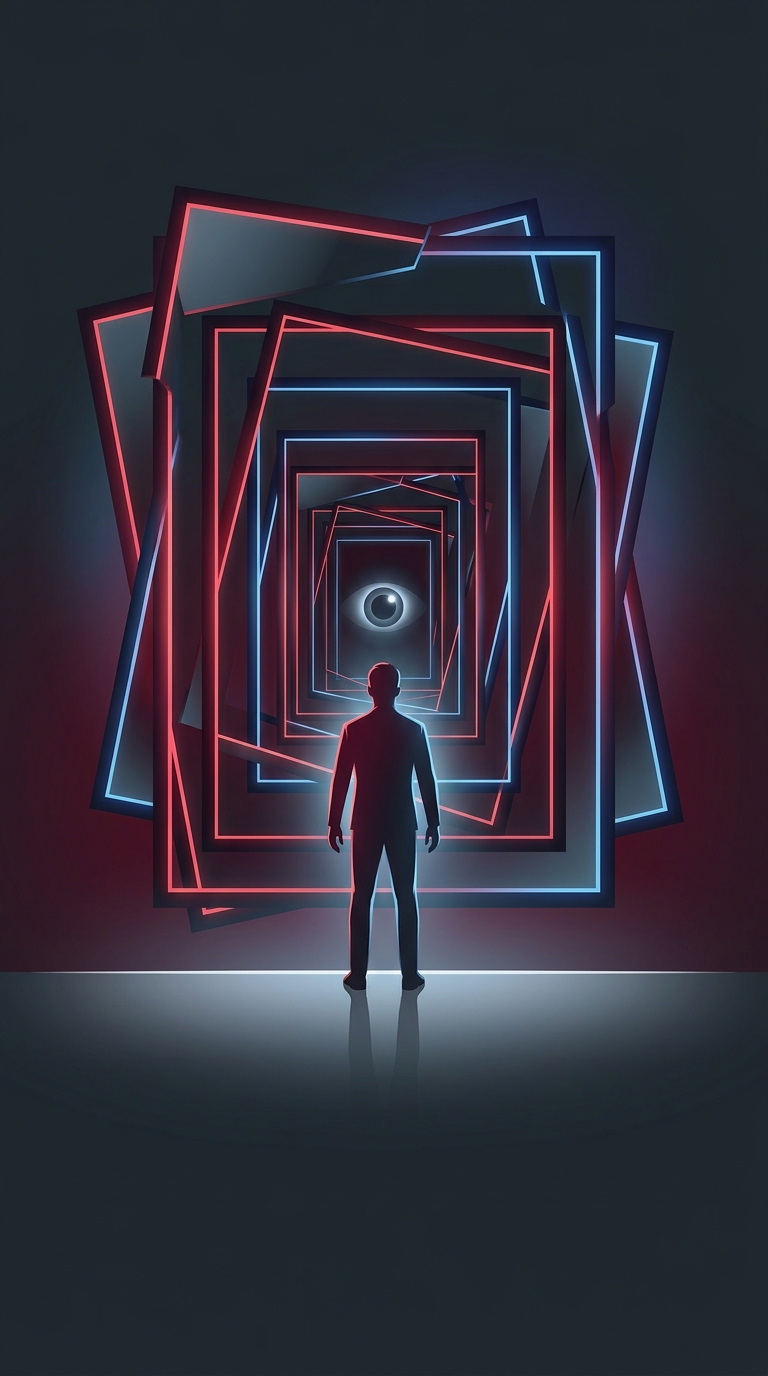
The choice depends on what the scene needs. A quick glance may work with a real mirror and a small adjustment; a moving camera or a long, unobstructed view may call for a built set or a composited reflection. The apparent mirror is less a fixed object than a piece of choreography between actor, camera, and reflected image.