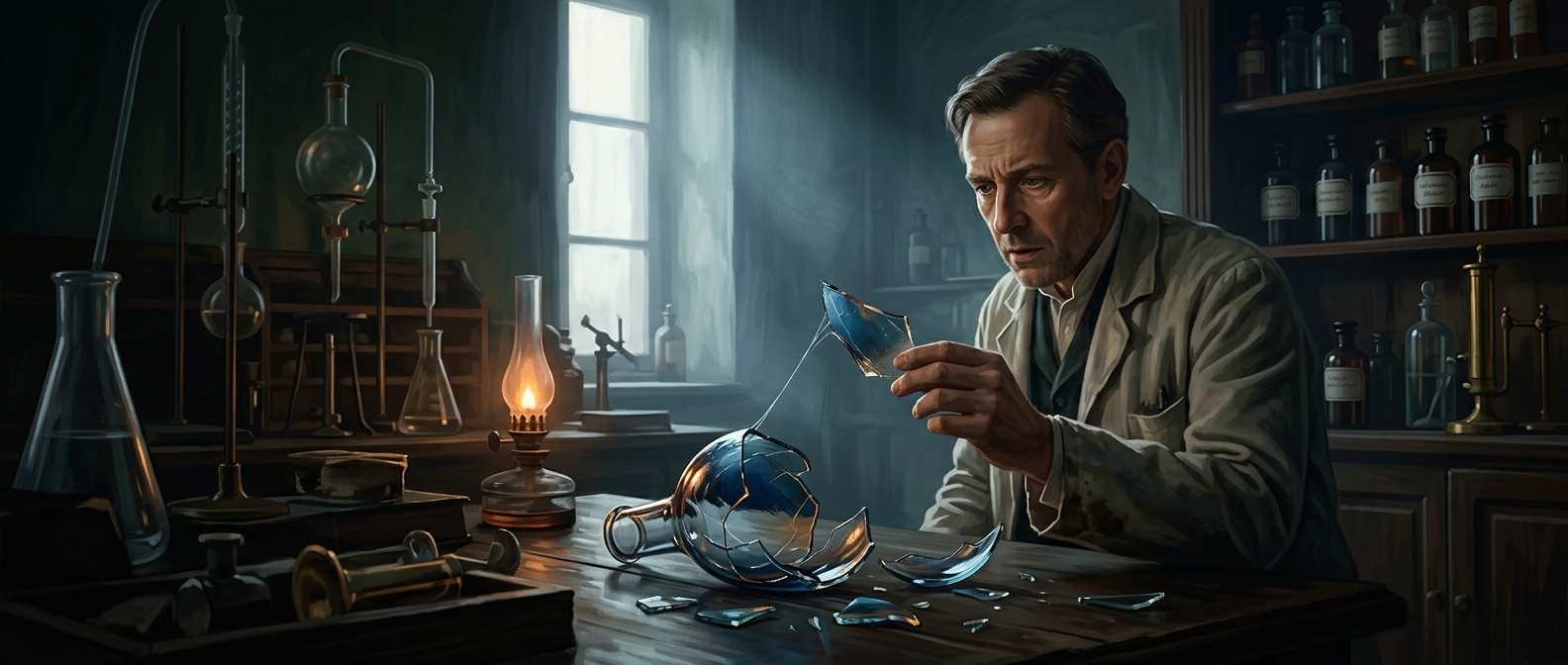
The flask revealed what glass could do after cracking
When chemist Édouard Bénédictus dropped a flask, its glass cracked but did not scatter into loose shards. A thin plastic film left inside had held the pieces together. The important clue was not that the glass had become unbreakable; it was that a layer between glass and the outside world could control what happened when it broke.
A flexible layer changes the failure
A laminated windshield uses two sheets of glass bonded around a plastic interlayer. In a collision, the glass may crack, but the interlayer clings to the fragments and helps keep them in place. Instead of flying inward as sharp pieces, much of the broken glass remains attached to the sheet.
That layer also helps the windshield stay together under impact. It does not make the glass invulnerable or eliminate every injury, but it changes a dangerous failure from a spray of shards into a cracked panel that is more likely to remain a single barrier.
Why the sandwich matters
The design depends on a balance: the glass must remain clear enough for driving, while the plastic must bond firmly enough to retain broken pieces. Laminating the layers turns a brittle material’s weakness—its tendency to shatter—into a more controlled break.
The flask’s lesson was simple and practical: safety did not require preventing every crack. It could come from keeping the cracked glass together between the driver and the road.