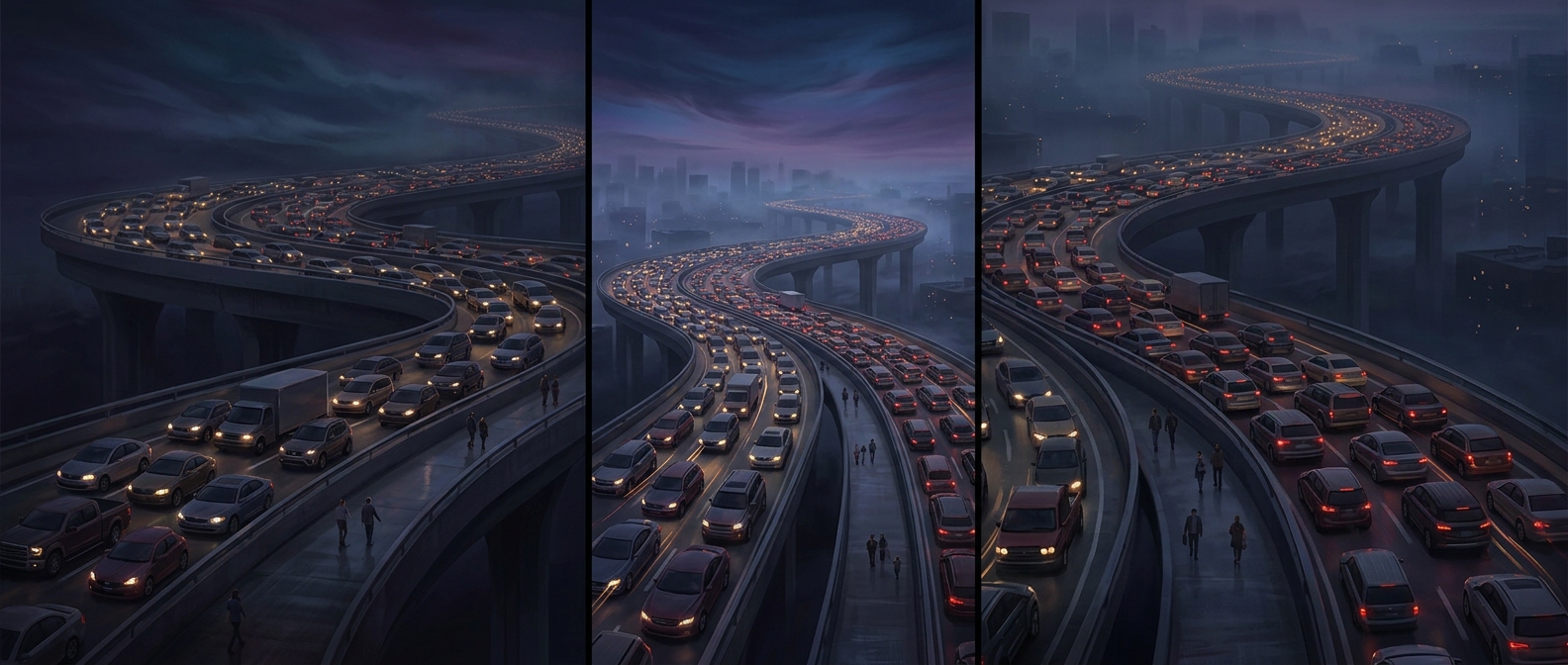
Why the Global Car Fleet Keeps Growing
A car fleet is a stock: the number of vehicles in use at a given time. Factory output is a flow into that stock, while scrapping and permanent retirement are flows out. The total rises whenever arrivals outnumber departures—even if the gap is small compared with the fleet already on the road.
Cars often remain useful long after their first owner replaces them. A vehicle can pass to another household, be repaired, or be sold into a different market. Those handoffs change who owns or uses the car, but they do not remove it from the global count. Retirement happens only when the vehicle is taken out of use for good, often because damage, corrosion, or repair costs make continued use impractical.
A Long Tail of Consequences
This slow turnover means decisions made during a boom in car buying can shape roads and neighborhoods for years. More vehicles require space not only while moving but also at homes, workplaces, shops, and transit hubs. Parking is therefore a land-use issue: streets and lots devoted to storing cars cannot serve other purposes at the same time.
The fleet also changes gradually. Replacing older cars with newer ones takes time because many older vehicles remain in service; a new model’s arrival does not immediately displace the cars already owned. The global count is shaped as much by how slowly vehicles leave service as by how quickly factories build them.