The runner had to earn its weight
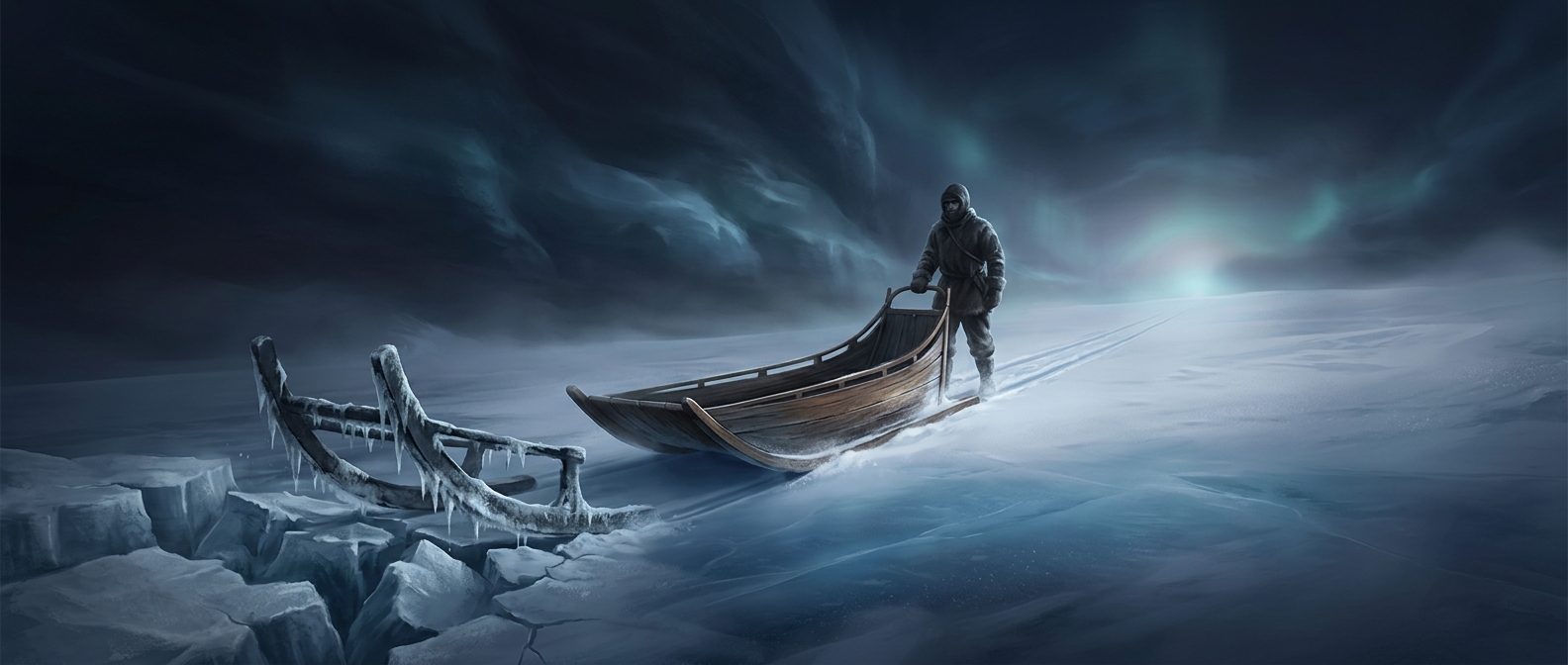
A sled runner is the long strip beneath a sled that supports its load and glides over snow. Metal can make a durable sliding surface, but it also adds weight to the sled before food, equipment, or other supplies are loaded. That extra weight is not passive: the hauling team must move it along with everything else.
On an expedition, the cost accumulates over repeated pulls. A heavier sled presses more firmly into the snow, increasing resistance, and its mass must also be hauled over rises and through uneven terrain. Replacing metal with wood reduced the sled’s dead weight—the weight of the equipment itself rather than the cargo—so more of the team’s effort could go toward carrying supplies forward.
A small saving travels the whole route
The choice was a tradeoff, not a claim that metal could never slide on snow. Runners must support the sled and keep it moving; the useful question was whether the added strength or other advantages of metal justified carrying it. If not, a lighter wooden runner could make the entire loaded sled easier to haul.
That is why a change to a narrow strip beneath the sled mattered: its weight was paid for on every stretch of the journey, while removing it reduced the burden at every pull.