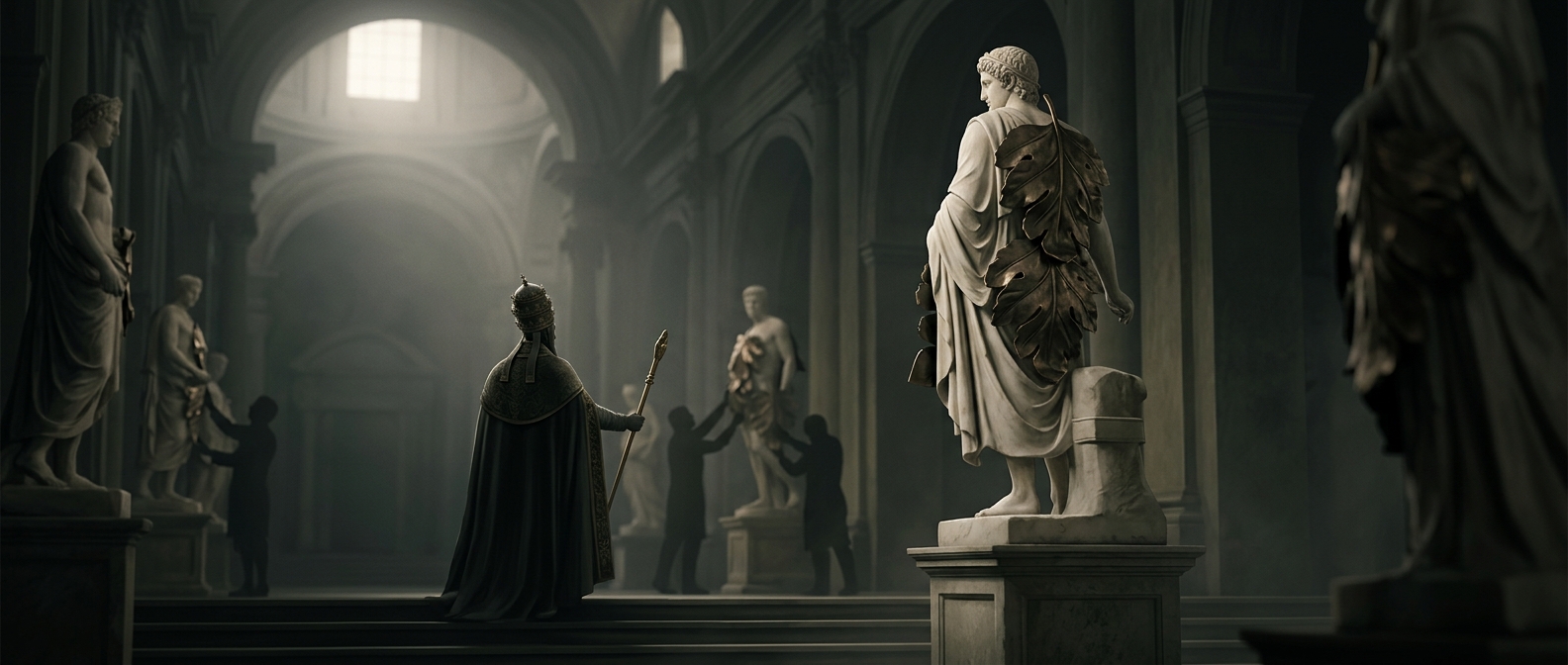
A modesty fix for a museum full of marble
The Vatican’s collections included ancient and later sculptures that showed the nude body, a familiar subject in classical art. But what counted as acceptable display could shift with religious and social attitudes. A conservative pope regarded some of these figures as indecent and ordered a practical change: cover the exposed parts without remaking the statues.
Why plaster, not a chisel
Carving leaves directly into marble would have permanently altered the sculptures. Plaster offered a faster, less destructive alternative. Workers could shape small leaf forms and place them over the areas the pope objected to, creating a visible cover while leaving the original marble beneath it intact.
That distinction mattered in a collection valued for its historic objects. The leaves were not new details carved by the sculptors; they were later additions imposed on works already regarded as worth preserving. Because they could be removed, the intervention could satisfy the order without making the change irreversible.
A change visible at a glance
Applying the same solution to hundreds of statues made the policy a kind of collection-wide edit. It altered how visitors encountered the figures, but also left a clue to changing standards: a plaster cover could sit beside marble as a later layer of interpretation. The statues’ nudity belonged to the original artwork; the fig leaves recorded a later authority’s decision about how that art should be seen.