What “mirroring” means in Human Design
Human Design describes a person’s traits through a bodygraph, a chart that maps patterns drawn from systems such as astrology and the I Ching. In that framework, a Reflector is defined by having every energy center in the chart “open”—meaning none is consistently activated in the same way as a defined center.
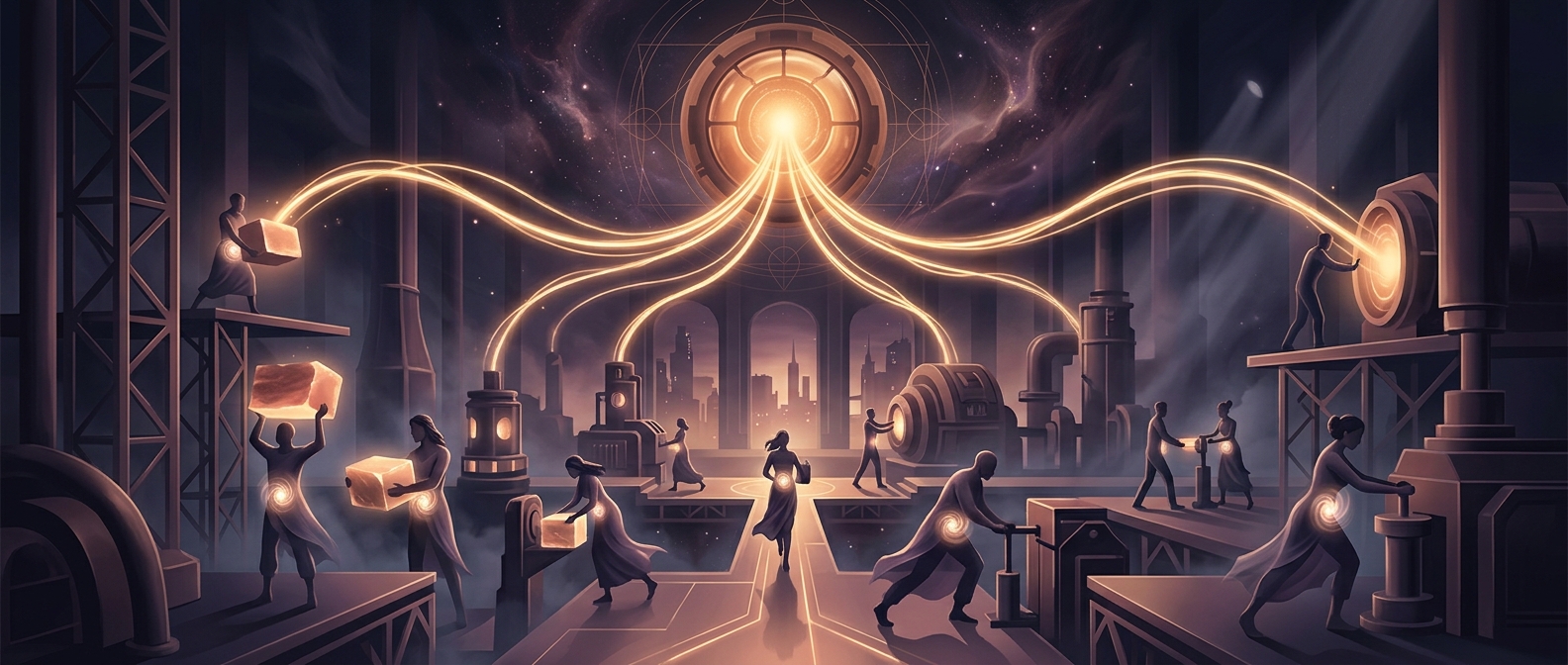
The system interprets that openness as receptivity. Rather than expressing a fixed pattern of energy, Reflectors are said to take in and reflect what is happening around them: the mood of a group, the character of a workplace, or the strain in a household. Calling them a social barometer is a metaphor for this perceived sensitivity, not a claim that they literally measure other people’s energy.
Why the surroundings matter
In this view, a Reflector’s experience can shift with the people and places they spend time in. A lively community might bring out one side of them; a tense or chaotic setting might feel very different. The “disorder” in the caption points to that changing mix—not to a diagnosis or to chaos as a measurable force.
That idea gives the type a particular role in Human Design: Reflectors are understood as revealing something about the condition of a group. If they seem unusually affected by a setting, the system may treat that response as information about the setting itself, rather than as a stable trait belonging only to the individual.
A belief system, not a scientific measurement
These interpretations belong to Human Design’s spiritual framework. They offer followers a way to reflect on how environment and relationships shape experience, but “energy” and “mirroring” here are not established psychological measurements. The practical takeaway within the system is simple: notice how a person feels across different surroundings before treating one moment as their whole nature.