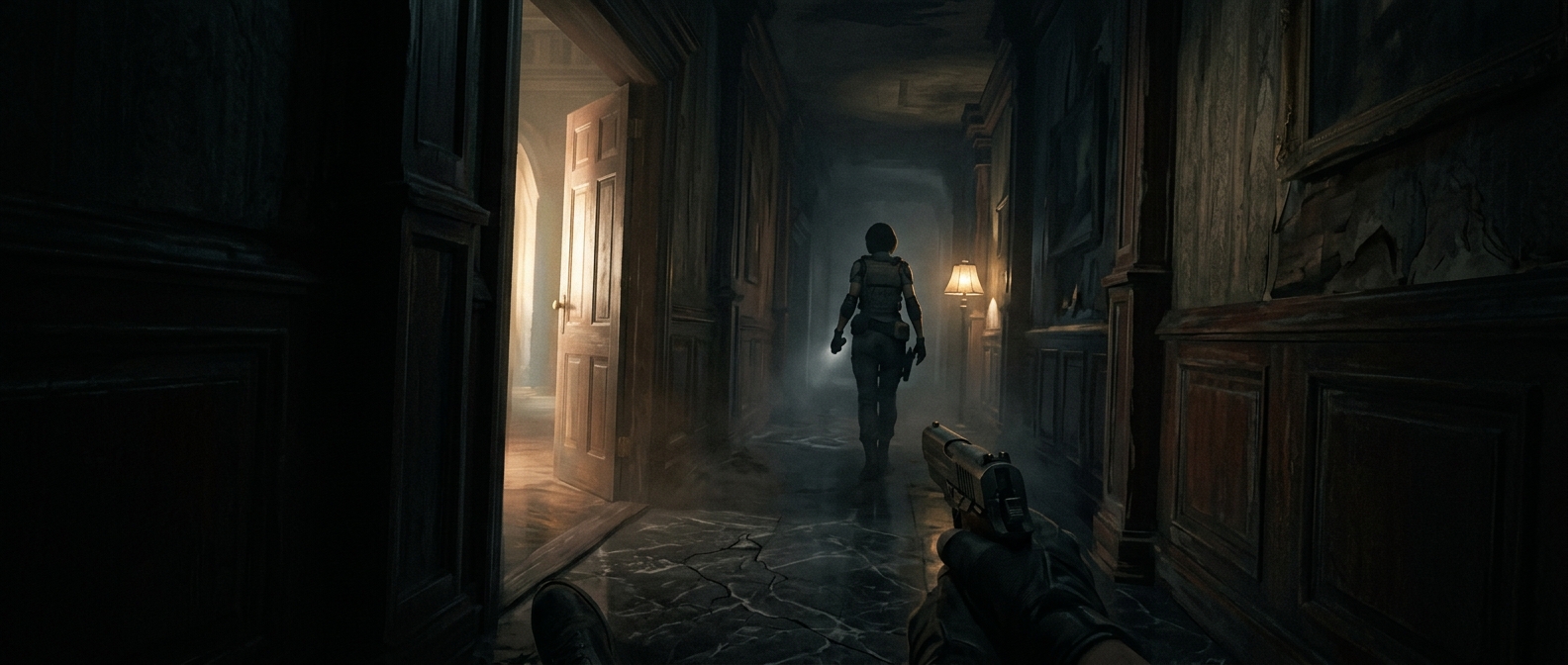
Why Resident Evil abandoned the first-person view
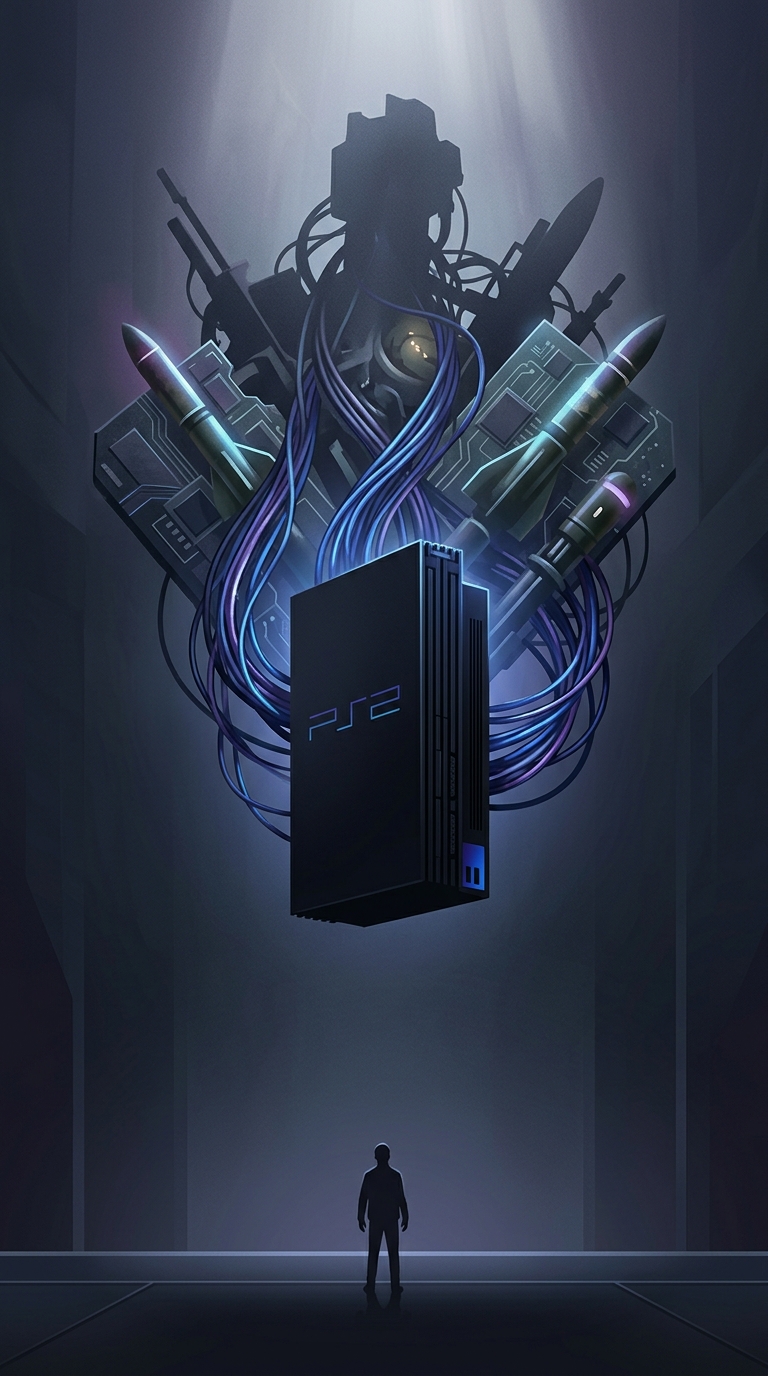
A first-person camera would have made the player’s view move with the character, demanding that the PlayStation draw the surrounding world from that changing perspective. The developers instead built rooms as pre-rendered backgrounds: detailed images prepared in advance rather than generated from scratch as the player moved. The game could then place simpler, moving 3D characters on top of those images.
That tradeoff let the original Resident Evil show richly dressed rooms without asking the console to redraw every wall and object in real time. The cost was that the player could not freely turn the camera. Each room was seen from a chosen, stationary angle, and crossing an invisible boundary could switch to a different view.
A hardware limit became a design tool
Fixed views did more than save processing power. Because players could not see around every corner, a camera could hide part of a hallway or hold a doorway just outside the frame. The screen controlled what was visible—and what might be waiting beyond it—while sudden changes of angle could make familiar spaces feel uncertain.
The arrangement also shaped how movement felt. The character steered relative to the screen rather than to a camera that followed behind, so changing camera angles could make directions harder to judge. That friction was part of the experience: navigating a room demanded attention even when no enemy was present.
The first-person plan fell away, but its replacement helped define the game’s identity. A limitation on what the console could render became a way to make looking around feel risky.