Why Scrabble draws the line at one word
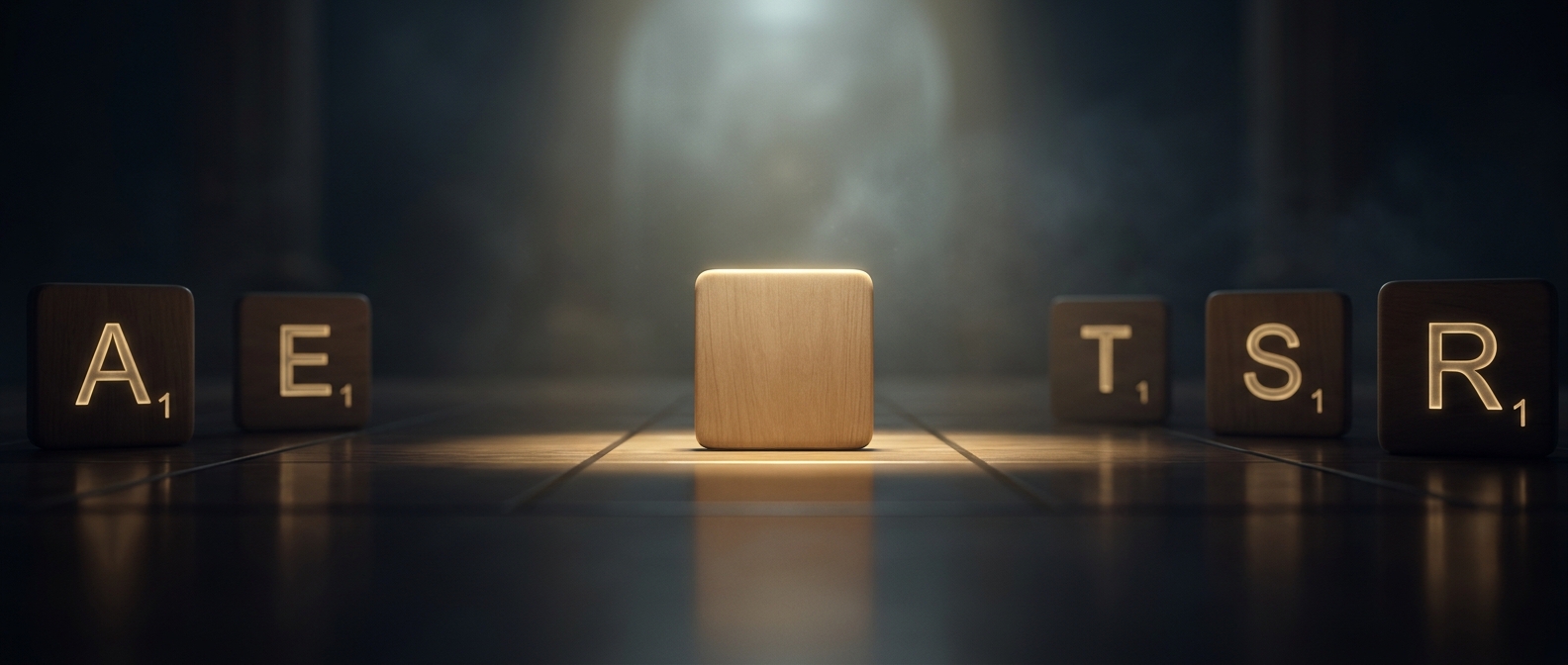
A Scrabble play is built from letter tiles placed in a continuous line across the board. There is no tile for a space or hyphen, and the board has no way to mark punctuation inside a play. So a familiar expression written as two words—or joined with a hyphen—cannot be played as that expression.
The word list decides what counts
The rule is not simply that a word must look ordinary or appear in everyday speech. Players check words against the dictionary or official word list used for their game. A phrase does not become playable just because it is familiar, and a hyphenated form does not qualify in that punctuation-marked form. If a related spelling appears in the word list as one unbroken word, that spelling may be playable.
That distinction matters because spelling can change how a word is treated: a compound written as one word is different, for play, from the same idea written with a space or hyphen. Scrabble tests a specific written form, not just whether players recognize the expression.
One standard keeps the board playable
The restriction also makes judging a turn concrete. Every play can be checked as a sequence of letter tiles, and each newly formed word can be evaluated by the same word list. Players may disagree about whether an expression is “really a word,” but the practical question is narrower: does this exact, uninterrupted spelling qualify under the game’s accepted list?
That is why a phrase can be perfectly understandable and still leave a player searching for another arrangement of letters.