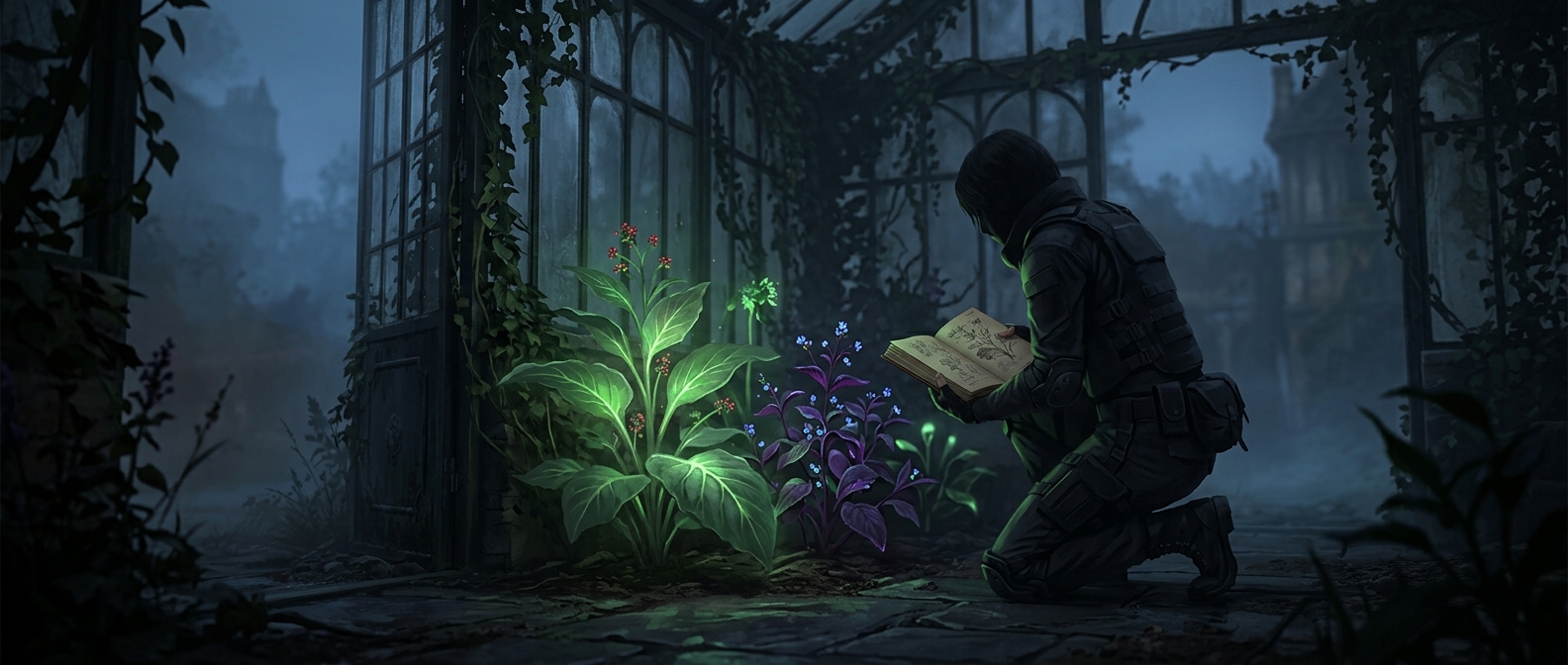
From Familiar Plant to Game Mechanic
A healing herb feels plausible before it does anything supernatural. Players recognize the basic idea that plants can be used as remedies, so a leaf or sprig can stand in for medicine without a lengthy explanation. Resident Evil turns that familiar association into an instantly legible object: something to find, carry, and use when danger has left the character hurt.
That simplicity also suits the series’ pressure-cooker design. Healing items compete for limited inventory space, and using one means deciding whether to recover now or save it for a worse moment. The herb is therefore both a visual cue and a resource-management choice—not merely decoration in a room.
Where the Realism Stops
Traditional remedies are not a single, uniform kind of medicine. Plants contain different substances, and any real effect depends on the plant, how it is prepared, the amount used, and the condition being treated. A plant remedy might help with a particular symptom; it cannot reliably close a severe wound or restore someone after catastrophic injury in seconds.
The games compress that messy reality into a clean rule players can learn quickly. The botanical reference makes the healing item feel familiar; the impossible speed and scale of recovery make it useful as game fiction. That gap is what lets a small green plant carry two meanings at once: a nod to real traditions of herbal care and a lifeline in a monster-filled emergency.