A leaf turns into a movement tool
In Super Mario Bros. 3, the Super Leaf transforms Mario into Raccoon Mario: ears and a striped tail appear, and the tail can swat nearby enemies or blocks. Its most distinctive ability, though, is flight. Mario cannot simply flap upward whenever he wants. He first has to build momentum by running until the power meter fills; then a jump can carry him into the air, where holding the button lets him rise before he begins to descend.
That sequence makes the leaf a small lesson in the game’s movement system. A long, clear stretch of ground is not just scenery—it is the runway Mario needs. A pit beyond it becomes a question of whether he can build enough speed in time.
Why the tail matters over a pit
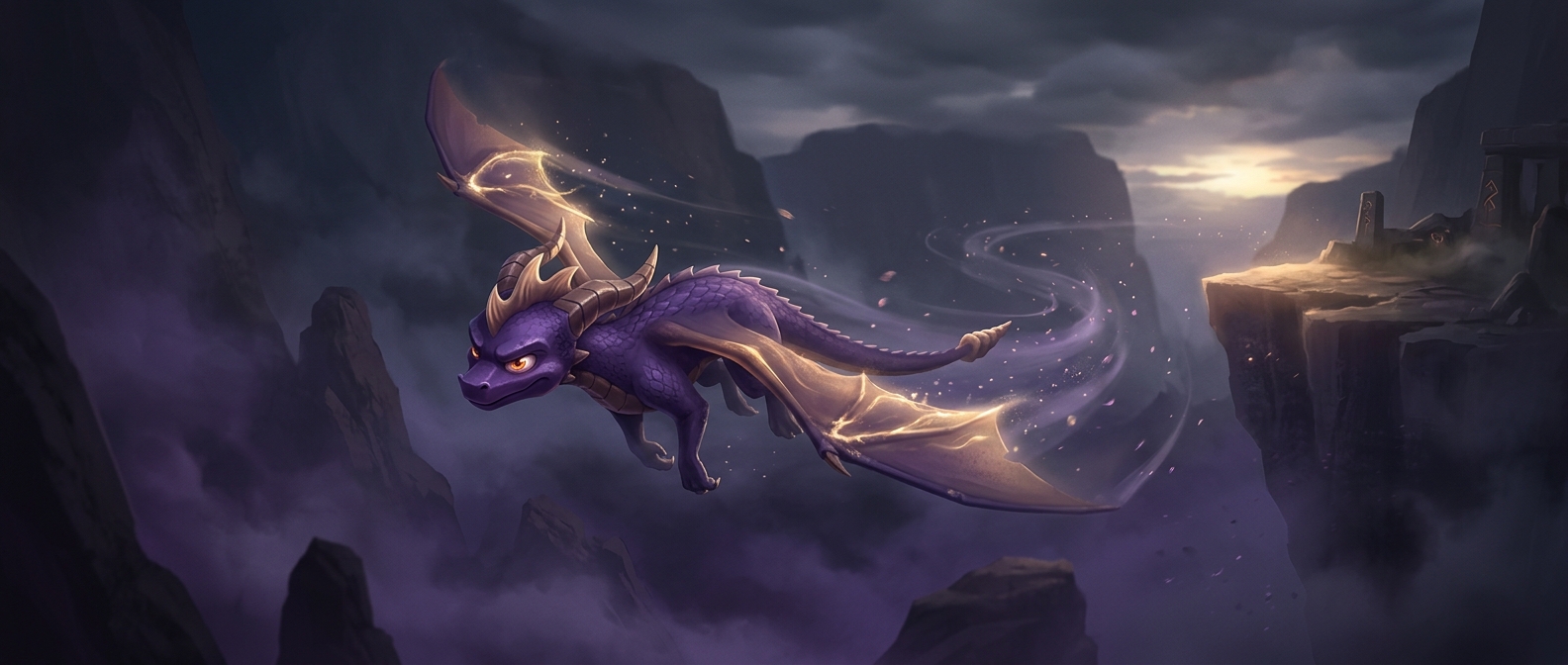
Once airborne, Mario can swing his tail and slow his fall, buying extra time to steer toward a platform. It is not quite a permanent hover: the player must manage his descent and reach safe ground. That distinction gives the power-up its tension. Flight offers a way across gaps, but it rewards planning and timing rather than making every jump effortless.
The costume also makes the ability easy to read. The tail suggests both the attack and the controlled descent, while the running meter signals when flight is available. A simple leaf therefore links appearance, instruction, and play: Mario looks different because he can move differently.