How One Sick Patient Could Set Off a Ward
In older hospital-management simulators, vomiting could behave less like a private symptom and more like a contagious event. A patient became sick, nearby people reacted with nausea, and some of them then vomited too. “Nearby” was the key: the game could turn a local incident into a spreading chain without modeling the detailed biology of infection.
That simple rule made distance matter. A crowded corridor or waiting area put more people within reach of the first patient, increasing the chance that one incident would become several. The resulting mess was visible, immediate feedback that the hospital was struggling to keep its patients and spaces under control.
Why the Janitor Became Part of the Crisis
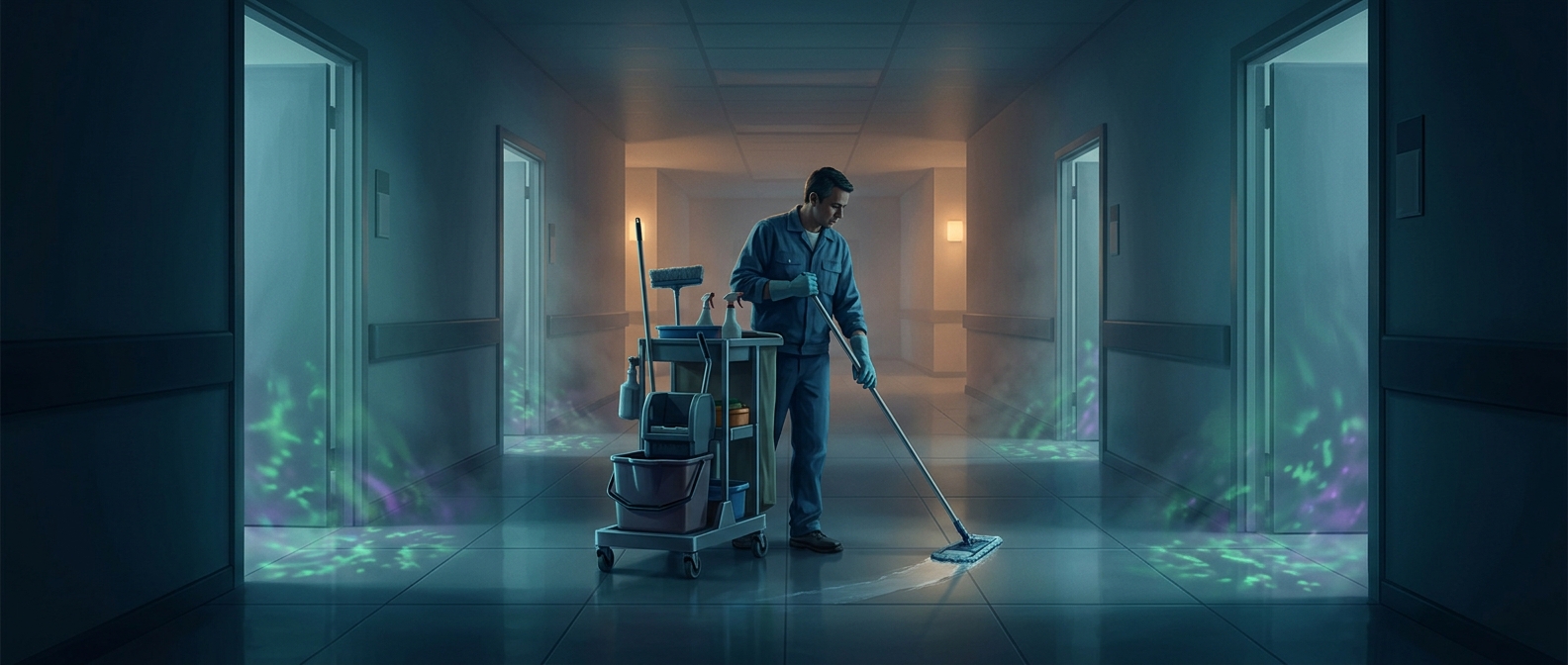
The janitor’s job was not just routine tidying. Once vomiting spread, cleanup became part of the response to an escalating emergency: each new episode created another mess for staff to handle. The player had to notice the cascade and direct attention toward it while the hospital’s other needs continued.
This kind of mechanic compresses a complicated management problem into an understandable loop: a crowded space makes a disturbance spread, and the player must spend staff time restoring order. It can be funny, but it also gives an ordinary support worker a crucial role. When one patient’s nausea can disrupt a whole area, the janitor is not merely cleaning up after the hospital—the janitor is helping it function again.