A Glide Turns a Jump Into a Route-Planning Choice
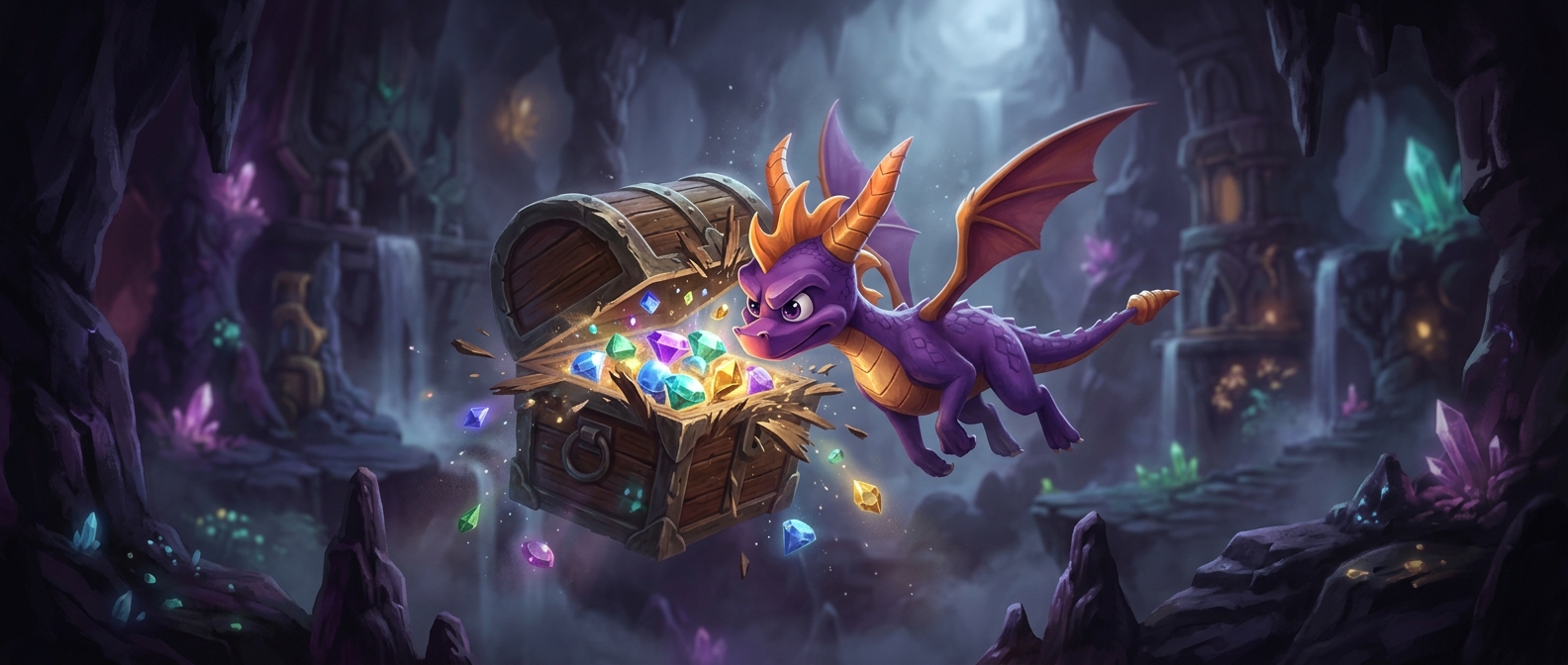
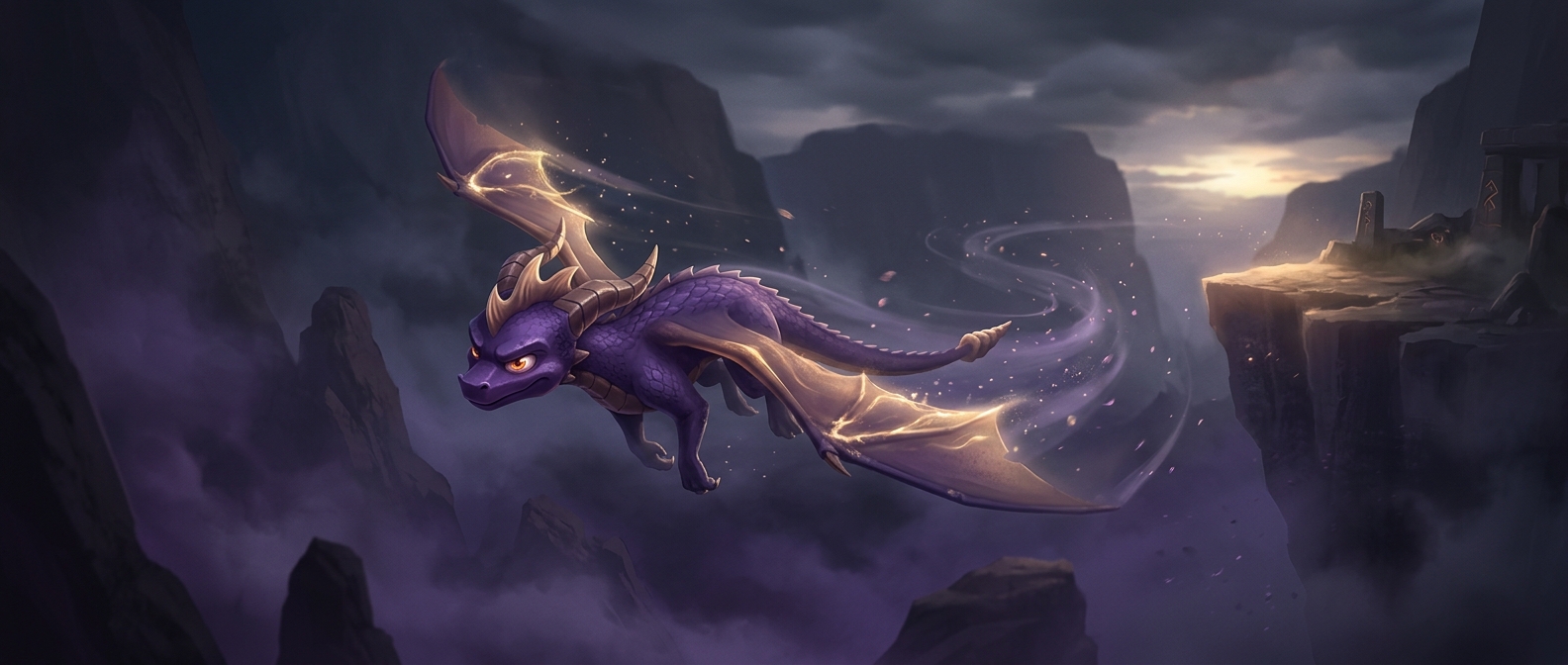
Spyro’s wings are useful only after he has left the ground. The player first has to jump, then open the glide to carry him forward while he gradually loses height. That distinction makes a wide gap a small problem to solve: find a takeoff point, judge the distance, and aim for somewhere Spyro can land.
A glide extends a jump; it does not erase gravity. Spyro cannot simply rise from a standstill and drift over a level, so height matters. A ledge can provide the extra elevation needed to reach a far platform, while a jump from lower ground may leave him short. The player is managing both forward travel and descent.
Why the Limit Matters
If Spyro could launch into unrestricted flight, many gaps and elevated routes would stop being obstacles. Requiring a jump preserves the level’s intended sequence of platforms and makes the approach to a gap part of the challenge. The glide still gives players control in the air, but it does not guarantee a safe arrival.
That creates a memorable rhythm: build speed or find a high edge, jump, then steer toward a landing spot before Spyro runs out of altitude. His wings expand where he can go without making the whole level freely explorable.