How a hard kernel turns into a soft puff
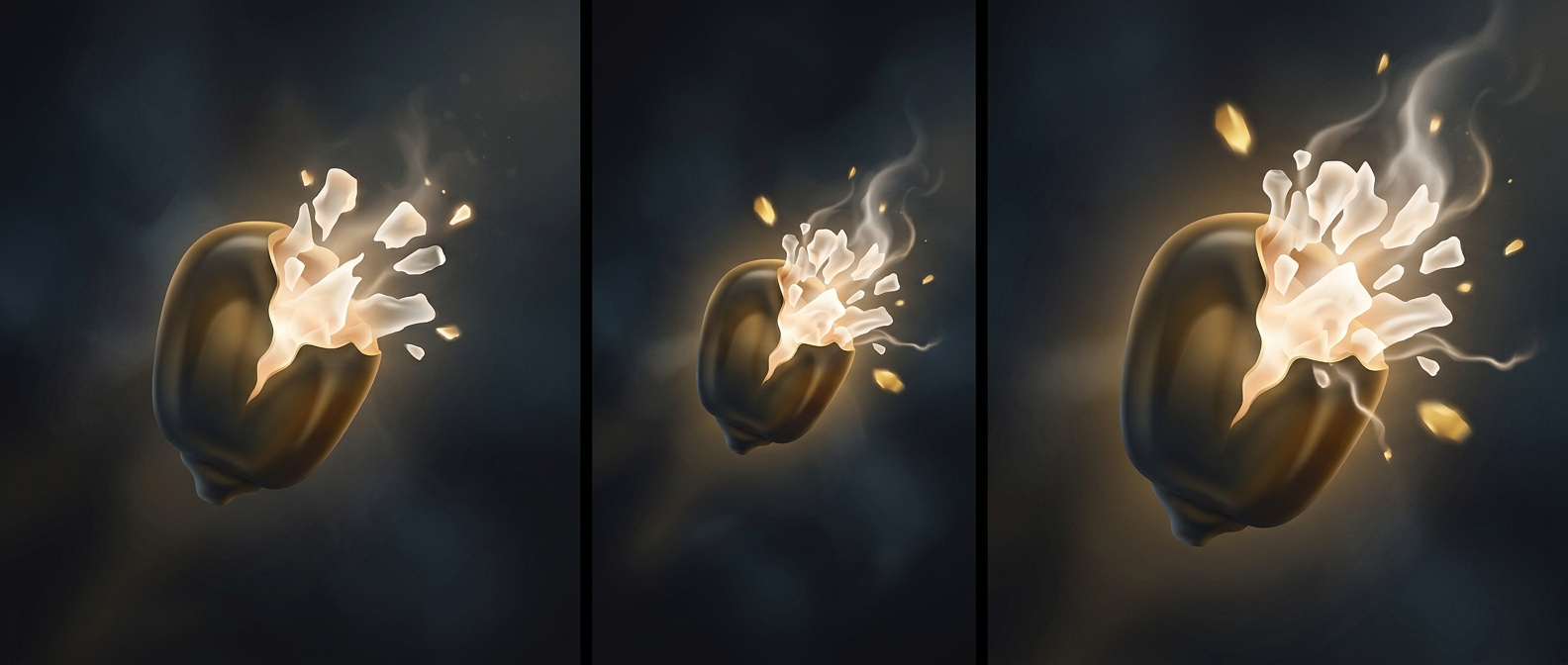
Inside a popcorn kernel, water is held among dense starch. As the kernel heats, that water becomes vapor, while the starch softens into a thick, pliable mass. The tough outer hull keeps the vapor from escaping, so pressure builds inside the kernel.
When the hull finally gives way, the pressure drops abruptly. Some of the hot water vapor expands rapidly, pushing the softened starch outward through the opening. The starch cools and firms almost at once, locking the burst shape in place. The pale, craggy popcorn is therefore not a seed that has simply split open: it is starch that has expanded and set.
Why some kernels stay unpopped
The process depends on a narrow chain of conditions. A damaged hull can leak vapor before enough pressure accumulates; a kernel that has lost too much moisture may not generate enough steam. If heating is uneven, some kernels may never reach the point where their starch softens and their internal pressure can force a rupture.
That is why a small flaw matters so much: the hull must be strong enough to hold pressure, but the kernel must still contain enough water to make the pressure useful. The same shell that keeps a kernel hard is what enables it to burst into something light.