Why the Far Ball Swings Out
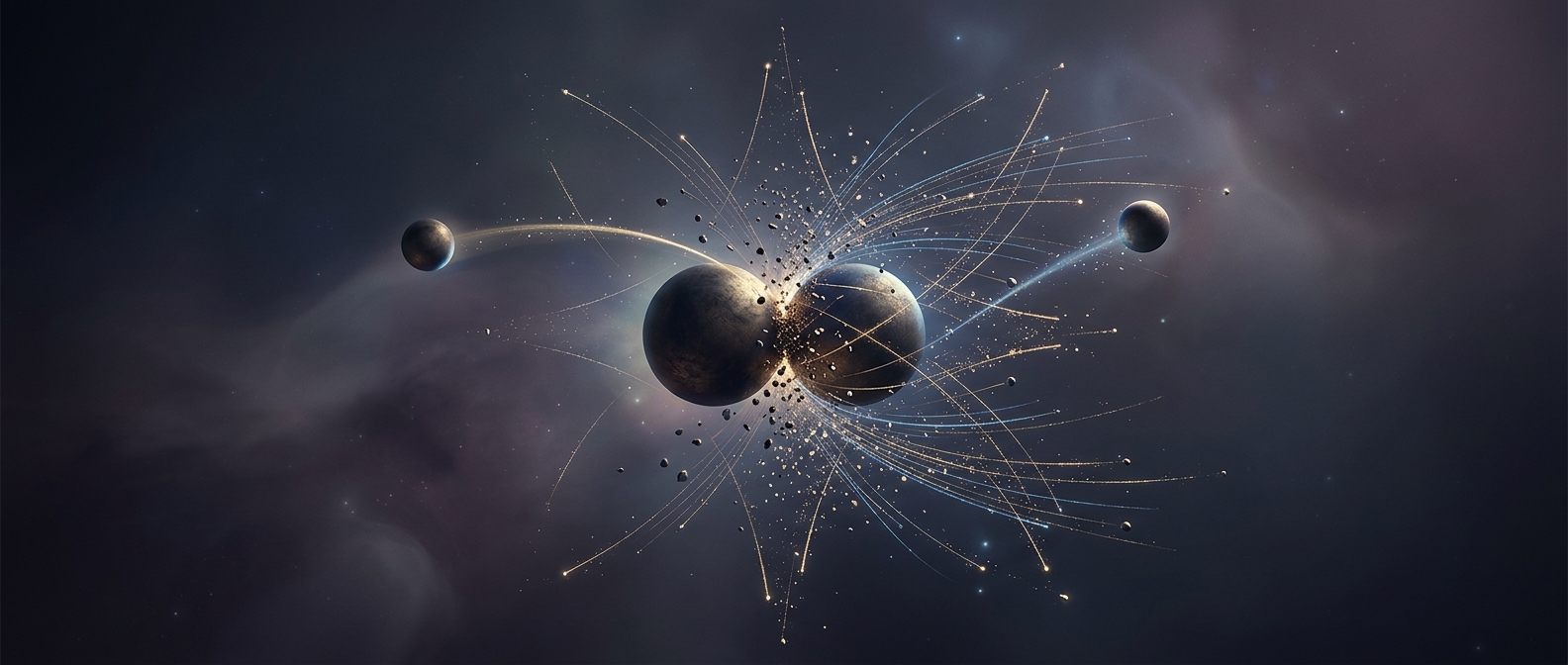
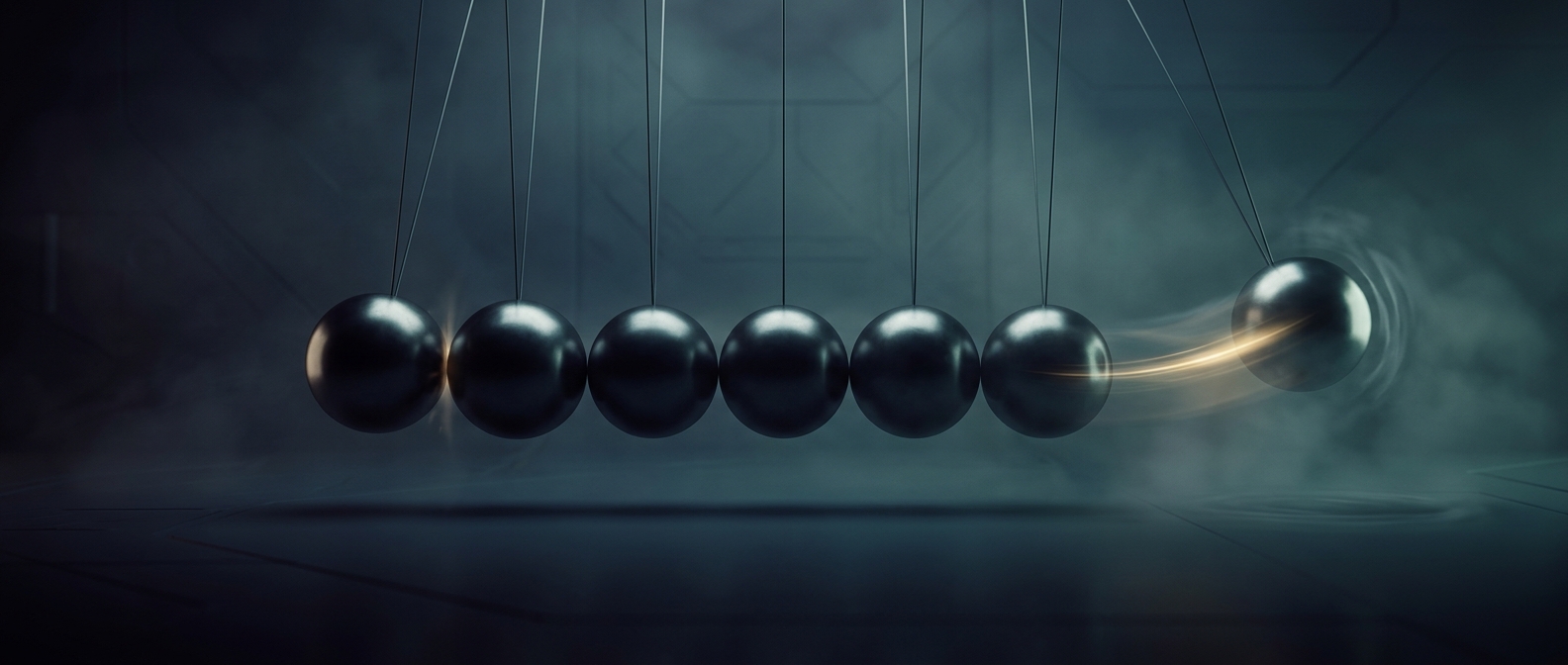
A Newton’s cradle looks like a row of solid balls passing a shove from one end to the other. The key is that the balls have nearly equal mass and collide nearly elastically: they rebound with little energy lost to permanent deformation. Under those conditions, the collision rules leave the far ball with almost the speed of the incoming ball, while the middle balls end up nearly at rest.
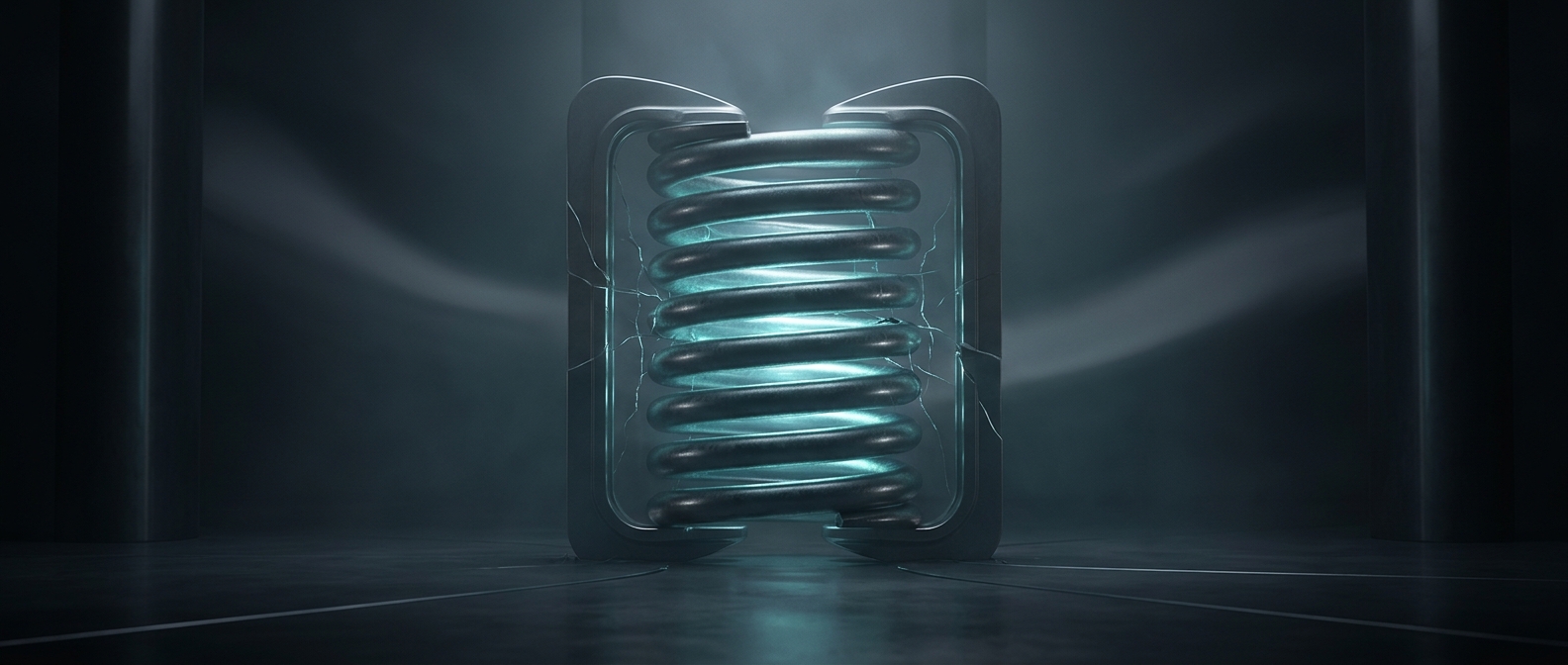
This is not a push traveling through perfectly unyielding spheres. Real metal compresses by a tiny amount at the contact points. That brief deformation creates a force, which accelerates the next ball; as the balls spring back, the force passes down the line.
The Constraints That Shape the Result
Two quantities govern the idealized collision. Momentum—mass multiplied by velocity—must be conserved, as must kinetic energy, the energy of motion. For equal-mass balls, sending one ball in and leaving the others still satisfies both conditions when one ball exits at nearly the incoming speed and the rest remain still. Sending several balls out would generally require a different distribution of speeds and would not match the same incoming momentum and energy in this simple setup.
The cradle’s wires matter, too. They let each ball swing while keeping the row aligned, so the impacts stay close to straight-line collisions. If a ball strikes off-center, the impact can make it spin or sway sideways, diverting some motion from the clean back-and-forth transfer.
Why the Motion Eventually Fades
The ideal result is a useful model, not a perpetual-motion trick. Each impact produces a little sound and heat, while the supports and surrounding air also take energy from the swinging balls. As the swings shrink, those losses become harder to ignore. The familiar click is therefore both the sign of energy passing through the row and a small part of the reason the motion cannot continue forever.