What Happens Inside a Compressed Spring
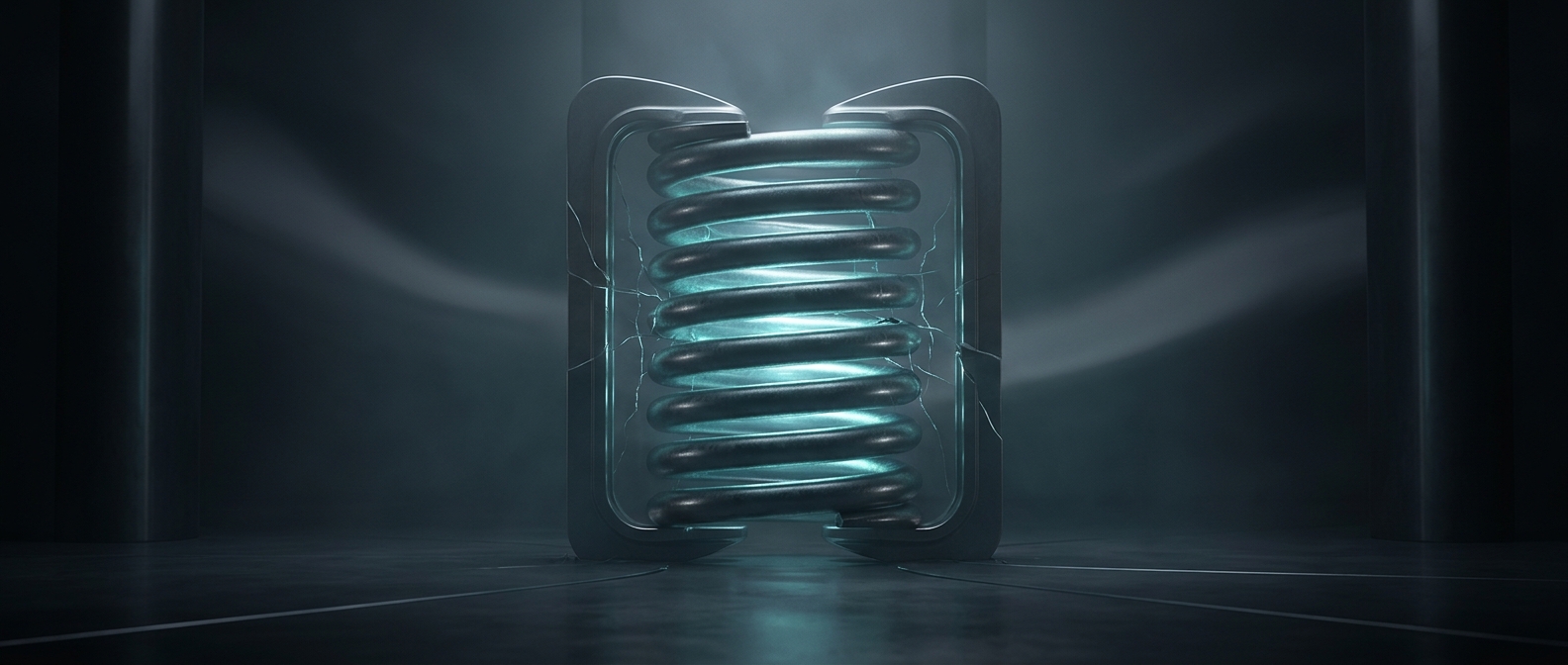
A spring stores energy because its material resists being bent, stretched, or squeezed. In a metal coil, the wire twists slightly as the coils move closer together or farther apart. The atoms in the wire shift from their usual arrangement, creating internal forces that push them back toward the spring’s relaxed shape.
The farther the spring is deformed, the more energy it can store—provided it stays within its elastic range, where it can return to its original shape. Push too hard, and the metal may bend permanently or break instead.
From Stored Energy to Motion
When released, the spring’s internal forces drive it back toward its resting shape. As it moves, stored energy becomes motion: a spring in a launcher can accelerate a toy, while one in a mechanical clock can turn gears. The spring does not create energy; it transfers energy supplied by the person or mechanism that compressed it.
A spring can also pass energy into vibrations. It may overshoot its resting position, compress again, and repeat the motion. Friction and air resistance gradually turn some of that movement into heat, so the bouncing eventually dies away.
Why the Same Spring Can Feel Different
A spring’s resistance depends on its material, thickness, coil geometry, and length. A stiff spring needs more force for the same amount of compression, so it stores more energy at that deformation. This is why a small spring in a toy can launch a light object, while a heavy-duty spring can support substantial loads: the useful effect depends on matching the spring’s stiffness and stored energy to what it must move.