A carcass turns solitary animals into competitors
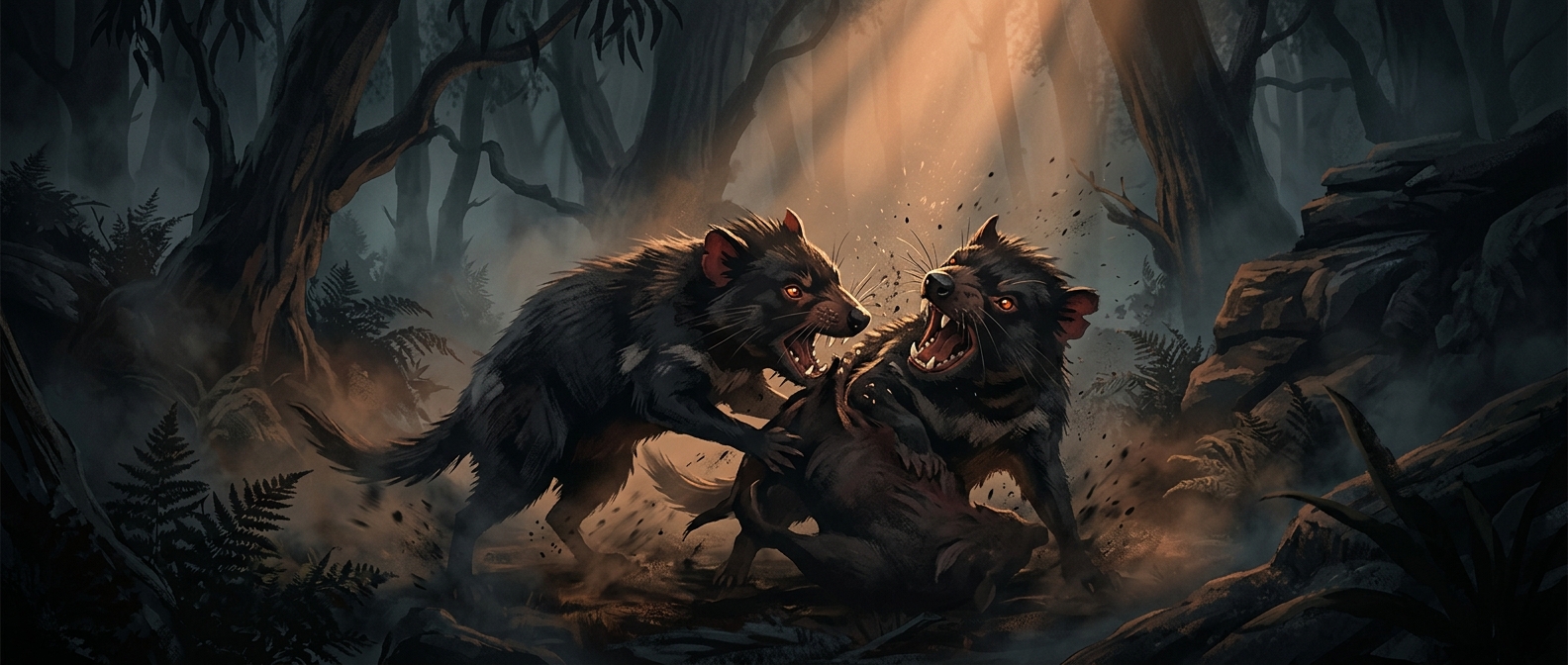
Tasmanian devils usually forage alone, but a large carcass can draw several to the same meal. Unlike food they can spread out or carry away, a carcass is a concentrated, temporary resource: animals have reason to crowd in and feed quickly before it is gone. That brings them into close contact, where a shove or a bite can settle who gets access.
Noise makes the contest legible
The snarls, screeches, and other calls are part of the encounter, not just background racket. Along with raised postures and aggressive movements, they signal willingness to challenge. A devil that yields after another animal’s display can avoid the greater cost of a prolonged fight; one that holds its ground may gain a place at the carcass. Biting—often directed toward the head or face—can make that threat physical when warning signals do not end the dispute.
This is better understood as a contest over the meal than as a formal seating order. The result depends on who is present and who can push whom aside, rather than guaranteeing one devil permanent first choice. The practical effect is visible at dinner: the animals’ noisy confrontation helps determine which mouths reach the meat, and which have to wait or leave.