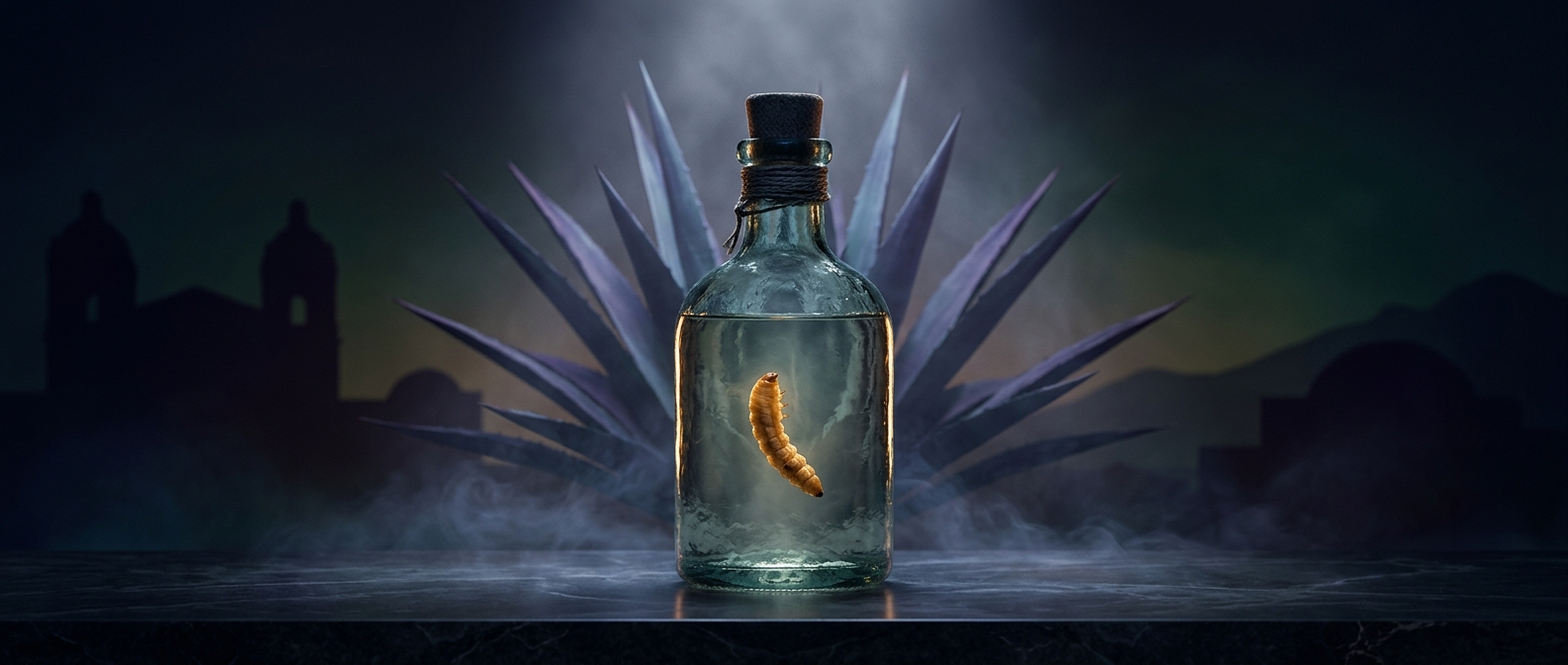
The larva arrives after the mezcal is made
Mezcal begins with the heart of an agave plant, which is cooked, crushed, fermented and distilled. A caterpillar in the bottle is not part of that chain: it does not drive fermentation or distillation, and its presence is not a required step in making the spirit. It is added to the finished product.
That distinction matters because a visible object can look like evidence of a traditional recipe or a special ingredient. Here, it is better understood as packaging—a feature meant to catch the eye and give the bottle a memorable identity.
Why put it where everyone can see it?
A larva floating in clear liquid makes an ordinary bottle instantly recognizable. It also connects the drink to the agave plant, where the caterpillar feeds, giving the product a vivid visual cue even when shoppers know little about how mezcal is made. The cue can suggest authenticity, but it does not measure how carefully the agave was handled or how the spirit was produced.
The practical takeaway is simple: judge the mezcal by the drink, not by the creature preserved in the glass. The larva tells you something about how the bottle is presented—not whether what’s inside is good.