Why Thick Chowder Holds Together
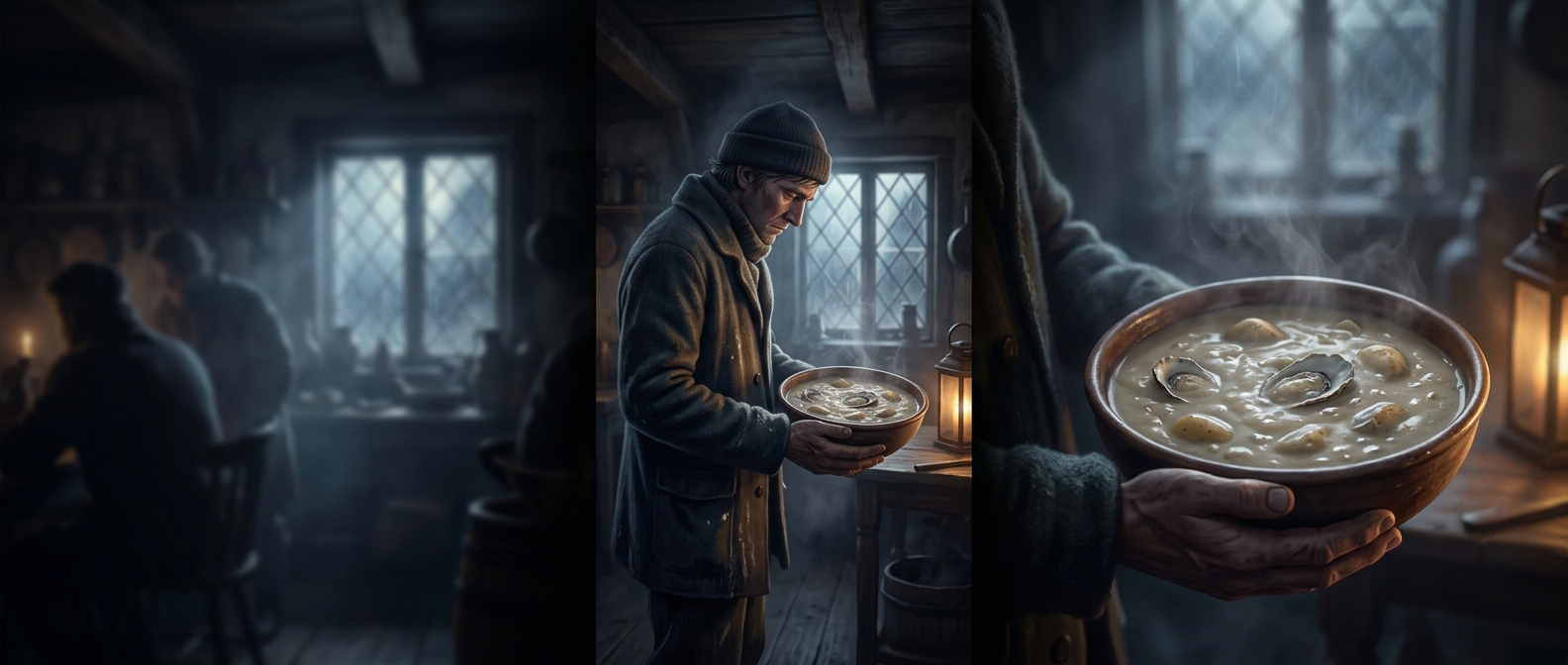
A spoonful of hearty clam chowder is not just liquid made creamy. It is a crowded mixture: broth, softened potatoes, clams, and often other ingredients suspended close together. With less free-flowing liquid between them, each spoonful feels substantial—and the solids give it something to chew.
Potatoes Thicken More Than They Seem
As potatoes cook, some of their starch moves into the surrounding liquid. Starch particles absorb water and swell; as they disperse, they make the liquid more viscous, meaning it flows less readily. Stirring or breaking up some of the potato can release more starch, helping the broth cling to the other ingredients instead of running off them.
Cream can add richness and body, but it is not the only source of thickness. The potatoes help bind the liquid, while the clams contribute the dense, bite-sized pieces that make a spoonful feel especially full. Those are related effects, but not the same one: starch slows the broth’s flow; solid ingredients make each bite more crowded.
The Texture Comes From Both
That combination explains why chowder can seem almost chewable without being a solid mass. Its liquid has been thickened, and its ingredients occupy much of the space in each spoonful. The practical test is simple: the broth stays with the clams and potatoes long enough for the whole mixture—not just the liquid—to arrive together on the spoon.