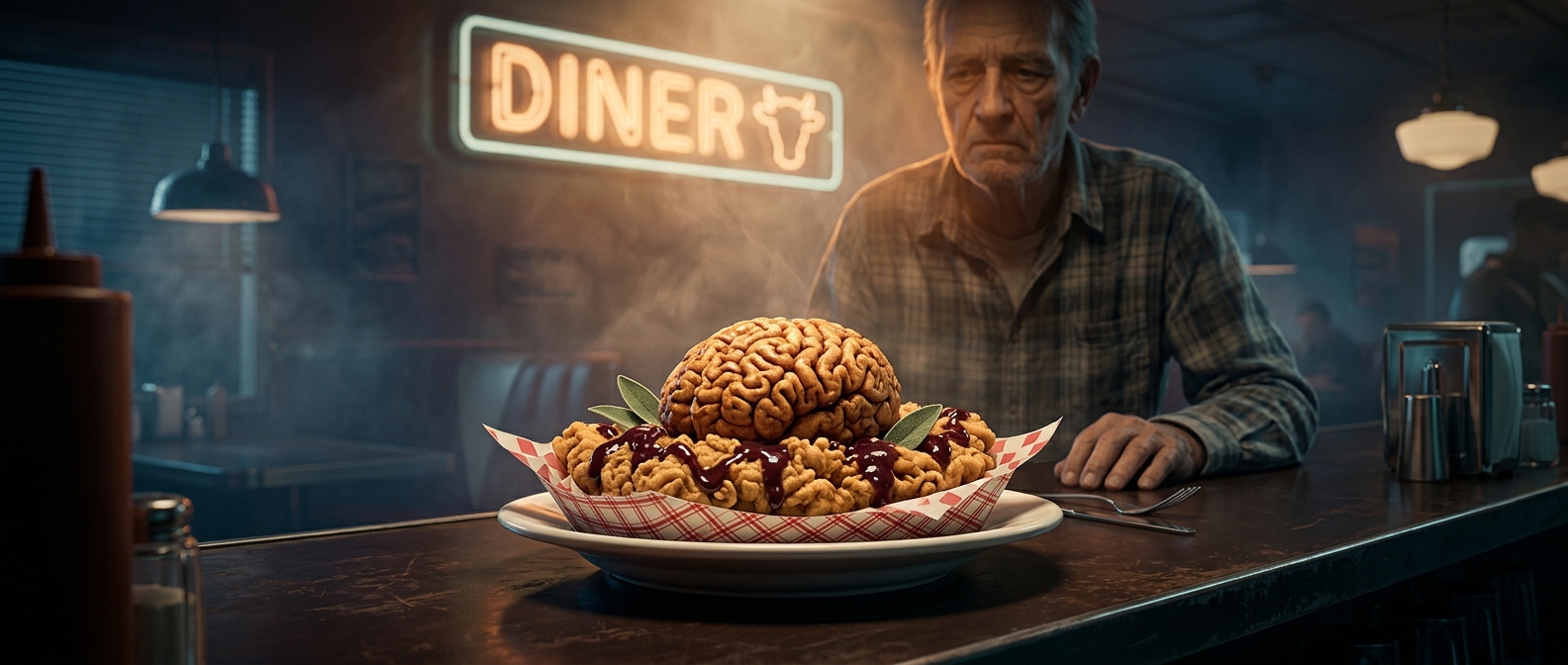
Why a Brain Needs a Crisp Coating
Cow brains are not muscle meat. They are soft, delicate tissue with a high water content and plenty of fat, so they can break apart more easily than a firm cut of beef. Flattening them creates pieces thin enough to cook quickly; batter gives those pieces a protective outer layer that firms up in hot oil.
As the coating browns, heat also sets proteins in the brain. The result is a contrast the bun can contain: a crisp exterior around a tender, soft center. The bun does practical work, too, keeping the fragile filling together for eating by hand.
A Hamburger’s Shape, a Different Texture
The familiar bun-and-fried-filling format makes the sandwich look like an ordinary burger, but its texture depends on a different cooking problem. A ground-beef patty can hold its shape under direct heat. Brain tissue is fragile, so the batter and quick frying are central to making it manageable as a sandwich.
That contrast is the point: the bun supplies a recognizable structure, while the filling changes what each bite feels like.