A town shaped by a mountain and a military port
Whittier’s compact layout makes sense once you picture its setting: a small harbor pressed between steep mountains and the water of Prince William Sound. There is little room to spread out, and the coastal weather can make ordinary trips outdoors unpleasant. A large, connected building offered residents a practical way to keep daily services close at hand.
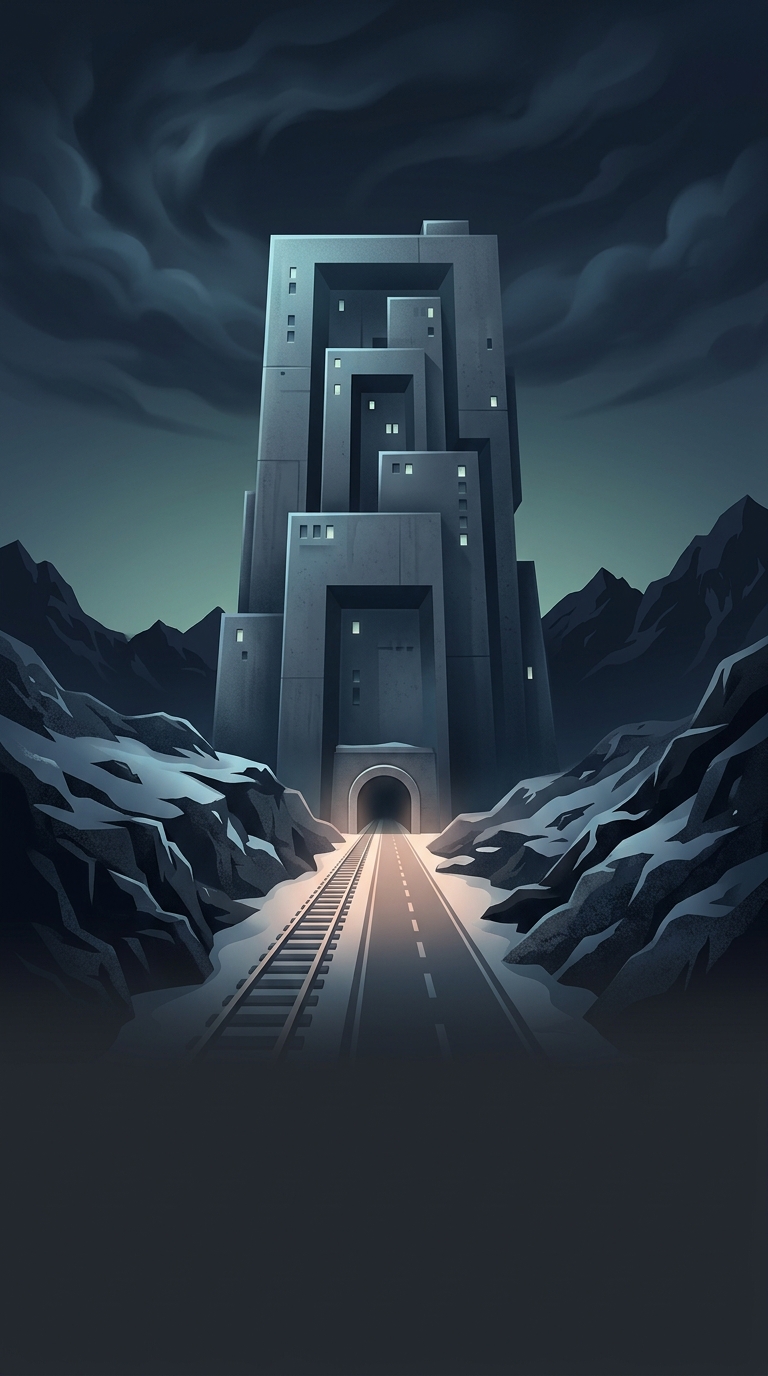
The building now known as Begich Towers was built in the 1950s as part of Whittier’s role as a military port. Its original purpose was to house Army personnel and support the operation of a strategically useful harbor. After the military presence receded, the structure became a place for civilian residents and local services, turning a wartime-era plan for concentrated living into the town’s everyday arrangement.
The tunnel sets the town’s timetable
Whittier’s land connection is also a product of its geography. The Anton Anderson Memorial Tunnel cuts through the mountain between the town and the road network outside. It carries both vehicles and trains, but its single lane cannot accommodate opposing traffic at once. Traffic is therefore scheduled in alternating directions, and the tunnel shuts overnight for maintenance and to allow rail operations.
That arrangement affects more than the drive. Supplies, visitors, and residents’ trips must fit the tunnel’s operating schedule, so Whittier is connected to the rest of Alaska without being continuously open to road traffic. The town’s most striking feature is not simply that many people share one building: it is that the building and the tunnel together make a remote harbor community workable in a place where both land and weather impose hard limits.