A wall made practice possible
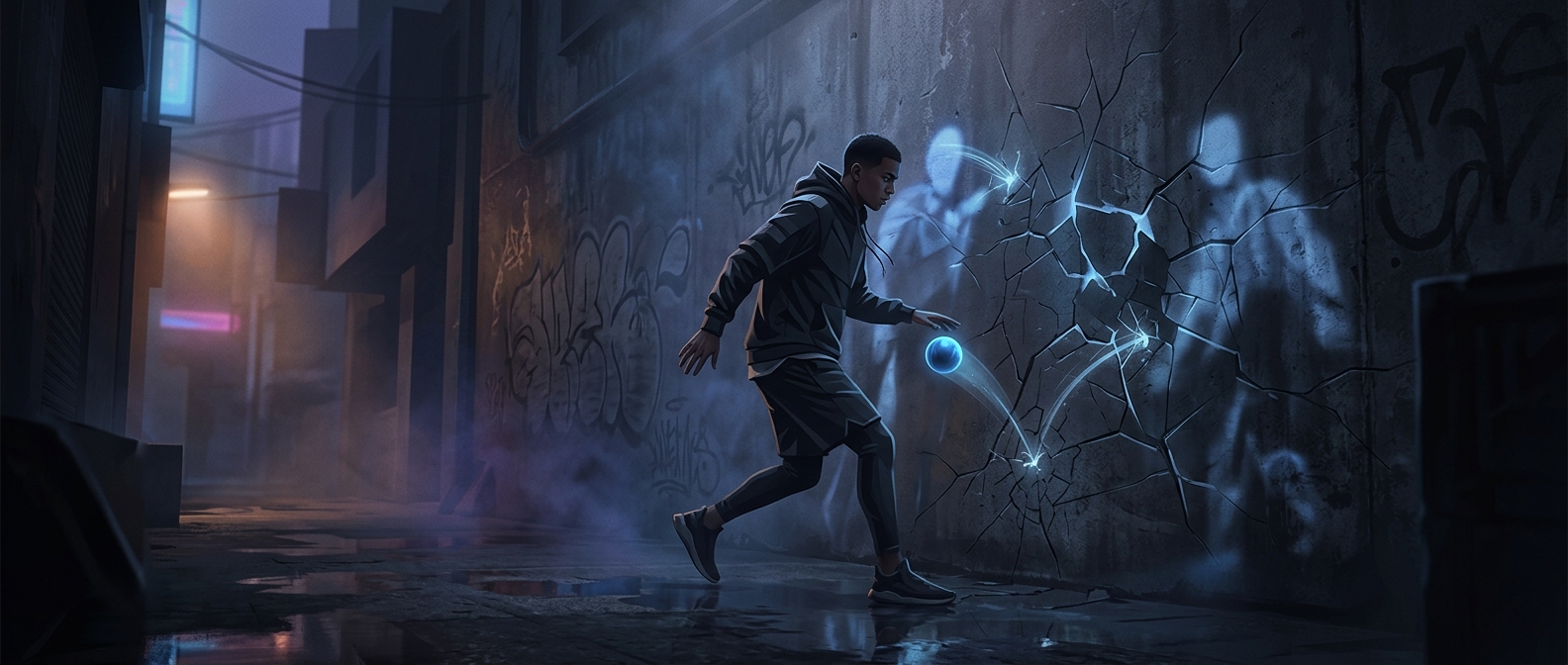
A wall solved the hardest problem of playing tennis alone: there was no one to send the ball back. Hit it firmly, and it returned; hit it at a shallow angle, and it came back across the ground. The player could keep a rally going without a court, a net, or a partner—and could start or stop whenever space allowed.
The rebound became the opponent
Unlike a person, a wall never guessed where the ball was going. The challenge was to read the rebound and get into position before the next shot. Distance, aim, and force all mattered: a ball struck too hard could return before a child was ready, while a poorly aimed one might veer away or leave the playable area.
That made the wall a simple but demanding teacher. Repeated rallies rewarded steady timing and controlled strokes; changing the angle or pace made the ball less predictable. Players could also invent informal goals—keeping a rally alive or aiming for a particular patch of wall—without needing an official court or a full set of rules.
A game shaped by its surroundings
The surface set the limits. A broad, clear wall gave players room to aim; a narrow one demanded tighter control. Nearby windows, doors, pedestrians, and traffic were not just scenery but hazards that shaped how hard or far a ball could be hit. The game’s freedom came with a constant calculation: make the next rebound playable without sending the ball somewhere it did not belong.