How a desert caravan town became a place of learning
At a trans-Saharan stop, travelers carried more than goods. Routes linking North and West Africa also moved books, ideas, and religious learning. Over generations, manuscripts gathered in Mauritania’s historic towns, where families kept them as inherited collections rather than as holdings of a single national institution. Their subjects—from poetry to mathematics—show that written scholarship served both cultural and practical interests.
That history helps explain why the books are there: a busy meeting point could become a center where texts were brought, read, copied, and passed down. The libraries’ family-run character is part of the preservation story, too. Care has depended on custodians maintaining collections in the places where they have long been held.
Why shifting sand matters to paper
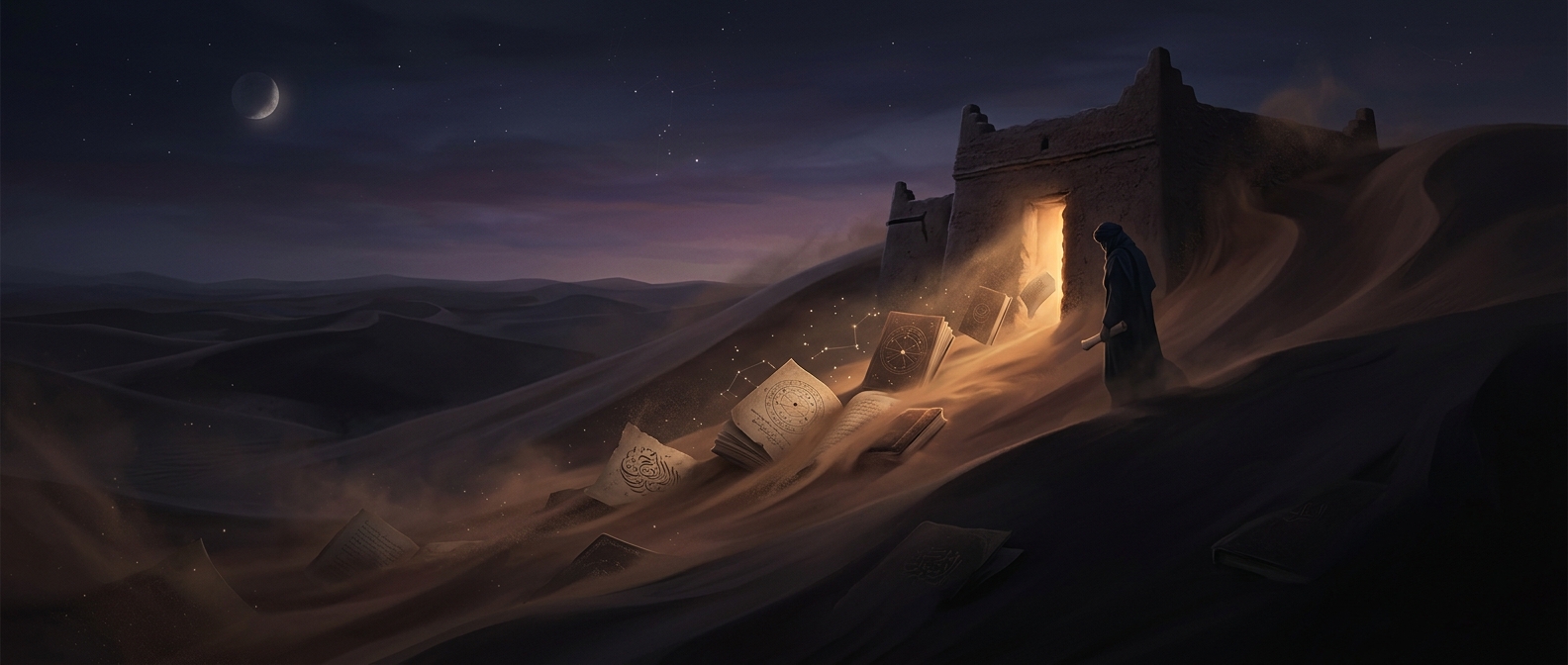
Sand does not need to bury a library outright to put its books at risk. As it advances around a settlement, it can make buildings harder to reach and maintain, while desert conditions expose fragile paper to dust and environmental stress. Manuscripts can be damaged by repeated handling or by unsuitable storage as families try to protect them from those pressures.
The threat is therefore both physical and cultural: losing a collection would mean losing not just old pages, but evidence of the scholarship and everyday interests that circulated along the caravan routes. A book preserved in a family library can connect a remote desert town to a much wider history of exchange.