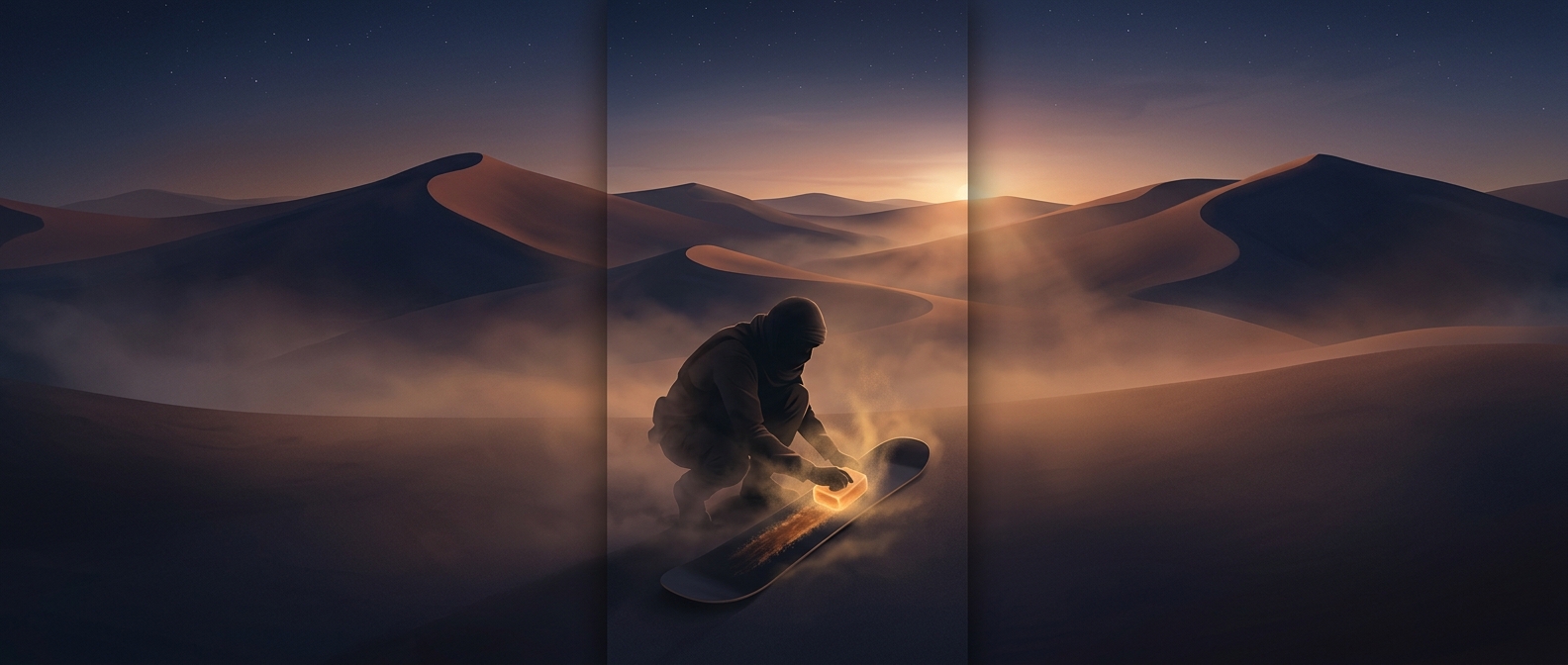
Why a Sandboard Needs a Fresh Coat
A sandboard does not glide over a smooth surface. Its base presses against countless grains, which shift, scrape, and catch as the board moves. That contact creates drag—the force resisting the board’s downhill motion—and can slow a rider even on a steep dune.
Wax leaves a thin, slick layer on the board’s underside. The grains still move against the base, but the coating helps them slide past it more easily instead of gripping the material. The difference can be felt in how readily the board starts moving and carries speed across the slope.
Why Riders Reapply It
A run wears the coating away: sand rubs across the base, and grains can cling to it. Once the surface loses its slickness, the board may feel sluggish. Rewaxing restores that layer for the next descent, so preparation is part of the repeated rhythm of riding—not a one-time adjustment.
Sand also makes the board’s base a working surface rather than a protected underside. Keeping it coated helps manage friction, but it does not eliminate the rough contact with the dune. The practical payoff is immediate: a rider who pauses to wax can get a cleaner, faster slide when the board tips downhill again.