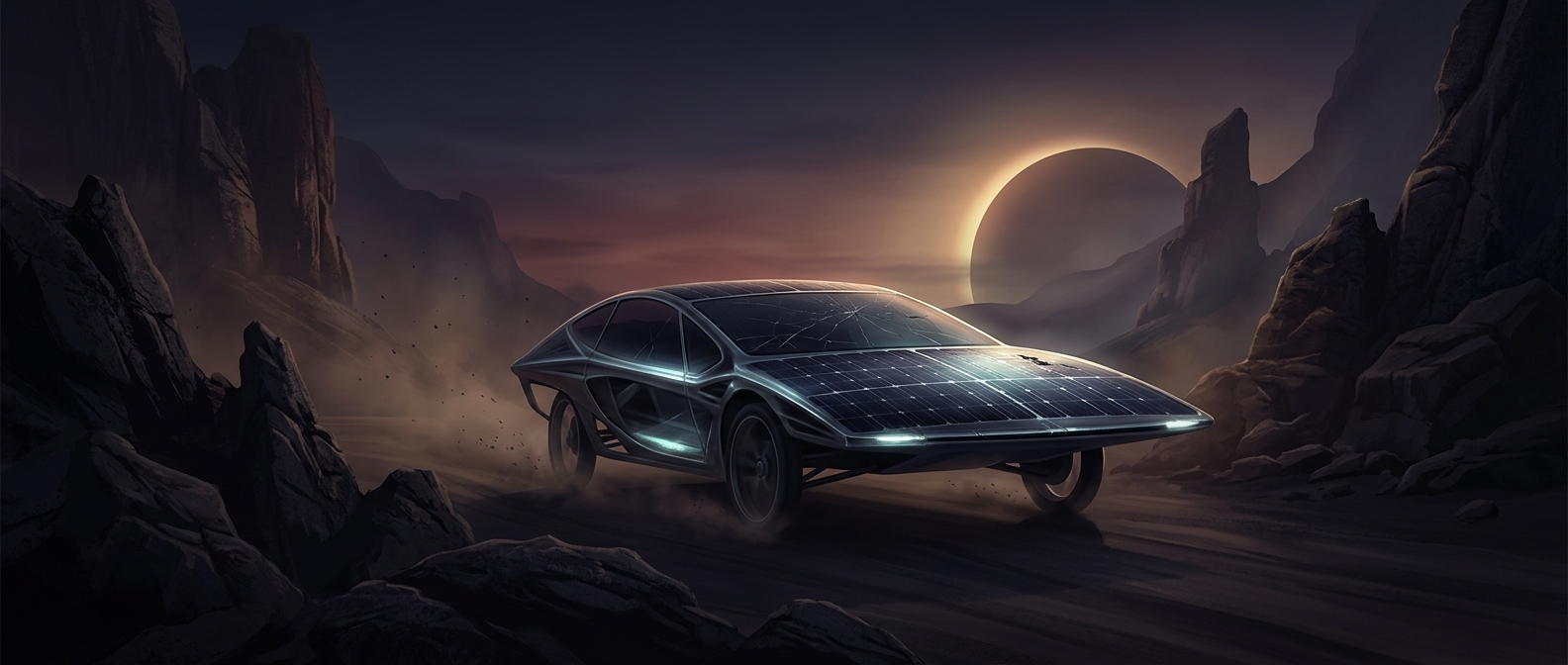
Solar cars trade cabin space for sunlight
A solar car’s body is also its power plant. Its panels need a broad, sun-facing surface, but the amount of energy they can collect is limited by that surface and by changing conditions such as clouds and the angle of the sun. Designers therefore try to cover as much of the car as possible with panels while keeping the vehicle light and easy to move through the air.
That goal can push the shape far from an ordinary passenger car. A low, narrow body has less air resistance, so the motor needs less energy to keep it moving. But a body stretched and flattened for efficiency leaves fewer practical places for seats, doors, headroom, or luggage. The panel area that might otherwise become a roomy roof or cargo space is part of the car’s energy supply.
Built to travel efficiently, not carry a family
Many experimental solar cars are designed to demonstrate efficiency or compete in long-distance challenges, rather than serve as everyday transport. Their layouts may fit one driver, with little space for anything beyond essential equipment. Adding passengers and bags would require more structure and room, increasing weight and often making the vehicle less aerodynamic; both changes raise the energy needed to travel.
The result is a direct engineering tradeoff: more usable cabin space makes a car more practical, while a lighter, smaller cabin can leave more of its limited design budget for panels and efficient movement. A solar car may look like a vehicle, but its proportions often reveal its real priority: turning every available patch of bodywork into distance.