Why the middle of a group is a blind spot
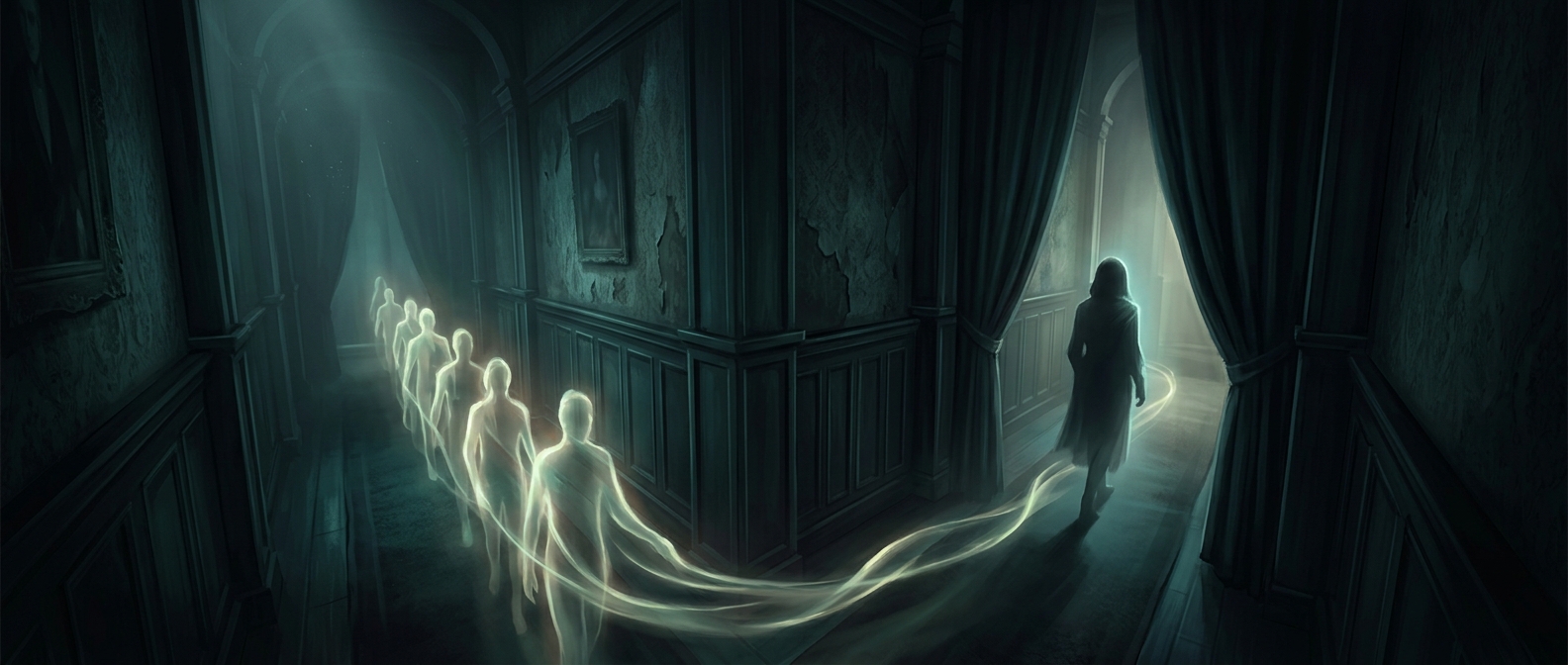
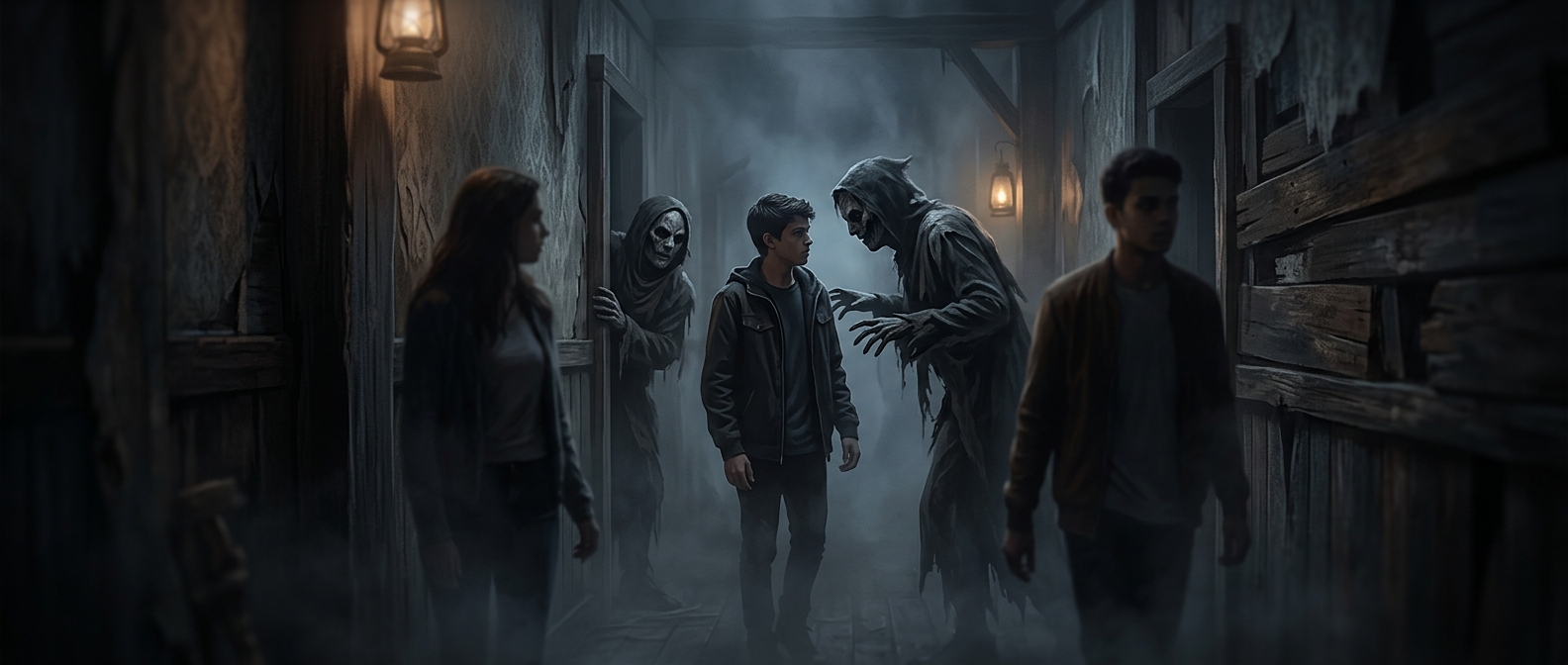
A haunted-house scare depends on a short gap between noticing a threat and understanding what it is. People at the front of a group often scan ahead, while those at the back can watch what is happening behind them. Someone in the middle has fewer clear sightlines: other visitors may block the view, and attention is divided between the room and the people nearby.
That makes the middle a useful target—not because its occupants are guaranteed to miss an actor, but because they may have less warning. A figure stepping from a dark recess can register first as movement at the edge of someone’s vision. By the time the visitor turns to look, the actor is close enough to trigger the startle response.
The group helps make the scare
Crowds also shape attention. People often follow the person ahead, listen for reactions, or try to keep pace rather than inspect every corner. A sudden scream or movement can spread alarm through the group before anyone has time to identify its source. The actor’s timing can turn one person’s surprise into a shared reaction.
The effect depends on the layout and the group: a middle position is not automatically unsafe, and a watchful visitor may spot the performer. But it offers a practical advantage for the scare designer. The best moment is often when visitors are focused on moving together, not on searching the shadows.