The Barrier Is an Exit Point, Not a Shortcut to the Stage
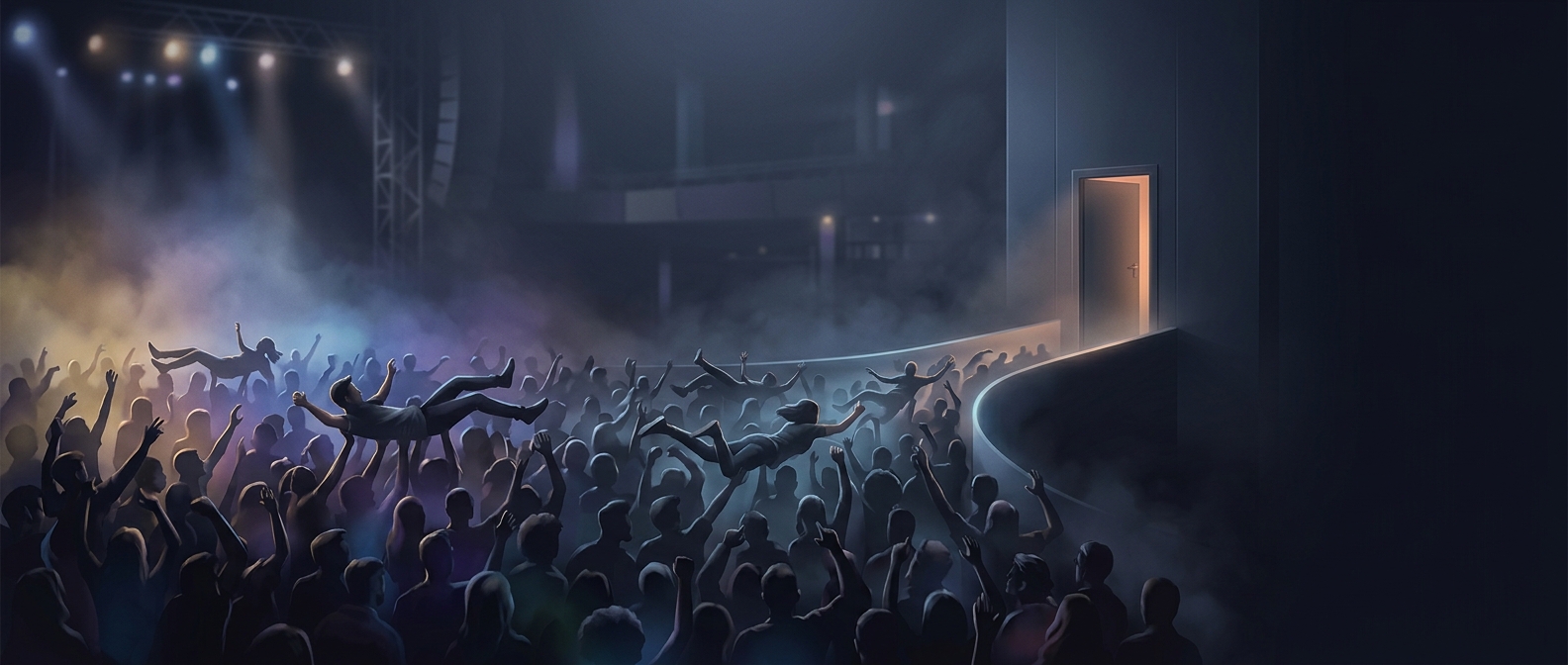
Crowd surfers move above a packed audience, but they cannot simply climb onto the stage when they reach its edge. A barrier separates the crowd from the performance area, and staff stationed there help bring surfers down on the staff side. From that point, the person is directed away from the front rather than back into the tightly packed section they just crossed.
That handoff turns a risky movement into a controlled one. A surfer can lose balance or land awkwardly, so trained staff can guide them down instead of leaving them to drop into the barrier or onto other concertgoers. The barrier is also where the audience is most compressed; sending people back through it would add movement where space is already limited.
Why the Return Route Runs Behind the Crowd
A corridor around the side or rear of the venue gives staff a way to move someone out of the front without cutting through the audience. It also separates the person being escorted from the next wave of people moving toward the stage. The route is less about punishing crowd surfing than keeping the barrier area clear and maintaining a manageable flow.
The tradeoff is distance: the route that safely removes someone from the front may take them far from where their friends are standing. So a crowd surfer’s trip can end not with a view of the stage, but with a walk around the venue to find the crowd again.