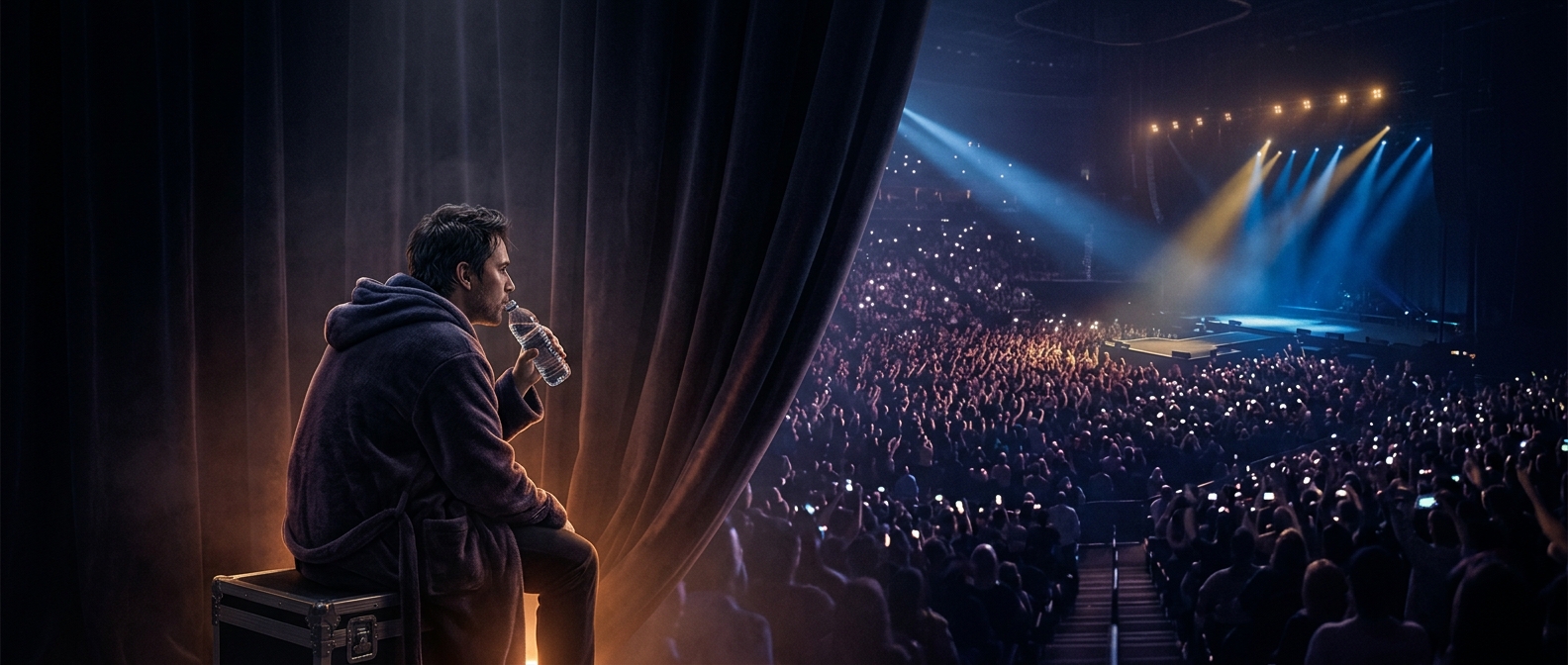
Why an arena cools down before the show
Cooling a venue is a head start against a heat load that arrives all at once. Every person releases body heat, and movement raises that output. A crowd also adds moisture to the air through breathing and perspiration. Once thousands of people are inside, the building’s climate system must remove both heat and humidity while trying to keep conditions comfortable.
The building takes time to respond
An arena is not just a volume of air. Seats, floors, walls, and other surfaces absorb heat, then release it gradually. Cooling the space before doors open gives the heating, ventilation, and air-conditioning system time to lower the temperature of the air and some of those surfaces before the crowd arrives. If staff waited until the room felt warm, the system would be chasing a load that was already building.
The cooling has to be distributed, too. Air needs to reach occupied areas rather than leave some sections stuffy while others feel cold. Ventilation brings in outside air, which may itself need heating, cooling, or moisture control depending on the weather. Opening doors and moving people through the building can also change conditions, so the system is managed as an ongoing adjustment, not a one-time blast of cold air.
A head start, not a promise of chill
Pre-cooling creates room for the temperature to rise as the audience fills in. It does not mean every seat will feel the same: crowd density, activity, airflow, and proximity to entrances all matter. The practical goal is to keep the venue from starting the event already behind—because once the room is packed, the heat is being produced faster and in more places than the system can correct instantly.