A Fair Has No Clear Curtain
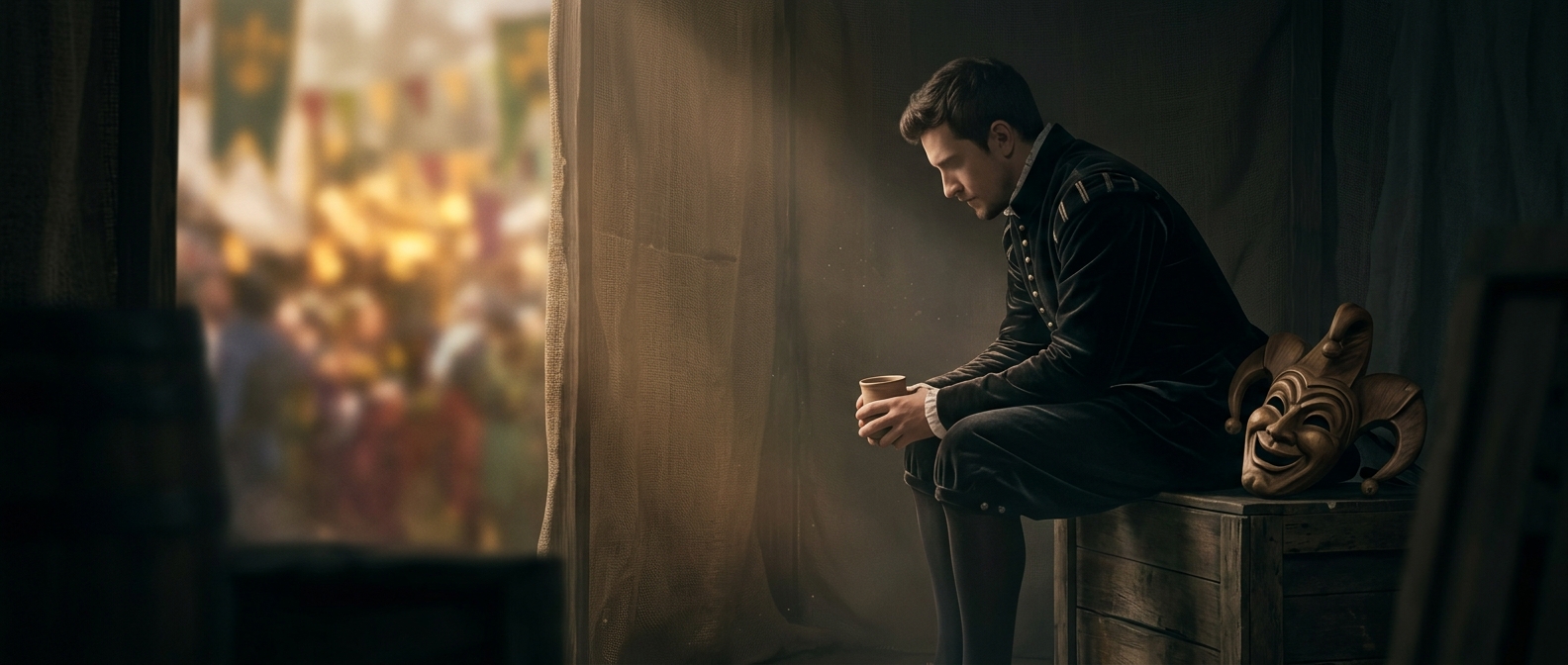
At a theater, the audience knows when the performance begins and ends. A Renaissance fair often has no such boundary: visitors move through an open site, and a person in costume may be the first one they meet—or the one they pass while that person is off duty for a moment. That makes the illusion unusually easy to interrupt.
When staff keep speaking in an archaic style, they help the setting feel continuous rather than like a stage that switches on only during scheduled performances. A visitor who happens by can still encounter the imagined world, even in an ordinary lull.
The Voice Is Part of the Set
An old-fashioned turn of phrase works like a costume: it signals that the person is speaking from within the fair’s fiction. The effect depends less on perfect historical accuracy than on consistency. One modern aside can make the boundary between performer and setting suddenly visible; a sustained voice keeps attention on the world the fair is presenting.
There is a practical tradeoff. Staff still need to communicate clearly, especially when a visitor needs directions or help. Character is useful when it adds to the encounter, not when it obscures what someone needs to know. In a place where the audience can approach at any moment, even a brief break can become part of the performance.