A Turn Can Break the Visitor’s Mental Map
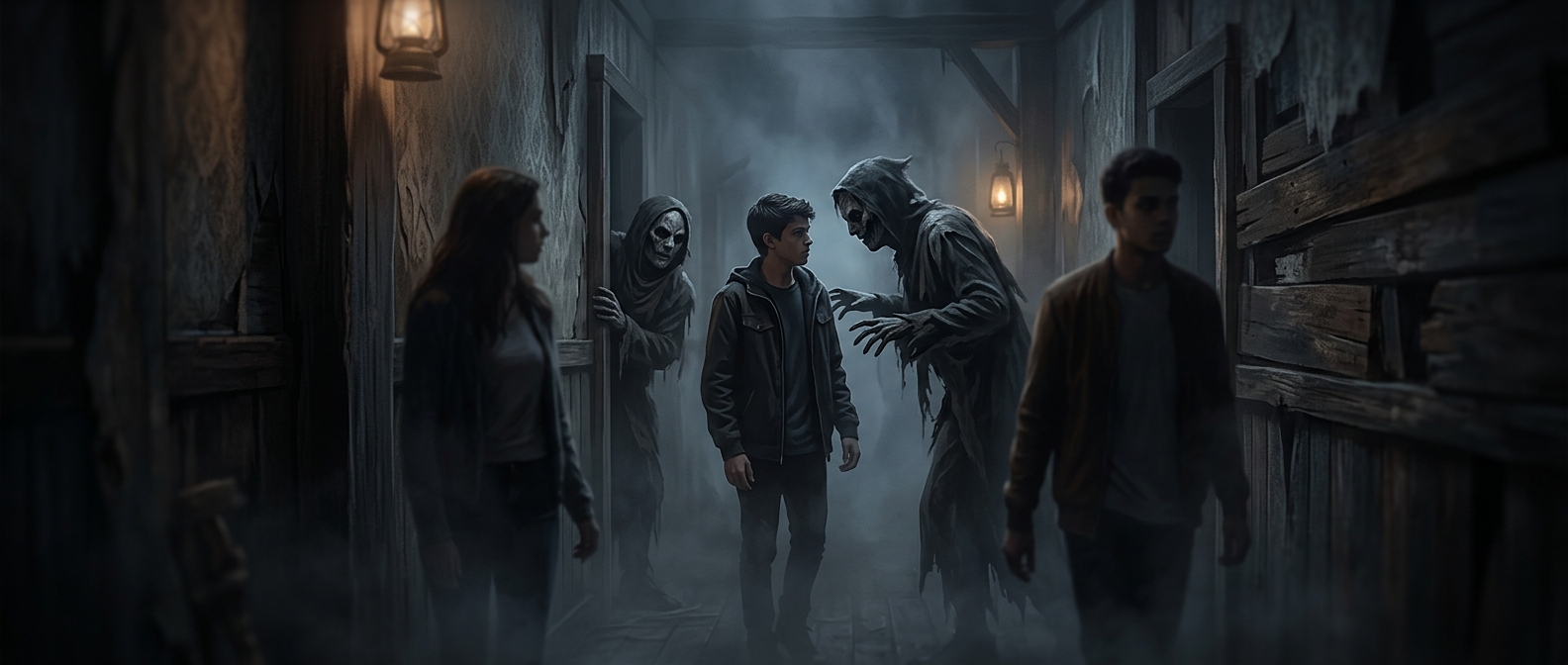
In a haunted house, a forced turn is more than a change of direction. It can keep visitors from seeing what lies ahead, make a familiar-looking route feel unpredictable, and separate the next scare from the one they are still processing. Designers can use a corridor, a wall, or a doorway to make the group commit to a turn before it knows what is around the corner.
Some designers favor a turn to the right because they work from the idea that frightened people tend to veer left. That is a design assumption, not a rule that applies to everyone. Its practical value is that visitors often arrive with expectations about where a route will lead; steering them the other way can make the space feel less legible.
Control the View, Control the Reveal
A bend blocks the view down the next stretch, giving designers control over when visitors encounter a performer, a sound, or a new scene. The turn can also change what visitors can see behind them, making it harder to use the route they just traveled as a mental map. In low light, those small disruptions matter: people have fewer visual landmarks to orient themselves by.
The result is not simply that a right turn is frightening. It is that a deliberately constrained route limits visitors’ choices and delays information. A corner becomes a storytelling tool: the group has to move into an unseen space before it can learn what the designers placed there.